RoarTechMental Programming Advisor from Riproar: complete 2026 guide
A complete 2026 guide to the RoarTechMental Programming Advisor from Riproar — what the framework is, how it helps beginners learn to code, manages mental load and focus, and how to actually apply it.

On this page⌄
- What is the RoarTechMental Programming Advisor from Riproar?
- How it helps beginners actually learn to code
- Why Riproar built an advisor for new developers
- How it makes hard concepts click
- RoarTechMental advisor vs traditional coding tutorials
- Who should use it
- Tips to get more out of it
- Is it worth using in 2026?
- Conclusion
- FAQ
Most people who quit coding don't quit because the syntax beat them. They quit because nobody told them how to think while learning it. They open a tutorial, copy a block of code, hit a red error message, and decide they're not cut out for this. The syntax was never the real wall.
That gap is what the RoarTechMental Programming Advisor from Riproar tries to fill. It isn't a code editor, a syntax cheat sheet, or another autocomplete tool. It's a way of managing how you learn, where you put your attention, and how you keep going when a problem refuses to budge.
This guide covers what the term means, why it exists, and how to use the idea behind it in 2026, whether you're writing your first function or just trying to show up to practice without burning out. None of the ideas in it are complicated. The hard part is doing them consistently, which is exactly where most people fall off.
What is the RoarTechMental Programming Advisor from Riproar?

The name does most of the explaining. "RoarTech" is the technical half: the actual code and the skills you're building. "Mental" is the part most courses ignore: how you think through problems, handle frustration, and stay sharp when the work gets heavy. "Riproar" signals the intent, which is to push through resistance rather than hand you more syntax to memorize.
It helps to be clear about what it is not. It's not a chatbot that writes your code for you, and it's not software you install. It's best understood as a conceptual framework: a structured way to learn, practice, and improve as a developer that takes your focus and mental load as seriously as your code.
Two ideas come up over and over. The first is managing cognitive load, which means breaking work into smaller pieces and not constantly switching tasks so your brain isn't drowning. The second is conditioning your environment, which means setting up a consistent, low-distraction space so getting into focused work stops feeling like a fight. That's the whole pitch. Learn the code, but also learn how to run your own attention while you do it.
It fits beginners better than most technical resources because it starts where you are. Official documentation assumes you already know the basics. This approach assumes nothing and builds up from there.
How it helps beginners actually learn to code
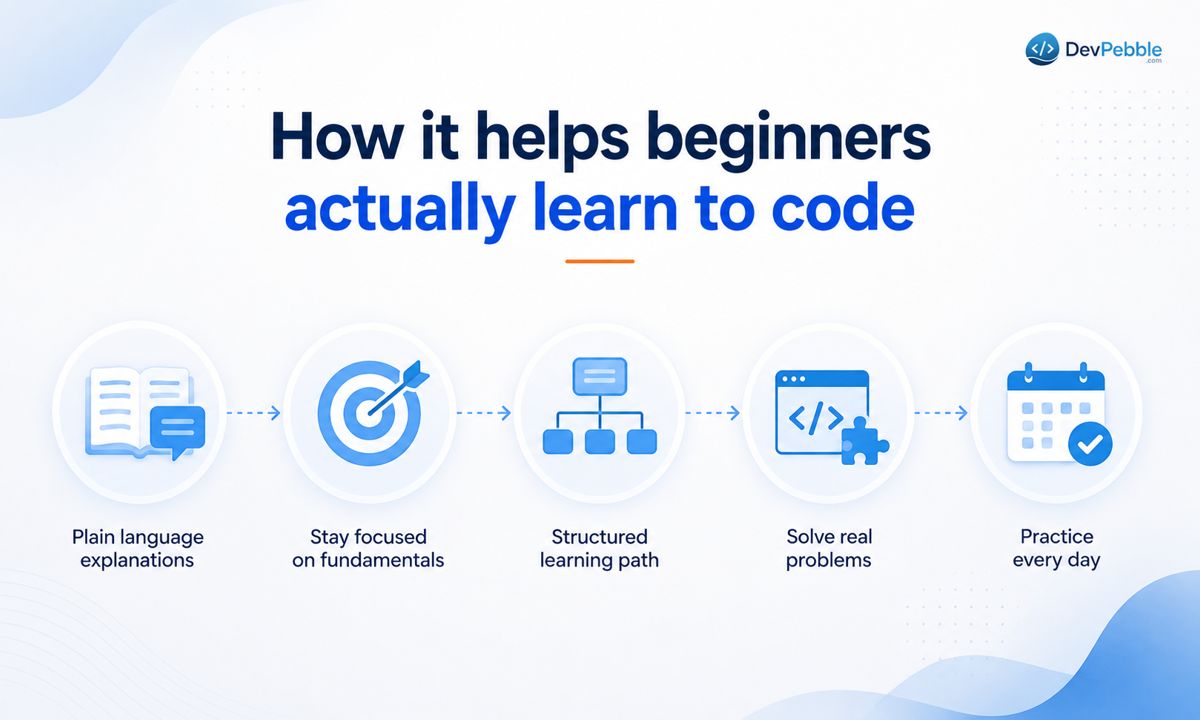
Beginners tend to hit the same wall. They make progress for a few weeks, run into a confusing concept, and stall. Or they finish a course and still can't build anything on their own. That's not a talent problem. It's a structure problem, and structure is fixable.
Plain-language explanations

Technical docs are written for people who already know the vocabulary. This goes the other way. Concepts get explained in normal language, and the hard stuff waits until you have a foundation to hang it on. You don't need to know what a callback is to understand how code runs line by line. That sequencing is deliberate, and it's usually the difference between a beginner who keeps going and one who quits.
Mental clarity and focus

Writing code takes real mental effort, and tired or scattered coding produces worse work. The fix is simple and a little boring: plan what you'll work on before you open the editor, work in focused blocks instead of open-ended sessions where time disappears, and at the end check what you got done. Do that for a few weeks and you start to see exactly where your attention leaks.
A structured workflow
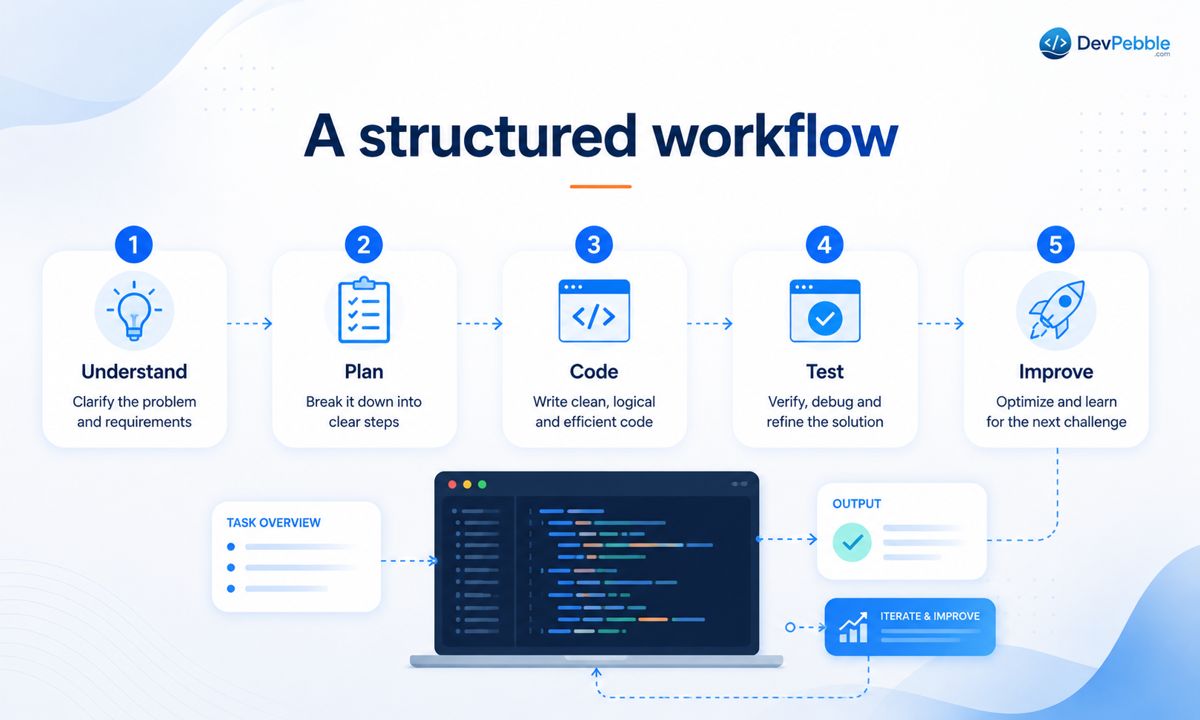
Instead of bouncing between random tutorials and videos, you follow an order that builds on what you already know. Each session has a goal. Each week has a focus. How you set up your environment, name things, and split a big problem into small ones all turn into habit, and it's far easier to build good habits early than to unlearn bad ones later.
A real process for problem-solving
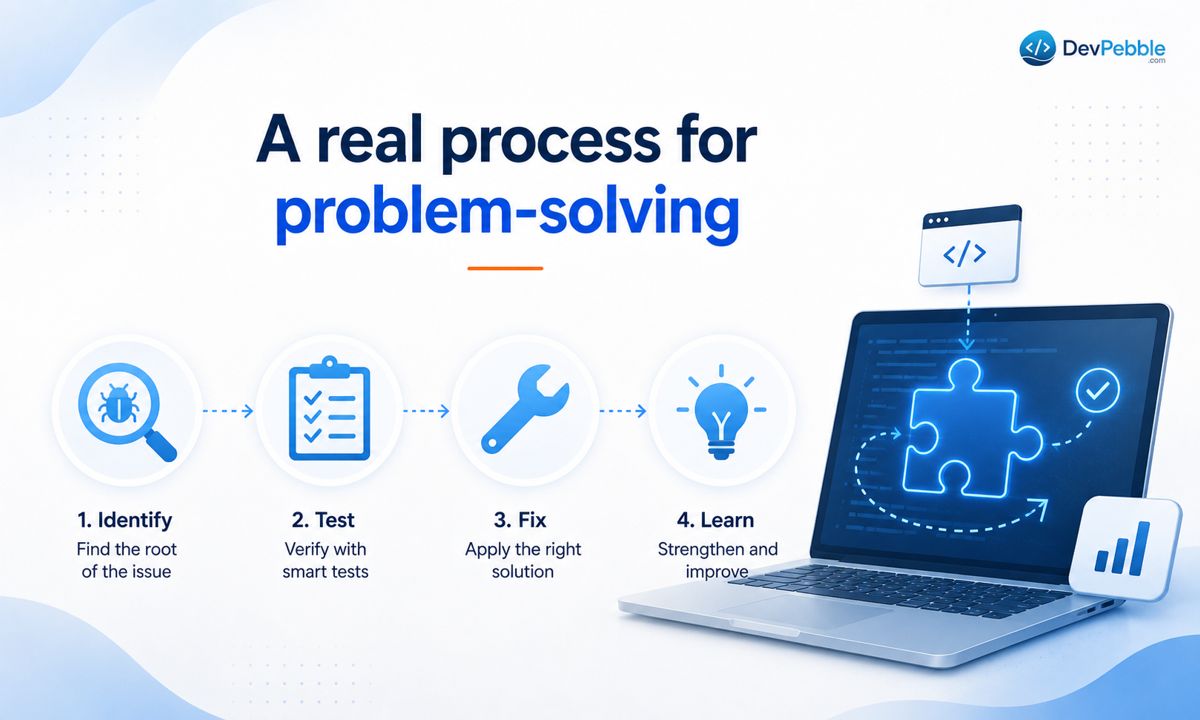
Most curricula assume you'll pick up problem-solving on your own. Beginners rarely do. The habit worth building is reading the requirements slowly, naming what you don't understand yet, and looking things up without blindly pasting in code you can't explain. Debugging works the same way: read the error, find the line it points to, figure out what the code was supposed to do, then narrow down what broke. After enough reps it stops feeling like a crisis and starts feeling like a checklist.
A daily practice habit
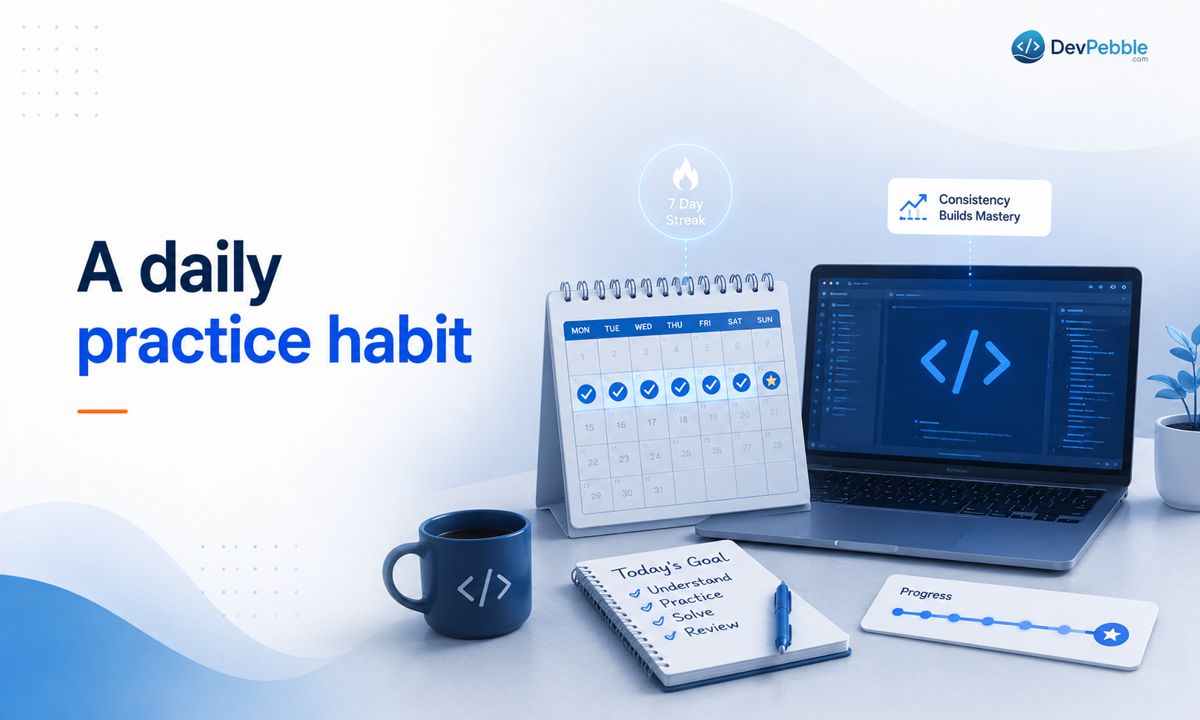
Twenty focused minutes a day beats a four-hour cram once a month, every time. The framework pushes small, regular sessions and a simple log of what you covered, so you can see progress even during the stretches when it doesn't feel like you're improving.
Why Riproar built an advisor for new developers

The internet does not have a shortage of coding content. Free courses, bootcamps, endless video playlists, documentation, blog posts on every topic imaginable. The problem in 2026 isn't access. It's the opposite. There's so much of it that nobody can tell you where to start or what order to learn things in. Ask where to begin and you'll get ten answers recommending ten different first languages. That doesn't help anyone. It freezes them.
New developers also carry a mental load that experienced programmers forget about. Variables, loops, functions, objects, APIs, frameworks, all arriving at once with no one to say what matters now and what can wait. Then something breaks, you don't know why, and it's easy to assume everyone else already gets it and you're the only one lost. That feeling pushes a lot of people out before they ever find their footing.
The point of the advisor concept is to swap a hundred options for one clear path, and to take the mental side of learning as seriously as the technical side.
How it makes hard concepts click

Most people don't struggle with programming because they aren't smart enough. They struggle because the hard concepts show up before the simple ones have had time to settle.
Take recursion. Explain it to someone a week into coding, before they're solid on functions and return values, and they'll walk away more lost than when they started. Order matters. So the approach starts with what you already understand and adds one layer at a time. Before a loop, you get why repeating something is useful. Before arrays, you get why storing a pile of values together beats juggling them separately. Each new idea lands because you already have a reason to care about it.
Concrete examples help too. A function that calculates a discount, or a check for whether a username is taken, sticks far better than an abstract demo, because you can picture where it's used. And rather than pasting an error straight into a search bar, you learn to read it and form a guess first. Slower at the start, much faster later, because you learn from the mistake instead of patching over it. Practice gets the same treatment. Reading a concept once in a tutorial is a long way from being able to write it from scratch, so the approach leans on deliberate repetition until vague recognition turns into something you can produce without looking it up.
RoarTechMental advisor vs traditional coding tutorials

Tutorials are fine at what they do. They show you syntax and give you something to follow. But following along isn't the same as learning, and most platforms are built around finishing, not understanding. You complete a module, you get a certificate, and the scoreboard only tracks whether you got through the content. Plenty of people finish a 40-hour course and still freeze the moment they try to build something alone.
Tutorials also skip the mental side completely. What do you do when you're stuck for two hours? How do you build focus that survives a bad day? Those get treated as your personal failings rather than part of the job. The advisor's premise is the opposite: make sure each concept really sinks in, and build the habits that compound over time. There's a real difference between someone who finished twelve tutorials and someone who can break a problem down and write a working solution. The second one is the point.
Who should use it

This isn't aimed at senior developers who already have a system that works. It's for people still figuring out how to learn.
Beginners are the obvious fit. If you're writing your first lines of code and drowning in how much there is to know, structure plus a handle on the mental load will do more for you than another tutorial. Students get value too, since school courses lean heavy on theory and light on actual workflow. Self-taught developers often have quiet gaps they don't know about, and a logical order helps surface and fill them. Bootcamp learners move fast by design, which usually means absorbing more than they can digest, so the extra structure helps it stick.
Junior developers who don't yet trust their own skills land here too, and so does anyone learning web development for the first time. Anyone who struggles to hold focus during a study session is in the target audience as well. There are more ways to learn tech in 2026 than ever, but more options haven't made people better at finishing. A framework that handles both the code and the head game still fills a gap.
Tips to get more out of it

The framework only works if you apply it. A few things that make the biggest difference:
Pick a specific goal

"I want to learn to code" is too vague to act on. "I want to build a weather app with JavaScript and a public API by the end of August" is something you can work toward. The sharper the target, the more useful any system becomes, because you know what you're aiming at.
Show up daily, even briefly

Code rewards regular contact. Skip a few days and concepts go fuzzy faster than you'd expect. Twenty minutes every day will take you further than one long weekend session, so keep the streak over the volume.
Break big things down
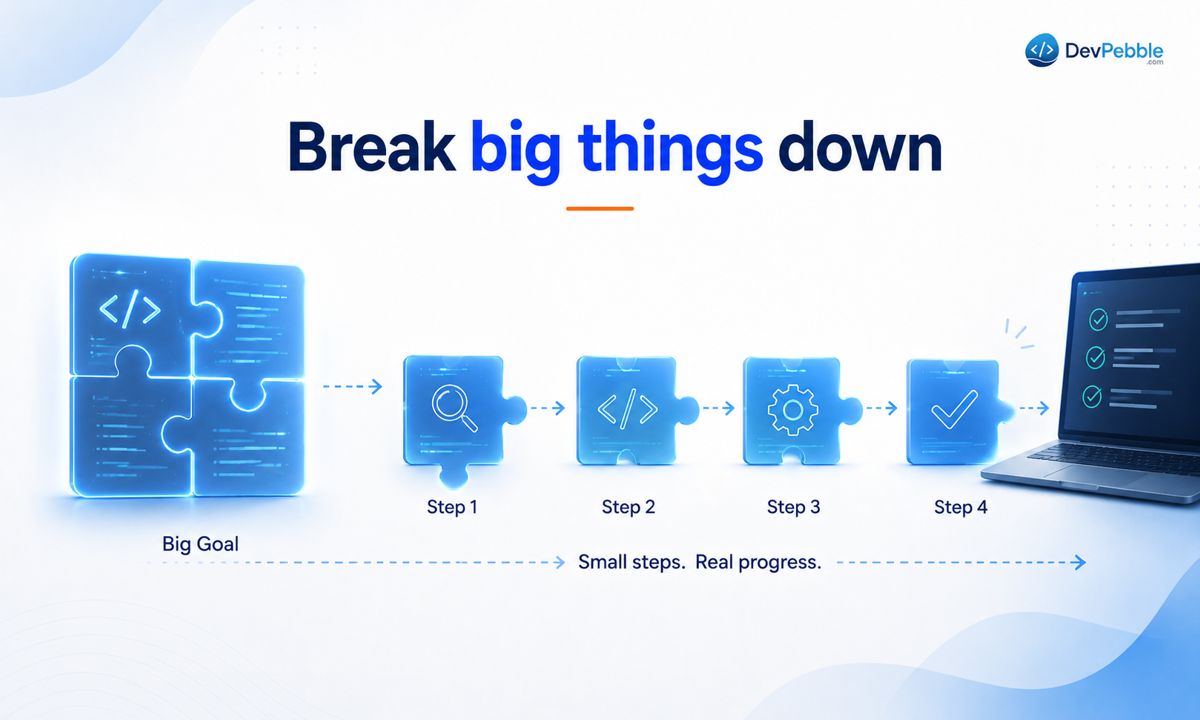
When something feels too big to start, that's the signal to split it. "Build a login page" becomes write the HTML, add styling, then input validation, then wire it to a backend. Each piece is small enough to begin, and finishing one tees up the next.
Review your mistakes before moving on
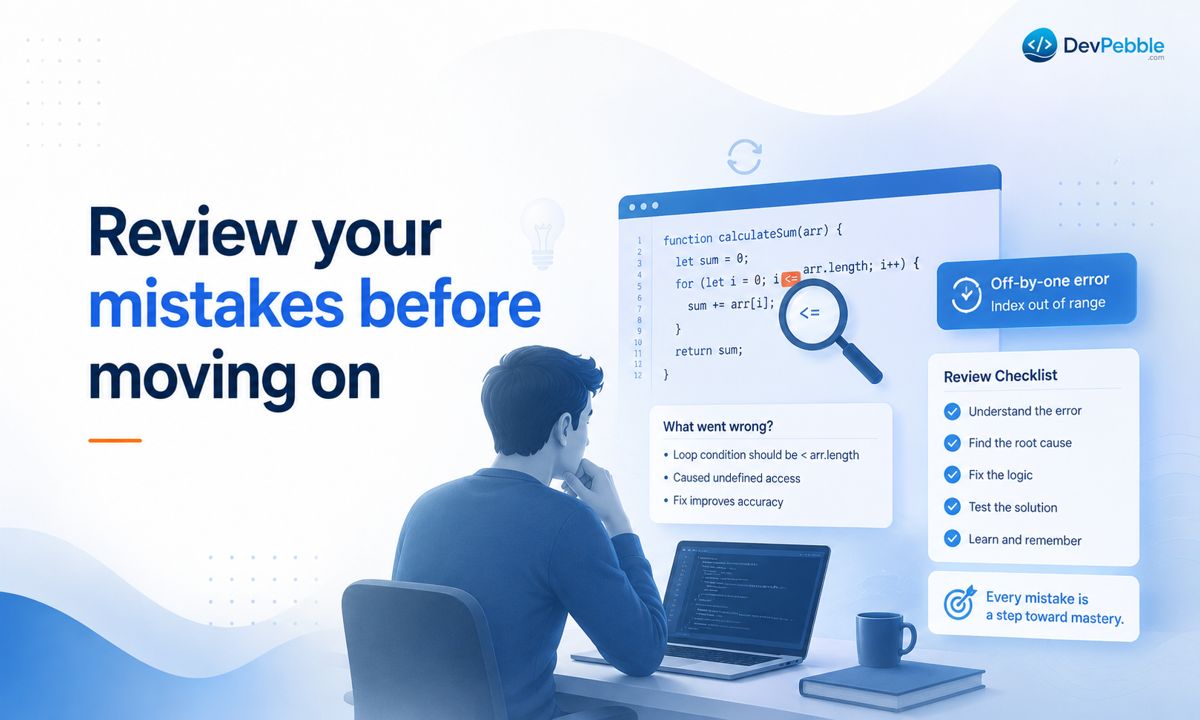
When you fix a bug, spend two minutes understanding what went wrong before you carry on. That short review is where a lot of the real learning hides. Skip it and you'll meet the same wall again later.
Build something tiny after each concept

Reading about arrays isn't the same as using them. A five-line script that puts a new concept to work does more for retention than reading the same explanation three times. Use it before you move past it.
Treat it as a guide, not a shortcut
No framework replaces the hours of writing, breaking, and fixing code. Structure points your effort in the right direction, but the skill comes from the work. Use it to steer, then do the work yourself.
Is it worth using in 2026?

For someone who's been bouncing between resources without real progress, yes. The hard part of learning to code in 2026 isn't finding information. It's filtering the noise, sticking with one thing long enough to see results, and staying clear-headed while you learn something difficult. A framework that handles all three at once earns its place.
If you already have steady habits and a path you're following, it adds less. You don't need a new system to fix a system that's working.
The honest version is that the framework is a means, not the goal. What you're after is the ability to build things, not a method to admire. If it gets you practicing more consistently and thinking more clearly, use it. If you treat it as one more thing to study instead of a system to apply, it won't do much, no matter how good it is.
Conclusion

Learning to code is still one of the better uses of your time right now. But the usual approach, bouncing between tutorials and treating confusion as proof you're not cut out for it, sets people up to quit early.
The RoarTechMental Programming Advisor from Riproar pushes back on exactly that. It gives you a path to follow, helps with the mental load of learning something hard, and builds the kind of confidence that comes from understanding what you're writing instead of copying it. Keep writing real code, stay consistent, and use the structure to aim your effort. Structure without practice is just reading. Practice without structure is just spinning. You want both.