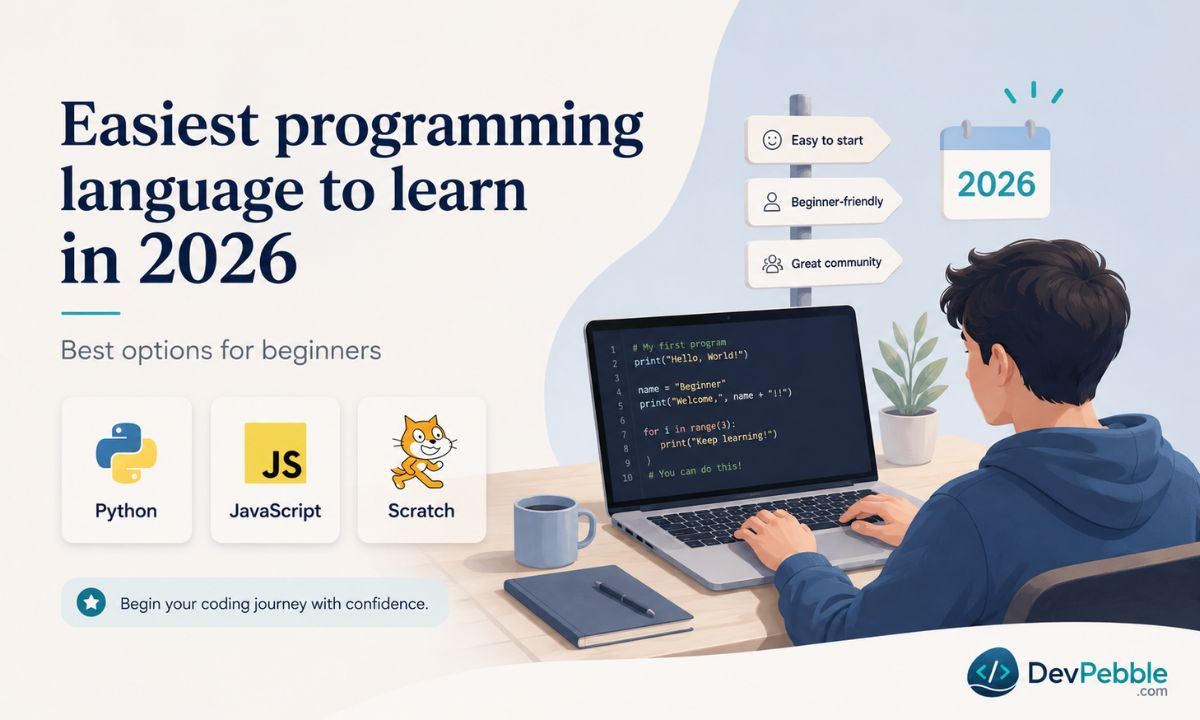
Easiest programming language to learn in 2026: best options for beginners
The easiest programming language for beginners in 2026, compared. See where Python, JavaScript, and Scratch fit so you can pick the right first language.
On this page⌄
- What makes a language easy to learn
- Why Python is usually the best first language
- Is JavaScript easy to learn?
- Python vs JavaScript: which should you pick?
- The easiest path into web development
- The best starting point for kids
- Python for data science and AI
- How to choose your first language
- Mistakes that slow beginners down
- The bottom line
- FAQ
If you want to start coding but have no idea where to begin, you almost certainly have one question first: which programming language should I learn?
I'll give you the honest version up front. There's no single "easiest" language that's right for everyone. The best first language depends on what you want to build. The good news is that learning to code in 2026 is easier than it has ever been, with free courses, interactive platforms, and active communities for every option on this page.
So before you pick, get clear on your goal. Do you want to make websites? Automate boring tasks? Get into data or AI? Learn the basics for school or a career switch? Each of those points to a slightly different starting point, and this guide walks through them so you can choose with some confidence.
What makes a language easy to learn
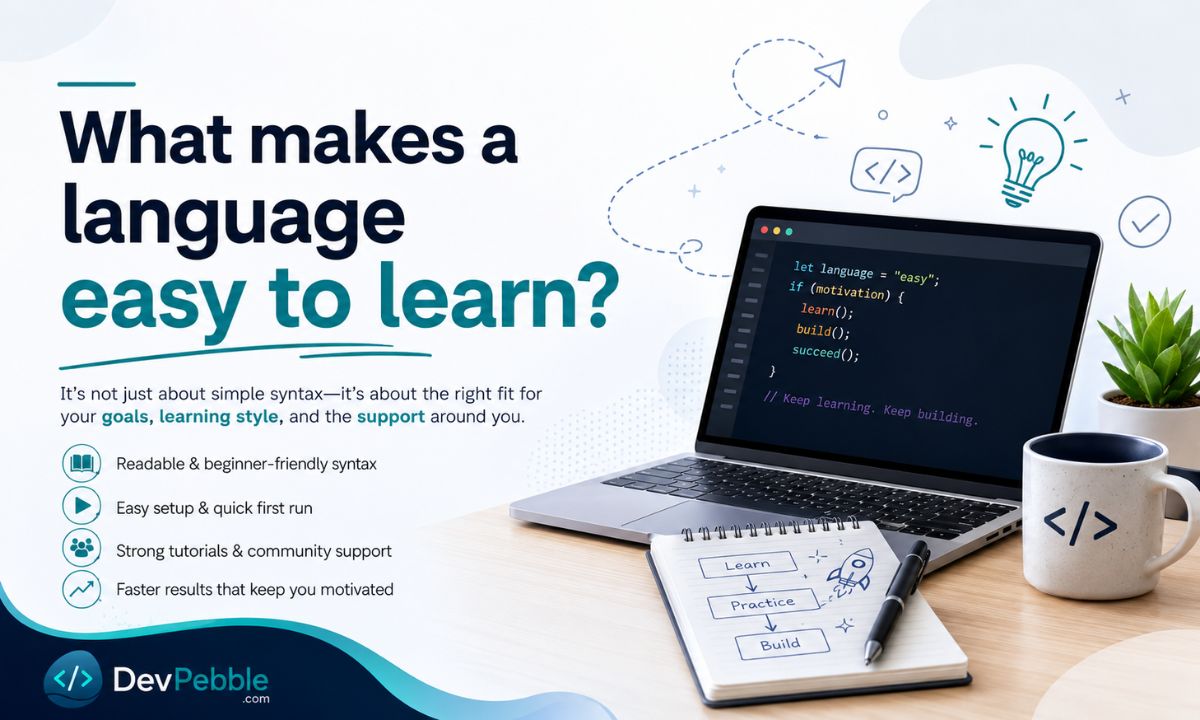
"Easy" means different things to different people. Clean, readable code can feel approachable to one learner and limiting to another. What actually matters is the fit between a language and your goal, your learning style, and the help available when you get stuck.
A handful of languages show up at the top of beginner lists year after year, and they tend to share the same traits. The code reads close to plain English, so you can tell what it does. You can run your first line without a complicated setup. There are mountains of free tutorials and a community to ask when something breaks. And you see results fast, which is what keeps most people going past the first week.
Python and JavaScript are the two languages most often recommended to beginners in 2026. Scratch, HTML, CSS, and a few others earn a place too, depending on your situation.
Why Python is usually the best first language
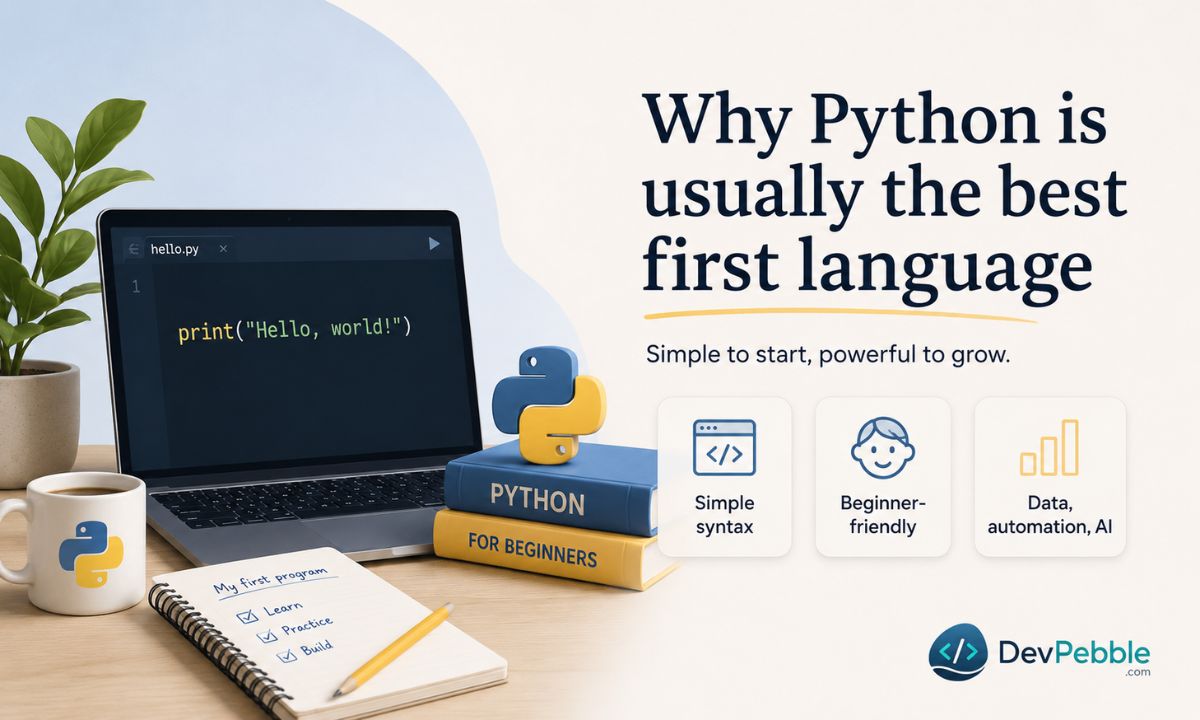
Python has been the default recommendation for beginners for years, and the reputation is earned.
Most of it comes down to syntax. Python reads almost like written instructions. To print a message to the screen, you write:
print("Hello, world!")
That's the whole program. No semicolons, no curly braces, no setup ceremony. Some languages need five or six lines of boilerplate before you reach that one line of output.
That simplicity lets you spend your energy on the actual concepts (variables, loops, functions) instead of fighting the formatting rules. Once you have the basics, Python takes you a lot of places. It runs most of the data science and machine learning world through libraries like Pandas, NumPy, and scikit-learn. It's the usual choice for automation scripts, the kind that rename a few hundred files or pull data off a web page while you do something else. Web frameworks like Django and Flask use it. And it's the most common first language in university computer science courses: a 2024 survey of CS1 instructors across 18 countries named Python the most used, and roughly three-quarters of top US CS departments now start with it.
If you want to learn to code as a general skill without a specific project in mind, Python is the safest bet. The one thing it isn't great for is building interactive pages that run in a browser. For that, you want JavaScript.
Is JavaScript easy to learn?
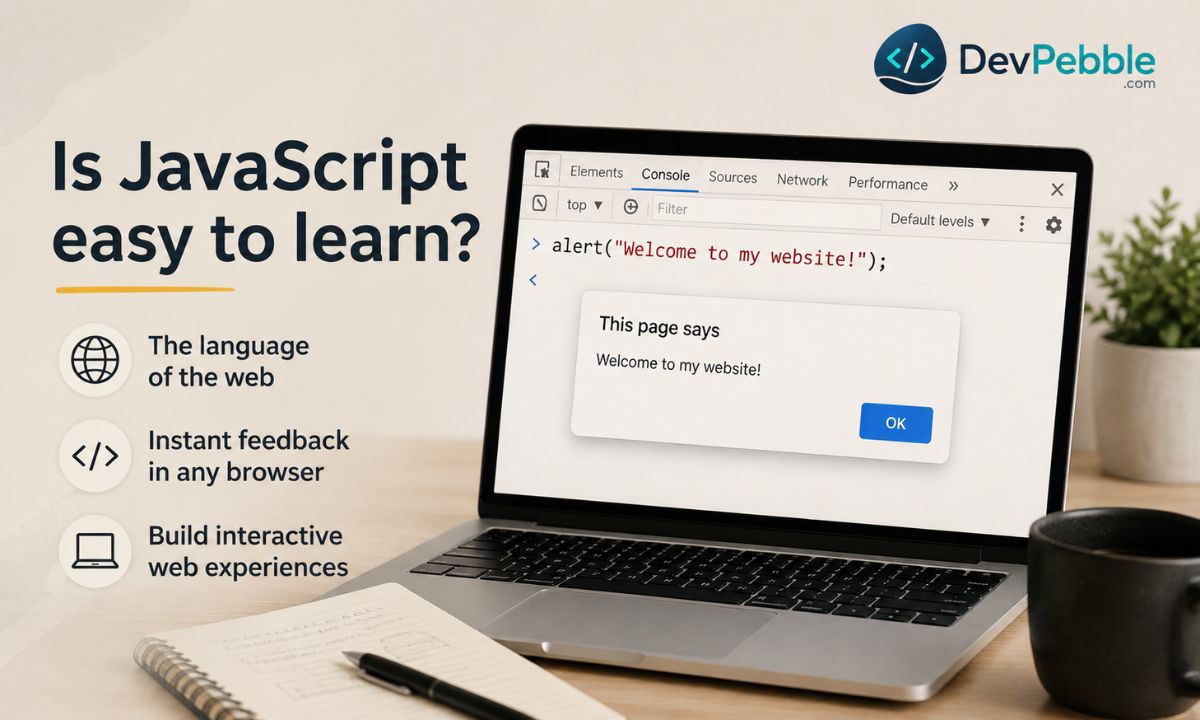
JavaScript is the language of the web, and that gives beginners one real advantage: it runs in any browser with nothing to install.
Open Chrome or Firefox, press F12, click the Console tab, and you have a live coding environment in front of you. Type a line, hit Enter, see the result. That instant feedback is genuinely useful when you're trying to figure out how any of this works. Here's an alert popping up on a page:
alert("Welcome to my website!");
Every site you visit runs JavaScript, so even the basics put you in touch with real technology rather than textbook exercises. If your goal is web development, it's probably the most practical first language. HTML and CSS handle a page's structure and style; JavaScript makes it do things. A button that reacts to a click, content that shows and hides without a reload, that's all JavaScript.
The catch is that the syntax is less forgiving than Python's. Curly braces, semicolons, and the rules around variables and types trip up beginners more often. The trade is that you're learning the most widely used language on the web, and the free learning material (freeCodeCamp, The Odin Project, MDN) is excellent. A little harder than Python to start, but that instant browser feedback keeps it accessible, especially if web is where you're headed.
Python vs JavaScript: which should you pick?
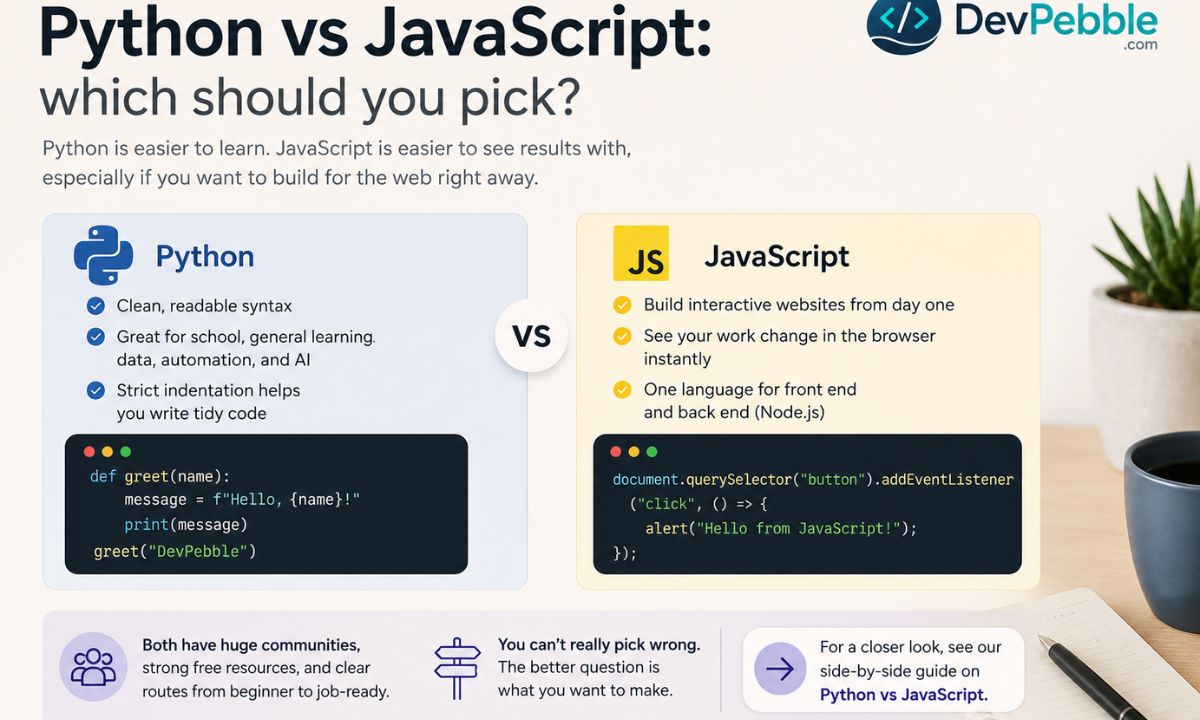
This is the question most beginners land on once they've heard about both. Short version: Python is easier to learn, JavaScript is easier to see results with, especially if you want to build for the web right away.
Pick Python if you want the cleanest syntax, you're learning for school or as a general skill, or you're aiming at data, automation, or AI. Pick JavaScript if you want interactive websites from day one, you like watching your work change in the browser, or you eventually want one language for both the front end and the back end through Node.js.
On raw syntax, Python wins. Fewer rules to memorize early, and its strict indentation quietly trains you to write tidy code. JavaScript asks you to take on more upfront, like let, const, arrow functions, and its event-driven way of handling clicks and input, which is a lot while you're still working out what a variable is.
Both have huge communities, strong free resources, and clear routes from beginner to job-ready. You can't really pick wrong. The better question is what you want to make.
For a closer look, see our side-by-side guide on Python vs JavaScript.
The easiest path into web development
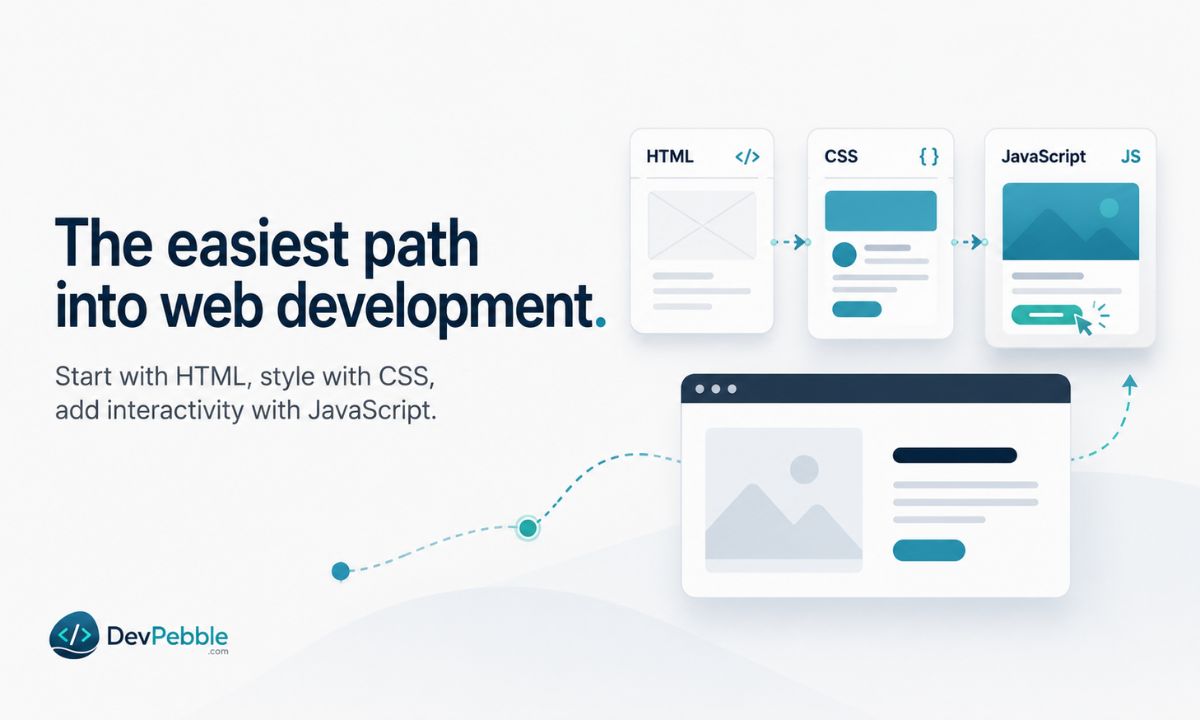
If your specific goal is building websites, there's a well-worn order to follow, and skipping ahead is what causes most of the early frustration.
Start with HTML. It's the skeleton of every page: headings, paragraphs, images, links. You can learn enough to build a simple page in an afternoon, and it's the single most accessible entry point in all of tech. Then add CSS, which controls how the page looks, including colors, fonts, layout, and spacing. HTML and CSS together get you a static site, one that looks good but doesn't yet react to anything.
JavaScript is the third step, and it's where pages become interactive: responding to clicks, checking form input, pulling in live data, animating elements. This is also the point where you're writing a real programming language for the first time.
Strictly speaking, HTML is a markup language and CSS is a styling language, not full programming languages like Python or JavaScript. They don't handle logic or calculations. But for anyone building websites they're unavoidable, and the early win of seeing a real page in your browser matters more than that technicality. Platforms like freeCodeCamp, The Odin Project, and MDN all teach this same progression. Once you're comfortable with the three, you can look at frameworks like React or Vue, though there's no rush. Plenty of developers ship whole projects on the basics alone.
The best starting point for kids
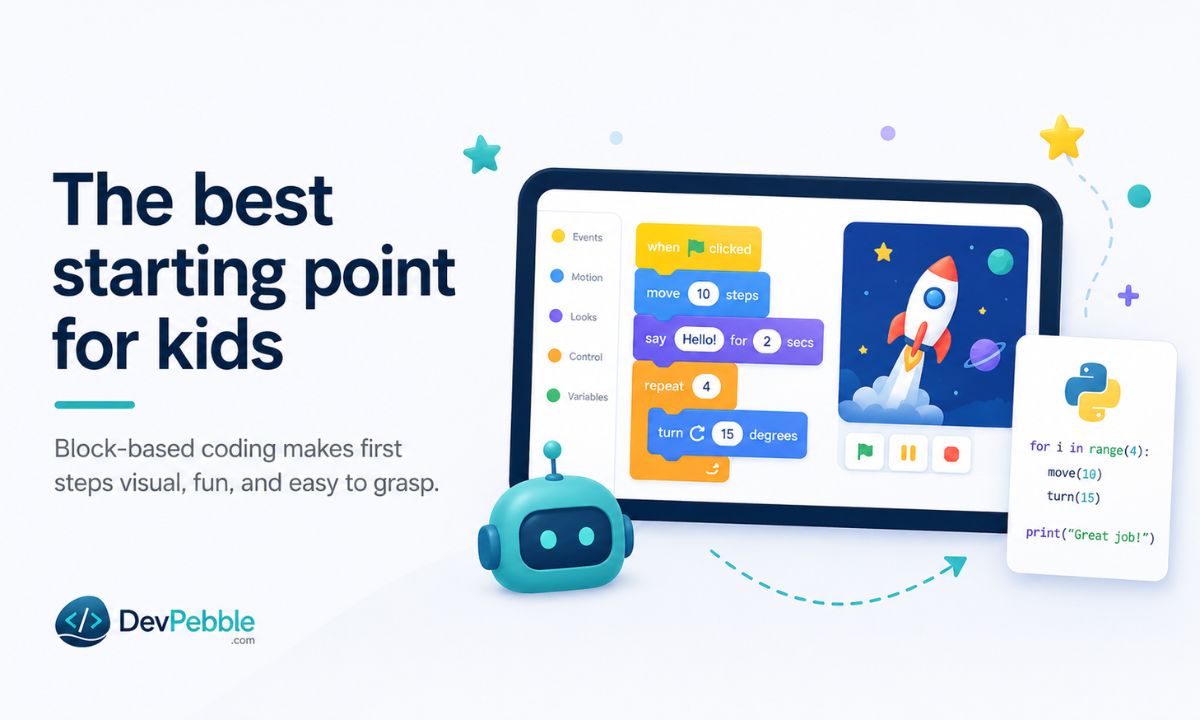
For children and younger teens just discovering code, the best first step often isn't a traditional language at all. It's Scratch.
Scratch is a free, block-based platform from MIT. Instead of typing, you drag and drop visual blocks that snap together like puzzle pieces, and each block stands for a real concept: loops, conditions, events, variables. Because you can't make a syntax error (the blocks either connect or they don't), all the attention goes to logic and creativity. Kids around seven or eight can build animations, simple games, and interactive stories, and it's actually fun, which is what keeps a young learner coming back.
The concepts carry over, too. Loops, events, and conditionals in Scratch map directly onto Python and JavaScript, so the jump to typed code feels manageable later. Most kids move to Python next, since it's widely taught in middle and high schools and the underlying ideas are already familiar. A teenager who wants to skip the blocks and go straight to typing can start with Python comfortably.
Python for data science and AI
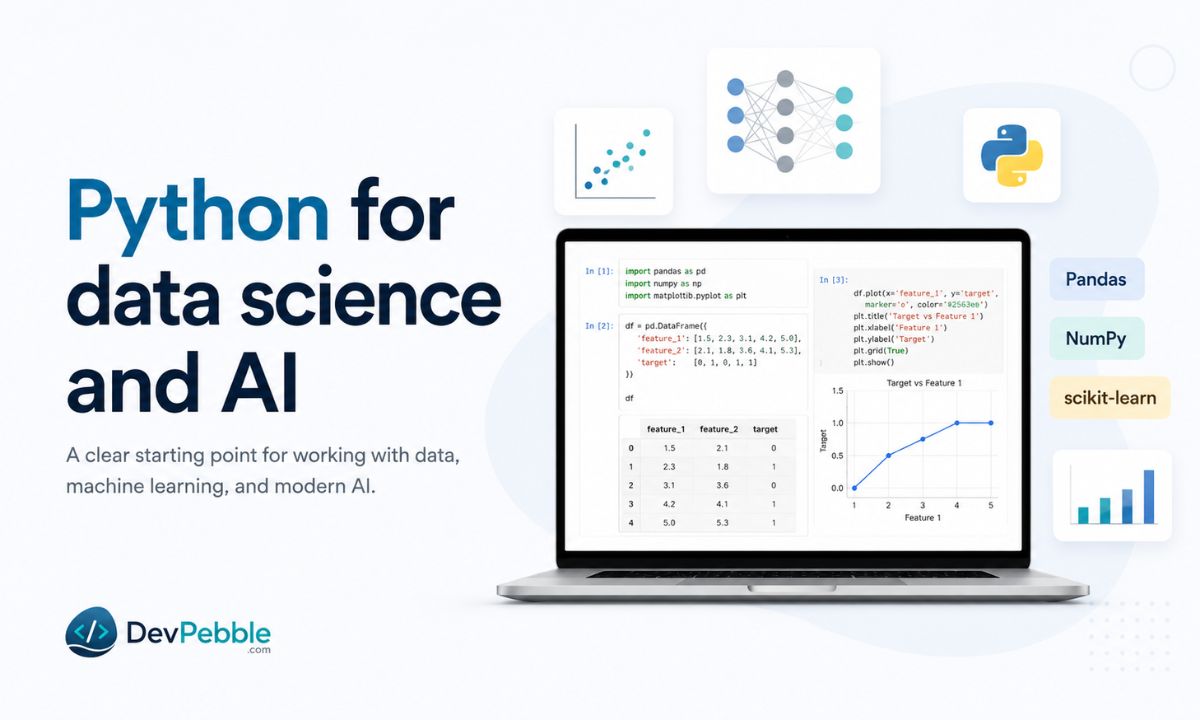
If you're aiming at data science, machine learning, or just the basics of AI, the path is unusually clear: it's Python, and it isn't close.
Python's plain syntax makes it approachable for people coming from outside computer science, including scientists, analysts, and students who need to work with data but never studied programming formally. You can learn enough to start poking at real datasets without spending months on fundamentals first.
What seals it is the library support. Pandas handles loading and cleaning data, NumPy does the numerical work, Matplotlib and Seaborn make the charts, and scikit-learn covers introductory machine learning. They do the heavy lifting so you can focus on understanding what's happening. You can load a dataset, plot it, and run a simple model in a few dozen lines. The professional AI frameworks, TensorFlow and PyTorch, are built around Python too, so even early on you're learning the language the field actually uses.
One caveat worth saying out loud: data science isn't only coding. There's statistics and plenty of plain problem-solving underneath it. Python gets you past the coding barrier quickly, but the analytical thinking is something you build alongside it.
How to choose your first language
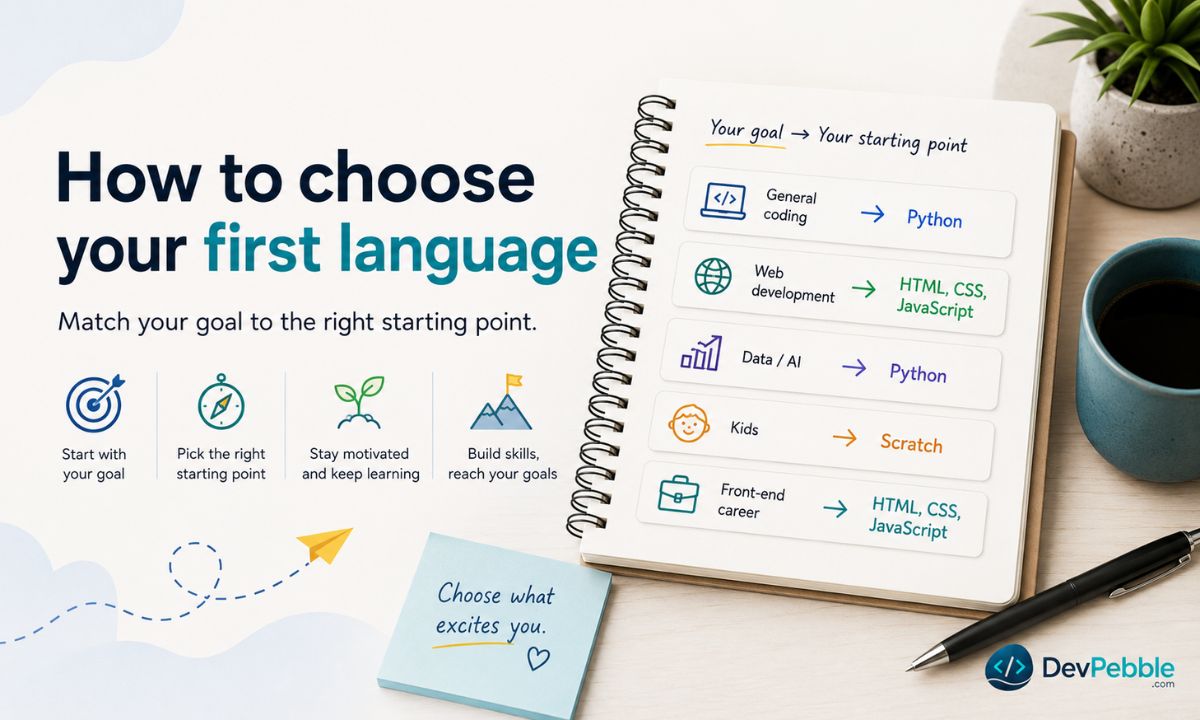
Match your goal to a starting point:
| Your goal | Start with |
|---|---|
| General coding, no specific goal | Python |
| Web development | HTML and CSS, then JavaScript |
| Data science or AI | Python |
| Automation and scripting | Python |
| School or university courses | Python (most common) |
| Kids under 12 | Scratch |
| Teenagers learning to code | Python or JavaScript |
| Front-end development career | HTML, CSS, JavaScript |
A few things worth keeping in mind while you decide.
Don't choose on popularity alone. Python tops most popularity rankings in 2026 and JavaScript runs nearly every website, but neither fact makes one the right pick for you. What matters is whether it moves you toward your goal.
Your first language won't be your only one. Most developers pick up two or three over time, and getting good at the first makes every one after it easier. Choosing Python now doesn't lock you out of JavaScript later.
And the best language is the one you'll actually keep practicing. If building websites excites you, JavaScript will hold your attention in a way Python might not, even though Python's syntax is technically simpler. Motivation beats theory here.
A beginner coding roadmap can help you plan what comes after your first language.
Mistakes that slow beginners down
Most people hit the same walls early. Knowing about them ahead of time saves a lot of grief.
The big one is switching languages too often. You start Python, hit a confusing error, read that JavaScript is better for web, jump ship, get annoyed at the syntax, then read about Ruby. Two months in you've touched three languages and learned none. Pick one and stay with it long enough to build something real.
Watching tutorials without writing anything is the next trap. Videos and interactive courses are a fine starting point, but watching someone else code isn't the same as coding. After each section, close the tab and try to rebuild it yourself, even badly. The struggle is where the learning actually happens.
A related habit is memorizing syntax instead of understanding it. You don't need every command in your head. You need to know why a loop or a function exists. Get the concept and you can always look the exact syntax up.
Two more. Skipping problem-solving practice leaves you stuck the moment a tutorial stops holding your hand; sites like Codecademy or Khan Academy help build that muscle early. And jumping to advanced projects too soon, like attempting an AI chatbot after a week, mostly leads to burnout. Start small: a number-guessing game, a personal page, a basic calculator. Finishing something small teaches you more than weeks of passive tutorials, and that feeling is what carries you to the next one.
The bottom line
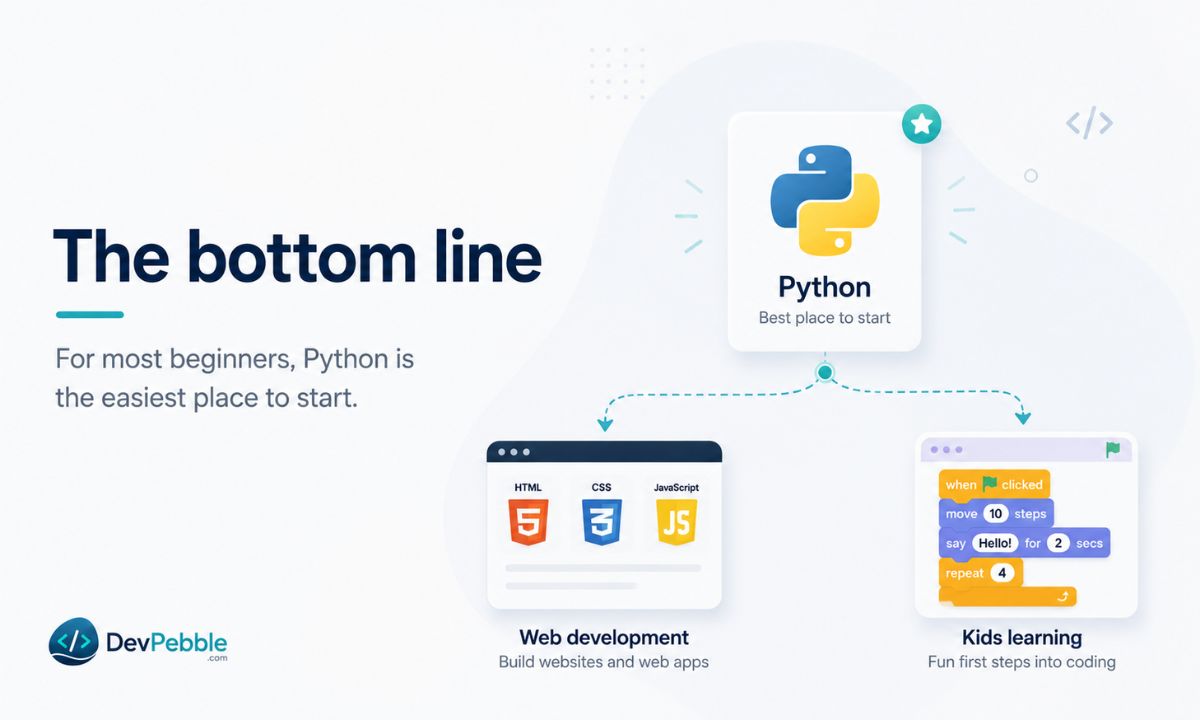
For most beginners, Python is the easiest programming language to start with. Readable syntax, a forgiving learning curve, and a wide range of uses make it the most flexible first choice. Whether you want to automate chores, explore data, or just see how programming works, it gets you there with less friction than almost anything else.
If you're specifically after web development, start with HTML and CSS, then move to JavaScript. Those three are the foundation of the web, and JavaScript is the easiest way into interactive projects. For kids, Scratch is the place to begin, building real concepts without the wall of syntax and making it enjoyable in the process.
There's no single best first language for everyone, but there's almost always a clear best one for you, based on your goal, your age, and what you want to build. So if you're still on the fence, start with Python, write your first line of code today, and branch out from there. Deciding and sticking with it is the only part that truly matters.