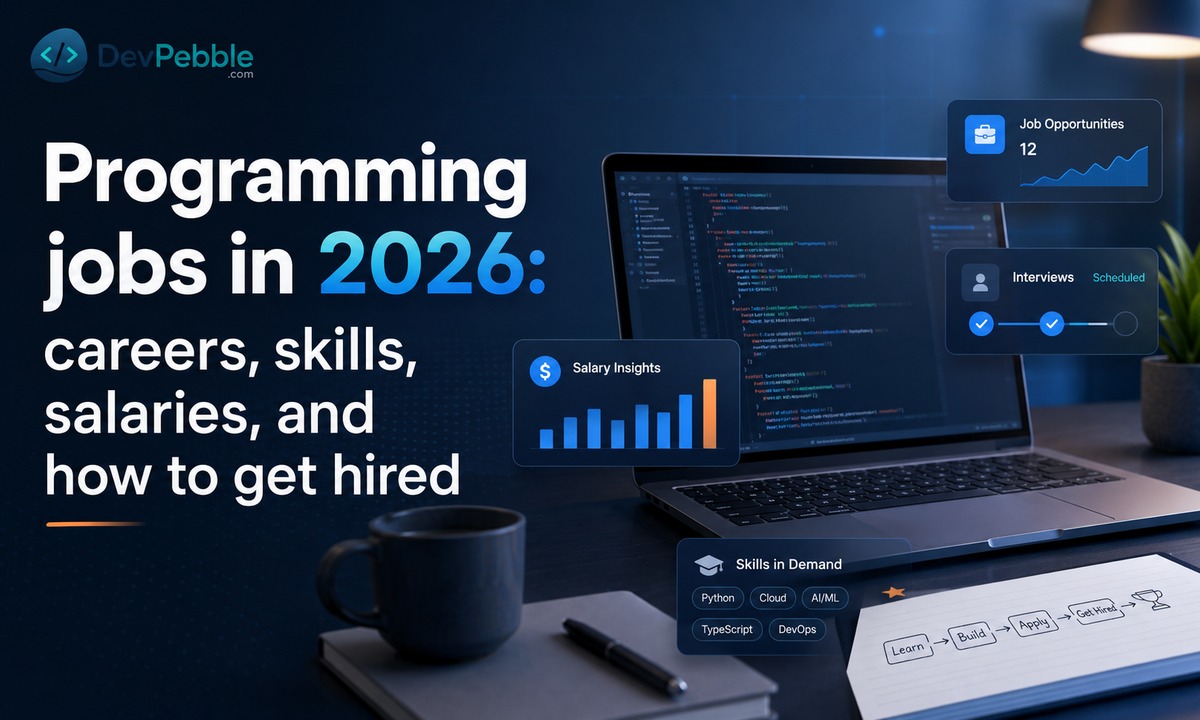
Programming jobs in 2026: careers, skills, salaries, and how to get hired
A 2026 guide to programming jobs — what the roles involve, whether they're still in demand, which pay the most, the skills and languages that get you hired, and how to land your first one with no experience.
On this page⌄
- What are programming jobs?
- Are programming jobs still in demand in 2026?
- Common programming jobs and what they involve
- Entry-level programming jobs for beginners
- Highest-paying programming jobs
- Programming jobs by skill level
- Best programming languages to learn for a job
- Skills that get you hired
- Do you need a degree for programming jobs?
- How to get your first programming job
- Common mistakes beginners make when applying
- Where to find programming jobs
- Remote programming jobs
- Programming jobs vs software engineering jobs
- Are programming jobs a good career choice?
- FAQ
Programming jobs are still worth pursuing in 2026, but the field looks different than it did a few years ago. The easy hiring boom is over. What replaced it is a market that pays well and keeps growing, while asking more of the people who want in.
"Programming jobs" is also a broad search. It can mean software development, web and mobile apps, data work, QA automation, cloud infrastructure, or machine learning. Each is a different day-to-day job with its own skills and pay range. This guide breaks down what these roles involve, whether they are still in demand, which ones pay the most, and how to land your first one with no experience.
What are programming jobs?
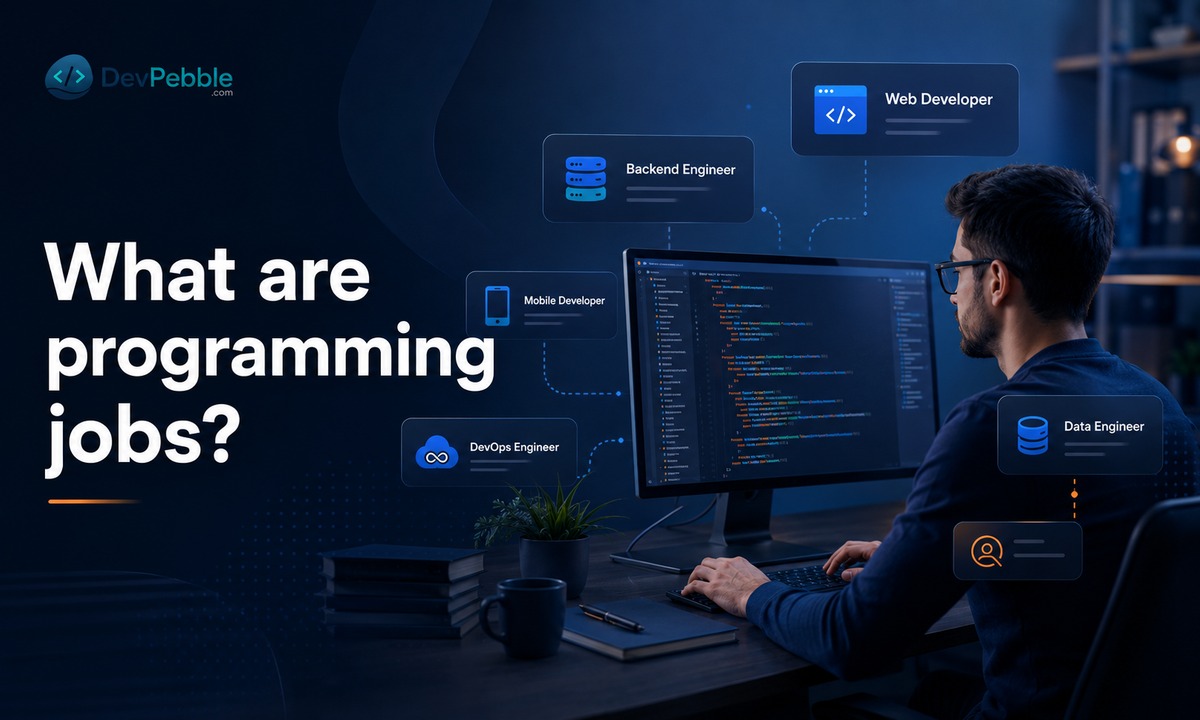
A programming job is any role where writing, testing, or maintaining code is a core part of the work. That covers a lot of ground, from building a mobile app to training a model to keeping servers running.
Programming jobs vs coding jobs vs software development jobs
People use "programming jobs," "coding jobs," and "software development jobs" interchangeably, and that is mostly fine. The small differences: coding usually points to the hands-on writing of code, software development covers the whole process of planning, designing, building, testing, and maintaining software, and programming sits in the middle as the general umbrella term. Titles get used loosely, so read the responsibilities in a listing rather than trusting the label on it.
Why one label covers so many careers
There is no single "programmer" job. A front-end developer builds interfaces, a data scientist works with models and datasets, and a DevOps engineer manages deployment pipelines. All three are programming jobs, but the work barely overlaps. The useful move is to pick the specific path that fits you instead of treating "programmer" as one career.
Are programming jobs still in demand in 2026?
Yes, though the demand has moved. Hiring is more selective than it was during the 2021 to 2022 surge, and it now rewards people who can show real skills over people with the right credentials on paper.
The current job market for programmers
Software is no longer a tech-industry thing. Healthcare, finance, retail, and logistics all run on custom software, which keeps demand steadier than the headlines suggest. The U.S. Bureau of Labor Statistics projects software developer employment to grow about 15 percent between 2024 and 2034, far above the 3 percent average across all occupations, with roughly 129,000 openings a year. Median pay for software developers sat around $133,000 in 2024.
Worth a caveat: the BLS "computer programmer" category, a narrower and older job title, is projected to shrink over the same period. That gap is the whole story in one statistic. Routine coding work is contracting, while broader software roles that mix building, design, and problem-solving are expanding.
Entry-level is where the squeeze is real. Junior and new-graduate postings have fallen sharply from their 2022 peak, and early-career developers have felt most of the recent slowdown. It is still possible to break in, but a beginner needs projects, not just a certificate.
How AI is changing programming work
AI tools changed how programming gets done without replacing the people doing it. They are good at boilerplate, scaffolding, and repetitive refactors, and much weaker at understanding business context, debugging tangled systems, or making architecture calls. One 2025 study by METR even found experienced developers were slower on real tasks when leaning on AI tools, a sign of where it still falls short.
The practical effect is that employers now expect you to use these tools well and still own the reasoning behind the code. Reviewing AI output critically matters more than accepting it. That also shows up in pay: PwC's 2025 Global AI Jobs Barometer found roles asking for AI skills carried a wage premium of around 56 percent, up from 25 percent a year earlier. Skills have not stopped mattering. The bar moved.
Which roles are growing fastest
AI and machine learning engineering is expanding quickest as companies build AI into products. Cloud and DevOps roles are growing because most infrastructure runs in the cloud now. Data engineering and data science keep climbing as companies collect more data than they can use, and QA automation stays steady as testing races to keep up with faster releases. Traditional web and software developer jobs still make up the bulk of the field.
Common programming jobs and what they involve
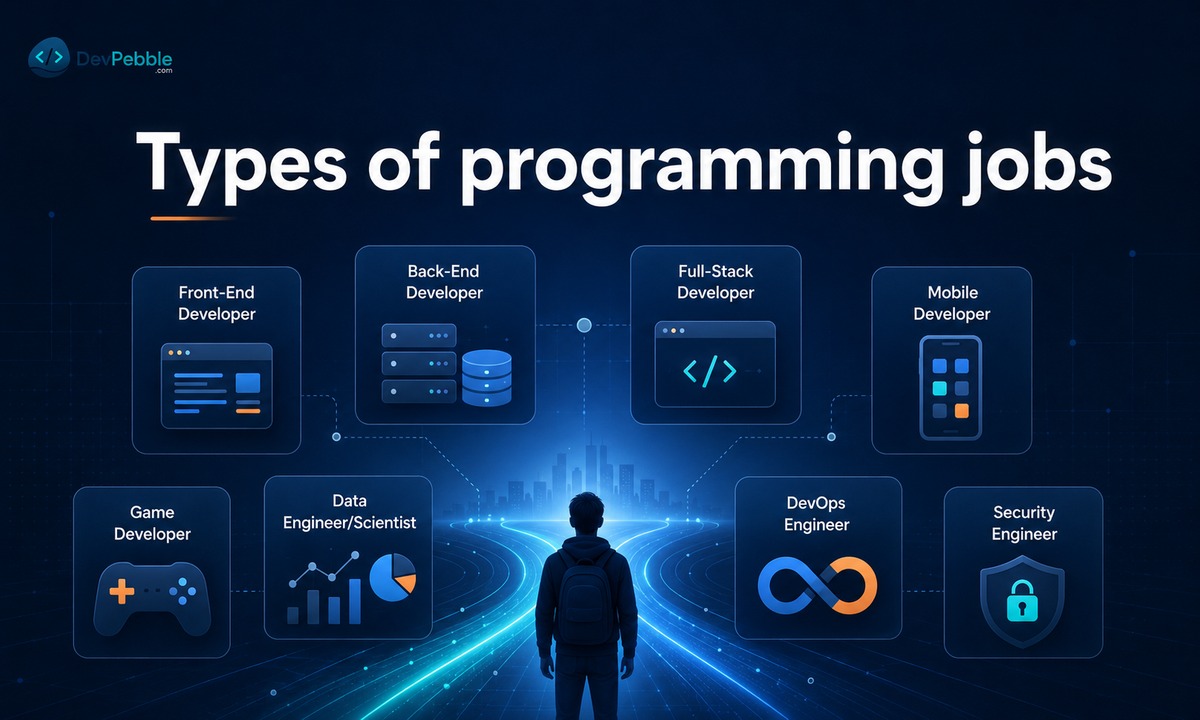
Here are the core roles most people mean when they say programming jobs.
A software developer designs, builds, and maintains applications. It is the most general path and a solid starting point, since the skills carry over everywhere. A web developer builds and maintains websites and web apps, usually mixing front-end and back-end work, and remains one of the more accessible entries. A mobile app developer builds for iOS and Android using languages like Swift or Kotlin.
Front-end developers handle what users see and click, working in HTML, CSS, and JavaScript frameworks. Back-end developers work server-side on databases, APIs, and the logic behind the scenes. Full-stack developers do both, which suits people who like variety. A data scientist analyzes data and builds models to guide decisions, making it one of the more math-heavy roles. A QA automation engineer writes code that tests software automatically before release. A DevOps engineer handles the systems that build, deploy, and monitor software. And an AI or machine learning engineer builds and trains the models behind recommendations, predictions, and automation, currently one of the fastest-growing paths of all.
Entry-level programming jobs for beginners
Not every role needs years of experience. A few are built for people starting out.
Junior developer roles, in both software and web, let you write code under the guidance of senior teammates on smaller features and defined bug fixes. WordPress developers customize themes and plugins with PHP and JavaScript, and because so many businesses run on WordPress, this stays a steady source of freelance and entry-level coding jobs. Technical support engineers troubleshoot user issues using logs and simple scripts, which builds the debugging instincts employers value.
QA tester is another common entry point, though with a caveat. Manual testing is exactly the kind of repetitive work automation is eating into, so treat it as a stepping stone toward QA automation rather than a destination. Internships and apprenticeships remain one of the fastest ways in, since they give you supervised project experience and often turn into a full-time offer.
Highest-paying programming jobs
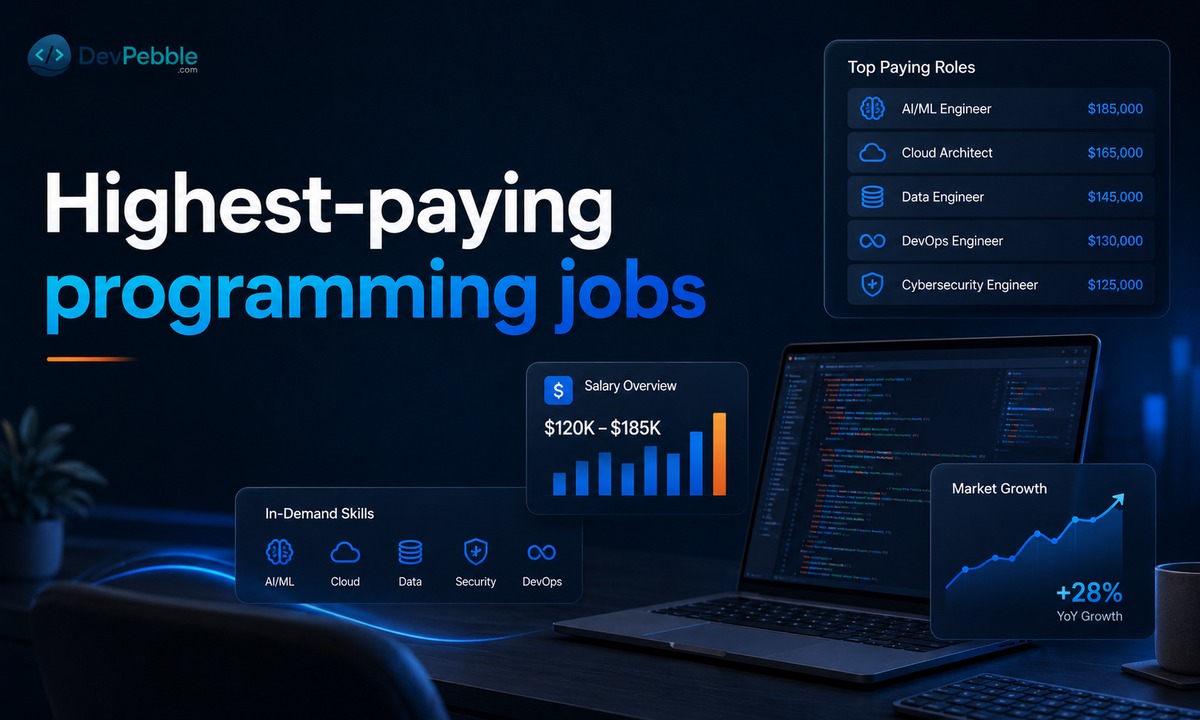
Higher pay tracks higher expectations: deeper experience, stronger problem-solving, and specialized knowledge in cloud, data, security, or AI.
AI and machine learning engineers sit near the top right now, largely because demand outruns the supply of qualified people. In the U.S., mid-level machine learning salaries commonly land in the $120,000 to $200,000 range, and senior roles at major labs climb well beyond that once equity is counted. Cloud software engineers who build on AWS, Azure, or Google Cloud stay in demand for the same reason companies cannot operate without cloud infrastructure. Data engineers, who build the pipelines feeding everything from reporting to AI, are paid well because that plumbing is essential. Security engineers, who write code and design systems that resist attacks, are consistently among the better-paid paths. Senior software engineers, who take on system design and mentorship, reach high salaries through years of experience rather than any single skill.
Programming jobs by skill level
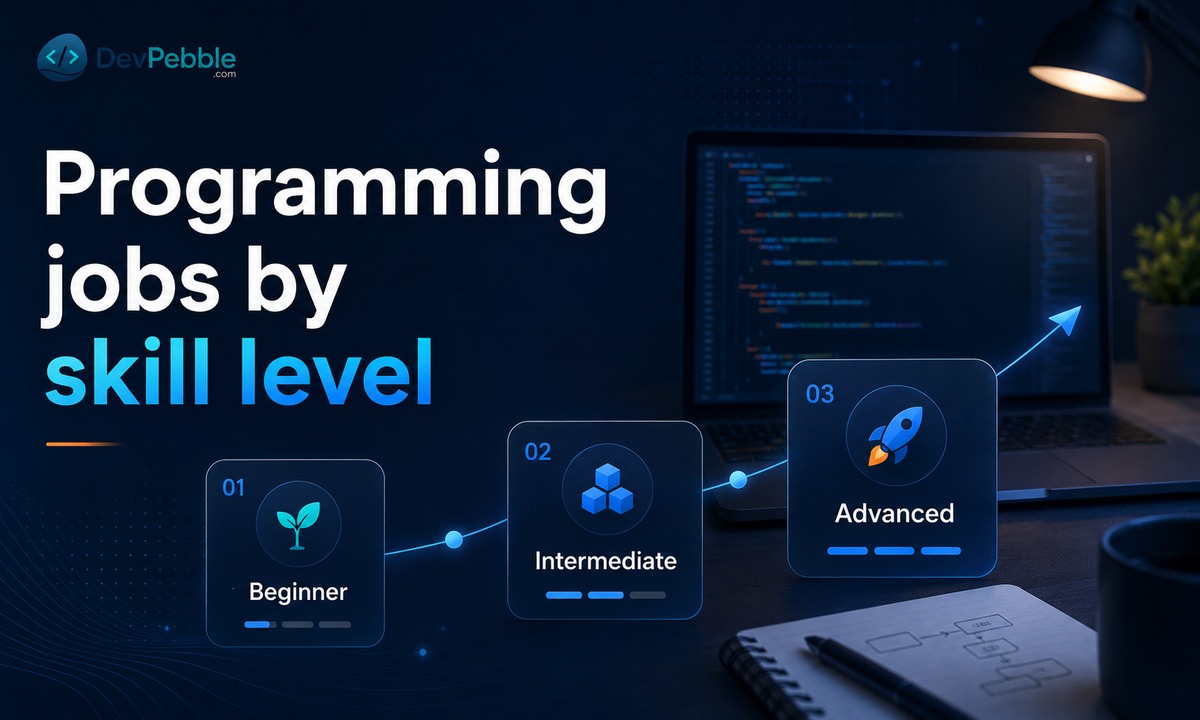
Most roles fall into three tiers, and knowing where you sit helps you aim.
Beginner-friendly roles like junior developer, QA tester, and WordPress developer expect foundational knowledge, a few real projects, and a willingness to learn. Intermediate roles, including front-end, back-end, and full-stack developer, usually want one to three years of experience and the ability to own features independently. Advanced roles like senior engineer, DevOps, AI engineer, and security engineer expect deep technical knowledge, system design skill, and sound judgment with little oversight.
Best programming languages to learn for a job
There is no single best language. The right one depends on the path you are chasing.
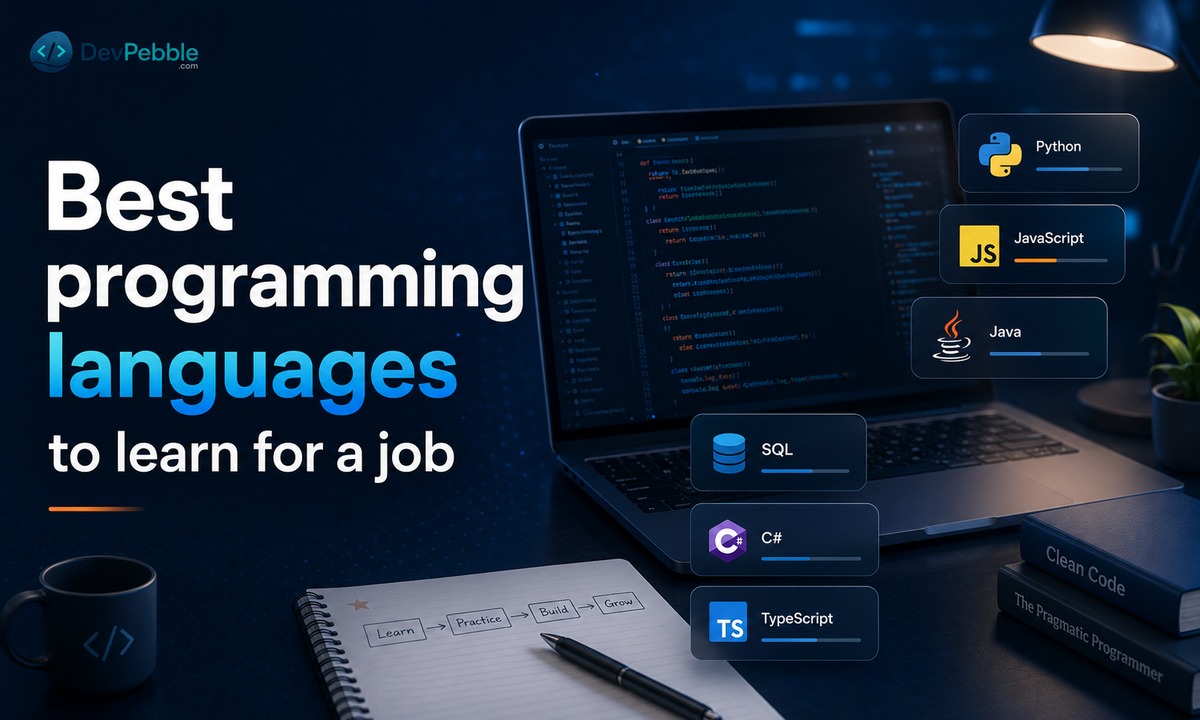
Python is a strong first choice for automation, back-end, data, and AI work, and its readable syntax opens several doors at once. JavaScript powers interactive websites and is essential for front-end work, making it the better start if web development is the goal. Java stays common in enterprise, finance, and large-scale systems that value stability. SQL shows up in nearly every data and back-end role, so even non-specialists need working knowledge of it. C# is widely used in enterprise apps and in game development through Unity. TypeScript, which adds type safety to JavaScript, is increasingly expected on larger professional teams.
Skills that get you hired

Knowing a language is table stakes. Employers look for more.
They want clean, working code and a grasp of data structures, but they care more about problem-solving, the ability to break a messy problem into logical pieces. Git and version control are close to mandatory now, so learn to commit, branch, and keep a tidy GitHub history. Most applications store data and talk to other systems, so basic database design and a working understanding of APIs go a long way. Being able to debug calmly under pressure often beats writing code fast. And because programming rarely happens in isolation, explaining a technical decision clearly and working with non-technical teammates is a real hiring factor.
Do you need a degree for programming jobs?
Short answer: no, but it depends where you aim.
A computer science degree, a bootcamp, and a self-taught path can all lead to the same career, with different trade-offs in time and cost. A degree helps at large companies, government roles, and positions that lean on deep theory like advanced algorithms, and it can get you past automated resume filters. For a lot of roles, though, especially at startups and smaller companies, a strong portfolio and demonstrated problem-solving carry more weight than the line on your resume. Employers increasingly care about what you can build.
How to get your first programming job
If you are starting from zero, the path is fairly consistent.
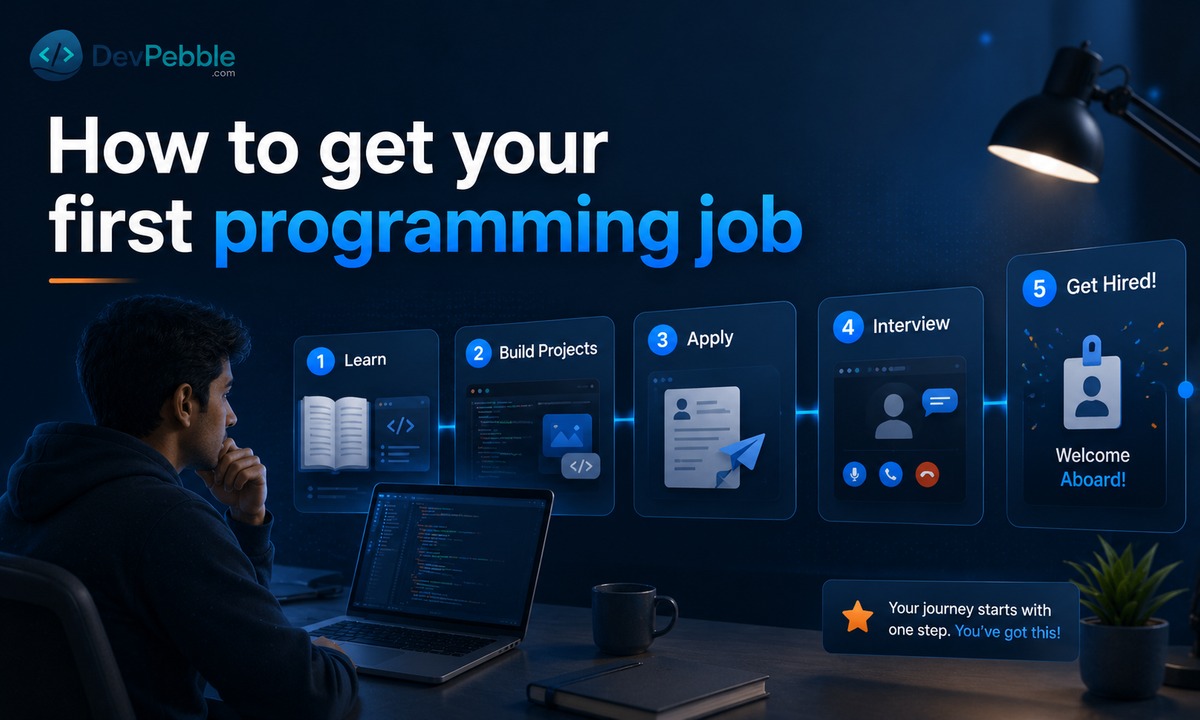
Pick one direction first, like web development or data, so your learning stays focused. Go deep on one language that fits that path before branching out. Then turn what you learn into three to five real projects that solve actual problems, not tutorial clones. Round out the basics with Git, databases, and APIs, since nearly every job assumes them. Keep a clean GitHub profile with real commits and clear documentation, because when you lack work history, that is what employers evaluate. Practice coding challenges and mock interviews so you can explain your reasoning out loud, which is often what interviews test. Then apply strategically: target junior roles, internships, apprenticeships, and contract work rather than waiting for a perfect listing, and tailor your resume to each role instead of sending the same one everywhere.
Common mistakes beginners make when applying
A few patterns quietly sink applications.
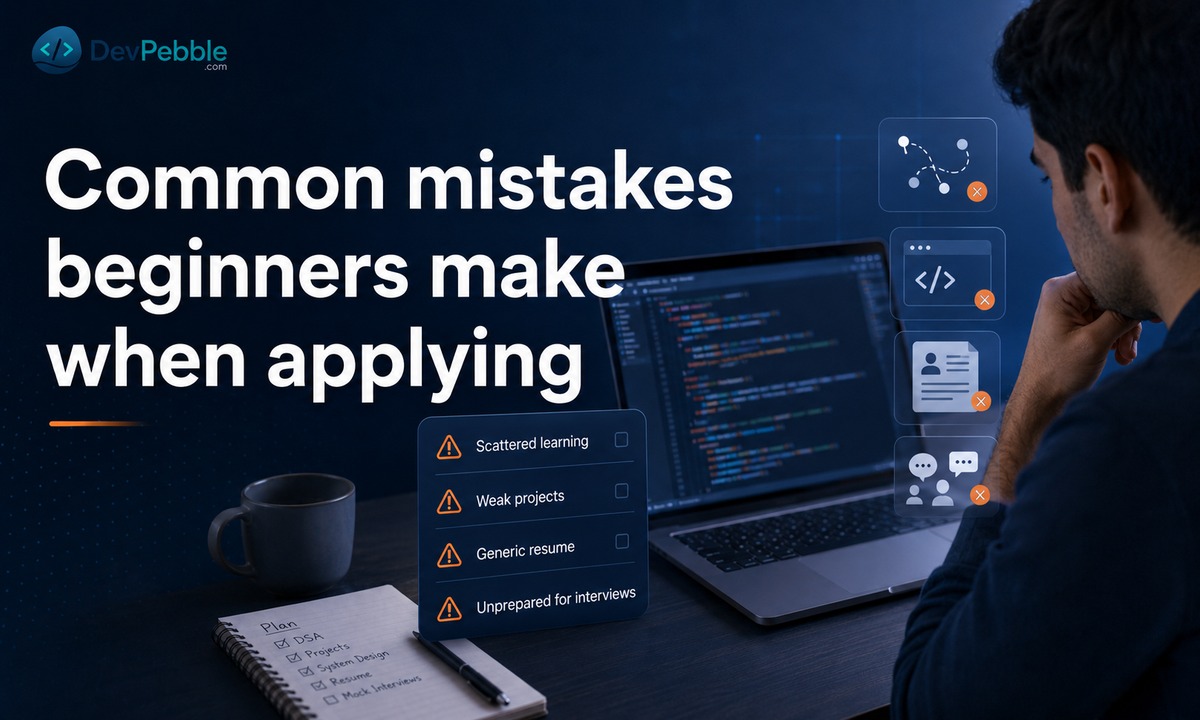
Learning several languages at once slows everyone down, so go deep on one and build something real. Applying with no projects gives an employer nothing to judge, and a couple of solid builds say more than a stack of finished courses. Skipping problem-solving practice makes technical interviews brutal, since most companies test logic, not memorized syntax. Sending an identical resume everywhere rarely stands out. And plenty of capable people freeze in interviews, so rehearse talking through your thinking, not just landing the answer.
Where to find programming jobs
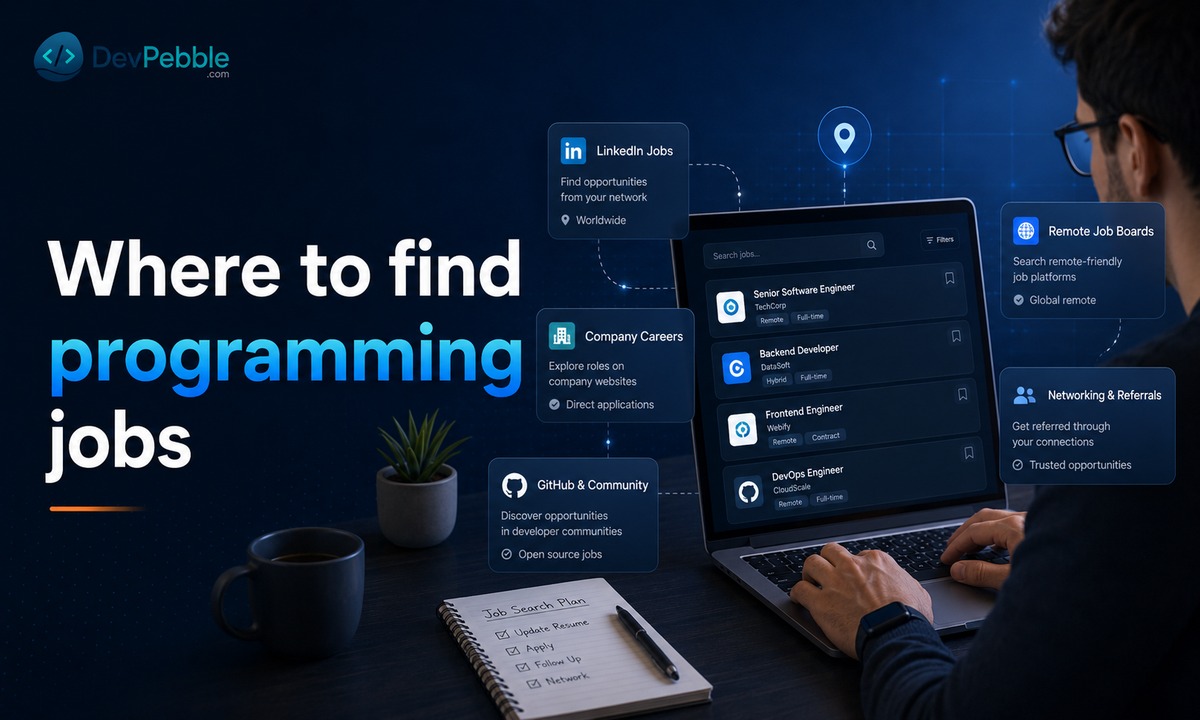
A few channels work better than the rest. General boards like Indeed and LinkedIn Jobs carry the highest volume, while niche boards like Dice or We Work Remotely narrow the field. Applying directly through a company's careers page can catch roles before they hit the boards. LinkedIn is worth using beyond listings, since posting about your projects gets you noticed, and many roles come through referrals rather than cold applications. Active participation in GitHub and developer communities surfaces leads that never get posted publicly. Freelance platforms like Upwork and Toptal offer smaller contract work that builds experience while you search, and remote-focused boards like Remote OK help if location flexibility is your priority.
Remote programming jobs
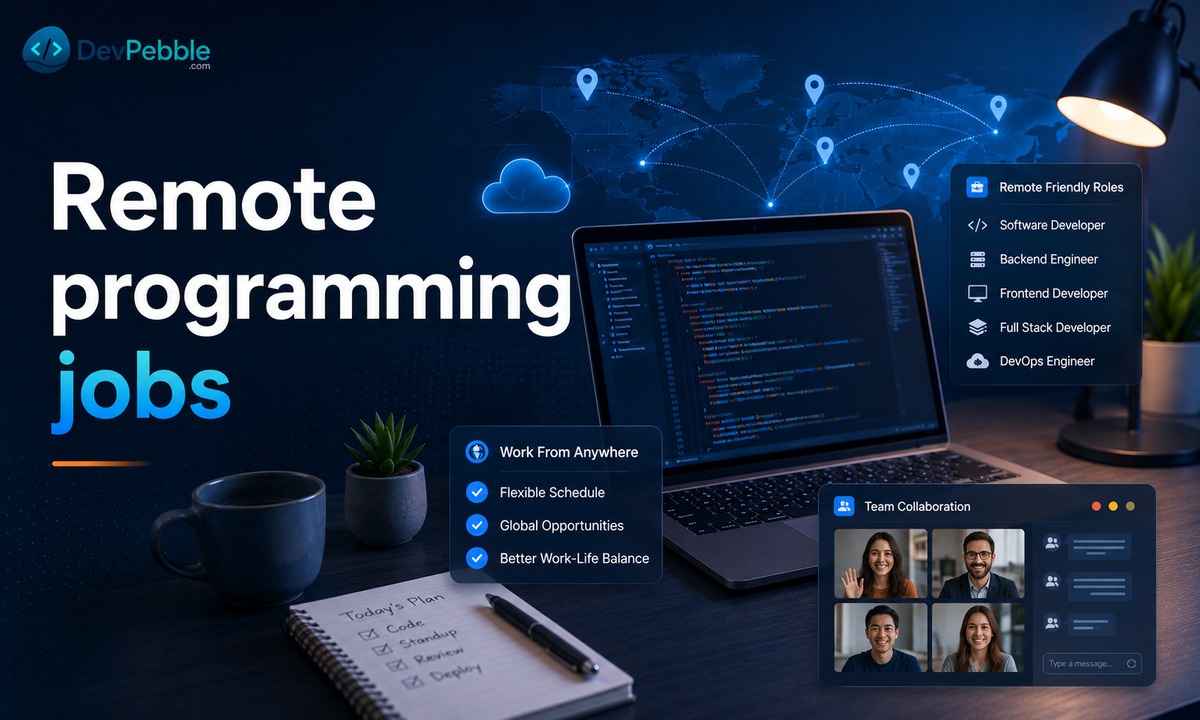
Remote work is common in this field, but competition runs higher because the applicant pool is not limited by geography. Web development, back-end work, and QA automation tend to be the most remote-friendly, since the tasks are independent and easy to review asynchronously. Remote roles reward strong written communication, self-management, and clear documentation. One thing to watch: remote pay is increasingly benchmarked to regional averages rather than the old big-city premiums, so a remote offer may pay less than an in-office one in a major hub. Be cautious of listings with vague company details, upfront requests for financial information, or offers that skip technical interviews, since real employers verify skills first.
Programming jobs vs software engineering jobs
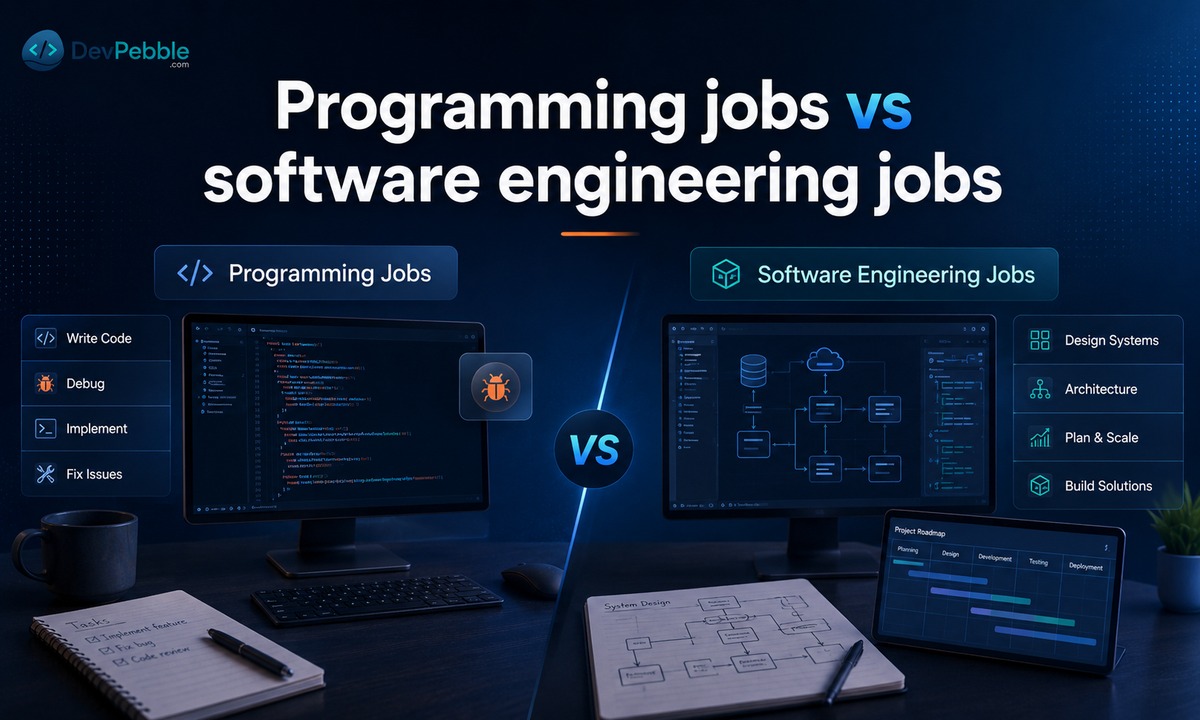
The titles blur, but there is a rough distinction. Programming jobs tend to focus on writing and maintaining code, while software engineering jobs lean more toward system design and long-term planning. Neither is strictly better for beginners, and most people start with programming-focused work and grow into broader engineering responsibilities. Because companies use "programmer," "developer," and "software engineer" inconsistently, the job description tells you more than the title does.
Are programming jobs a good career choice?

Programming jobs are still a strong bet in 2026 for anyone who goes in with a plan. The market changed. Hiring is pickier, AI shifted what employers expect, and the easy entry-level roles thinned out. But the underlying demand for people who can build and maintain software has not faded, and the long-term numbers point up.
The people who make it in tend to do the same handful of things: they pick one path instead of learning everything at once, they build real projects instead of only finishing courses, they learn the skills employers test for, and they keep applying instead of waiting for perfect conditions. Whichever role you want, it comes down to focused effort rather than shortcuts.