Best programming courses in Atlanta: a 2026 guide for beginners and career changers
The best programming courses in Atlanta for 2026, compared. See how bootcamps, technical colleges, university certificates, and tuition-free programs stack up on curriculum, cost, and career support so you can match a course to your goal.
On this page⌄
- Why Atlanta is a good place to learn to code
- How to judge a programming course before you enroll
- The programming courses worth knowing in Atlanta
- Which programming language should you learn first
- Matching a course to your goal
- Online vs in-person: which format fits you
- Green flags and red flags before you pay
- What programming courses in Atlanta cost
- A simple plan to get started
- Bottom line
- FAQ
Atlanta has turned into one of the busier tech markets in the Southeast, and the demand for developers, data analysts, and IT staff keeps pulling people toward coding. If you're trying to figure out which of the best programming courses in Atlanta actually fit your situation, the hard part isn't finding options. It's sorting through a mess of bootcamps, technical colleges, university certificates, tuition-free programs, and online classes that all promise to get you job-ready.
This guide is built to help you narrow that down. It covers what to look for before you enroll, the specific Atlanta providers worth knowing, which language to start with, and roughly what all of it costs, so you can match a course to your goal, budget, and schedule instead of guessing.
Why Atlanta is a good place to learn to code
Atlanta pairs a low cost of living with a genuine cluster of tech employers. Companies like Delta, The Home Depot, and Mailchimp sit alongside a steady flow of startups, and the metro consistently ranks among the top U.S. markets for software developer jobs. Every industry here hires tech people now, from healthcare and logistics to finance and media, which means your options for a first role aren't limited to pure software shops. That breadth is part of why a coding class in Atlanta can pay off, but only if you pick one that teaches skills employers are hiring for.
How to judge a programming course before you enroll
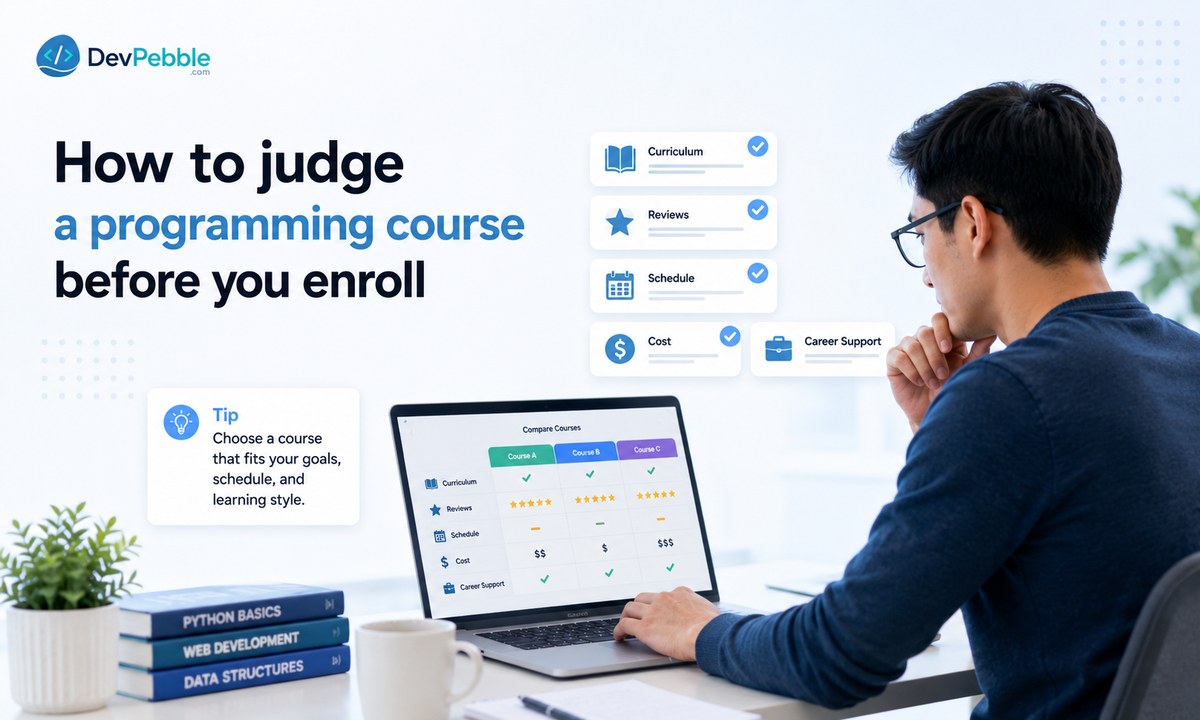
The "best" course depends on what you want out of it. Still, a few things separate a strong program from a weak one no matter where you're starting.
Curriculum and the languages it covers
Look at what you'll actually build. Some courses go narrow on one language like Python; others cover a full stack of front-end, back-end, databases, and version control. For web development you want HTML, CSS, and JavaScript at minimum, plus a framework like React. For data or backend work, a Python-heavy course focused on logic and data structures will serve you better. Either way, check how current the material is. A curriculum that hasn't been refreshed in a few years may still be teaching tools the industry has moved past.
How beginner-friendly it actually is
Don't trust the "beginner-friendly" label on its own. Some bootcamps expect you to finish pre-work in HTML, CSS, or basic programming logic before day one. Others start from zero. Ask directly whether there's a prerequisite or a pre-course assessment, and how much help is available when you get stuck early. Mentorship, office hours, and small cohorts make a real difference for people who've never written code.
Career support and real projects
If the goal is a job, career support matters as much as the technical content. You want a program that has you building working projects you can walk through in an interview rather than quizzes. Ask specific questions too: how many one-on-one coaching sessions are included, is there a dedicated careers team or just a resource library, and what does support look like after you graduate. Vague "career support included" language isn't an answer. If a program can't spell it out in a sentence, treat that as a sign.
Cost, schedule, and format
For working adults, cost and format usually decide it. Prices range from free workforce programs to bootcamps in the mid five figures. Be honest about your week before you commit. A full-time immersive program moves fast and is tough to combine with a job, while part-time or self-paced options stretch the timeline but fit around one. Format matters too, since in-person, online, and hybrid setups give you different levels of direct instructor time.
The programming courses worth knowing in Atlanta
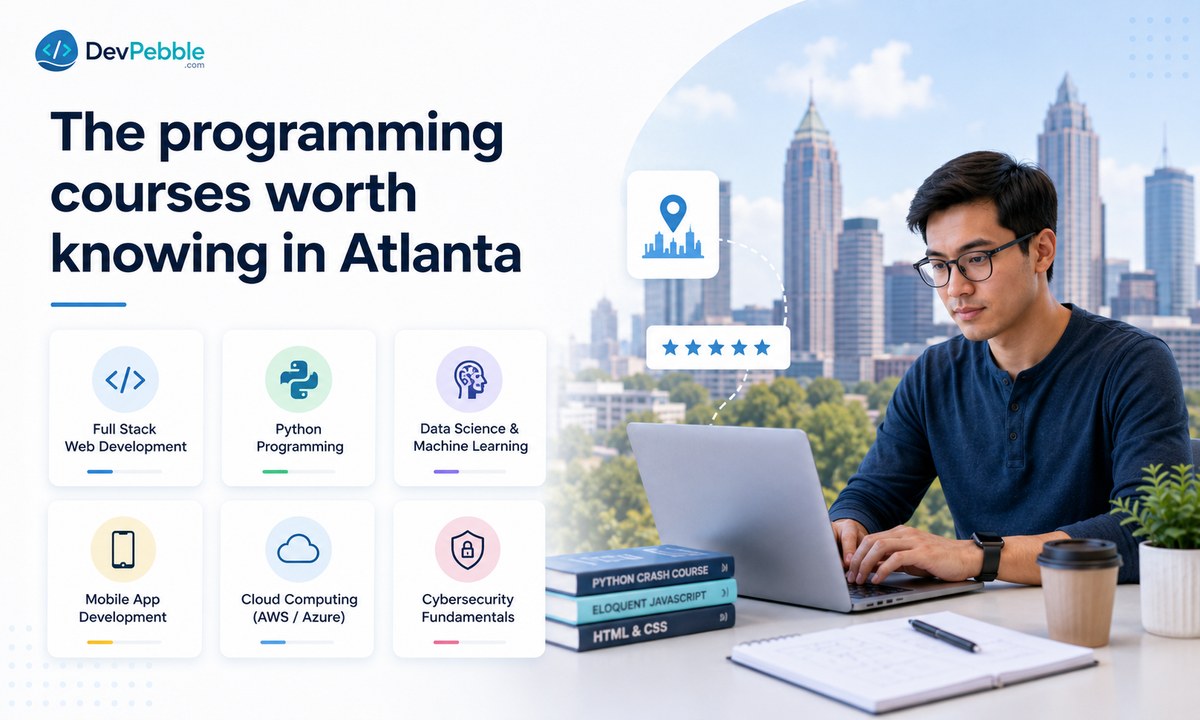
Atlanta's options fall into a few buckets: university and professional-education certificates, credit-based technical college programs, private bootcamps, shorter workshop-style classes, tuition-free workforce training, and self-paced online platforms. Here's how the better-known providers in each stack up. Program details and pricing change often, so confirm specifics on each provider's official page before you apply.
Georgia Tech FlexStack and online courses
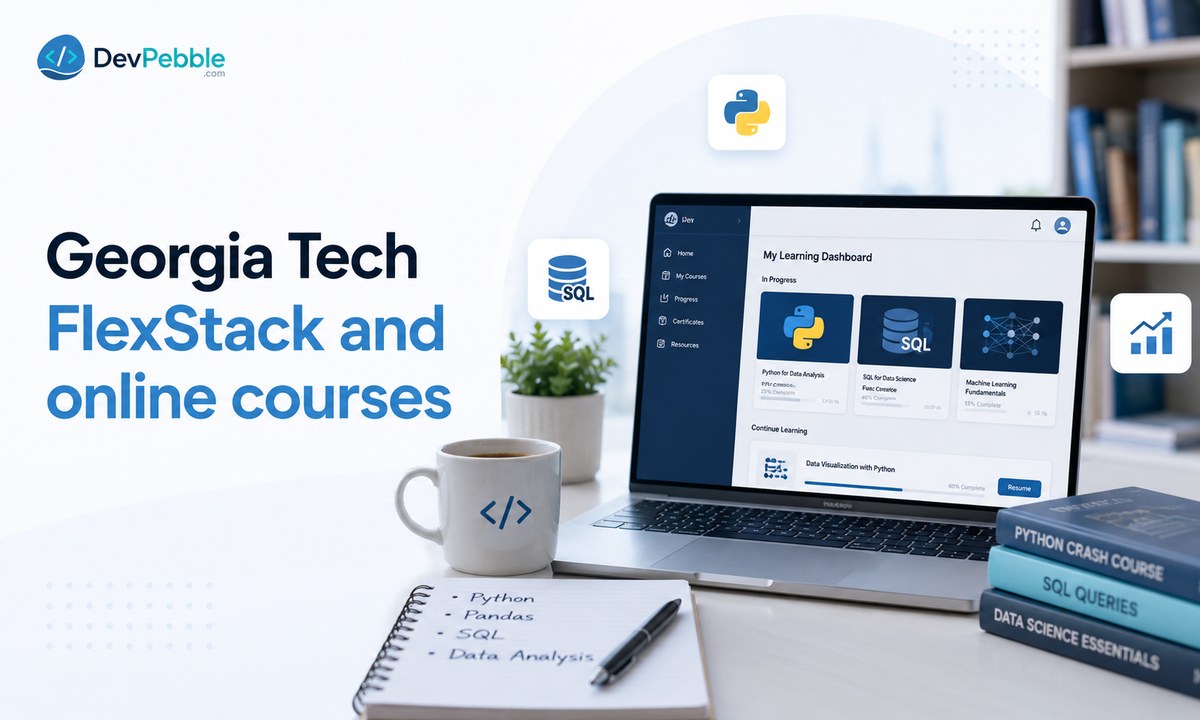
FlexStack is Georgia Tech Professional Education's answer to the coding bootcamp: a set of live, online certificates you stack rather than one long program. According to Georgia Tech, you earn the full FlexStack credential by completing three modular certificates, chosen from options like Python Fundamentals, SQL Fundamentals, Python Data Modeling and Visualization, and a newer Python AI Principles track. The Python Fundamentals certificate is three courses taken in sequence over about nine weeks and needs no prior experience, though later certificates build on earlier skills (SQL Fundamentals, for instance, expects some Python first). You get small-group instruction and a dedicated advisor, which suits people who want to move steadily and add credentials one at a time instead of committing to a single large bootcamp cost. Georgia Tech also runs foundational computer science and Python courses through platforms like edX, which lean more self-paced and academic if you'd rather explore a topic before committing.
Atlanta Technical College
For a traditional, credit-based route, Atlanta Technical College offers programming credentials through its Computer Information Systems department: a Foundations of Computer Programming certificate, a Computer Programming Diploma, and a Computer Programming Associate of Applied Science (AAS) degree, plus language-specific certificates in Java and C++. You can start with a short certificate and continue toward a diploma or degree. Because it's a public technical college, coursework follows a semester calendar rather than an accelerated sprint. The trade-off is pace, since a diploma or AAS takes longer than a bootcamp, but it's often the most affordable path and comes with a recognized academic credential and a broader foundation. It can also be a good fit for younger students combining general education with technical coursework.
General Assembly and private bootcamps
General Assembly is the familiar name for career changers who want an intensive, project-heavy program. Its Software Engineering Bootcamp runs roughly 12 weeks full-time or 24 weeks part-time, teaching JavaScript, Python, and full-stack development with career coaching built in. Worth knowing: General Assembly has been shifting toward stackable, AI-focused course pathways rather than one fixed bootcamp, so the exact format is in flux. Most Atlanta-area bootcamps, General Assembly included, offer online or hybrid delivery on top of any in-person option. Full-time formats finish faster but are hard to pair with a job; part-time spreads the same content over evenings and weekends. Whatever the provider, ask exactly which tools and versions are taught before you sign up.
Per Scholas: tuition-free training
Per Scholas runs no-cost tech training in Atlanta, funded by grants, with a campus in Peachtree Center. Its Software Engineer track covers HTML, CSS, JavaScript, React, Node.js, Express, and MongoDB, and it also offers IT support, cybersecurity, and data programs. Courses run full-time, Monday through Friday, for roughly 12 to 16 weeks, and there's no tuition and no income-share repayment. The catch is eligibility: you generally need to live within commutable distance of the campus, meet income requirements, and clear an admissions process. Free doesn't mean easy to get into, but for the right person it removes the financial barrier entirely and includes career coaching and an employer network.
Noble Desktop and short workshops
Noble Desktop is a New York-based provider that offers live online classes accessible from Atlanta, along with some in-person sessions. Its lineup leans toward shorter, focused options: multi-day Python bootcamps, a Full-Stack Web Development Certificate, and a longer Software Engineering Certificate, most with a free retake within a year. This is a reasonable choice if you want to learn one language or skill without signing up for a full career-change program, or if you want to test whether coding clicks before spending more.
Which programming language should you learn first
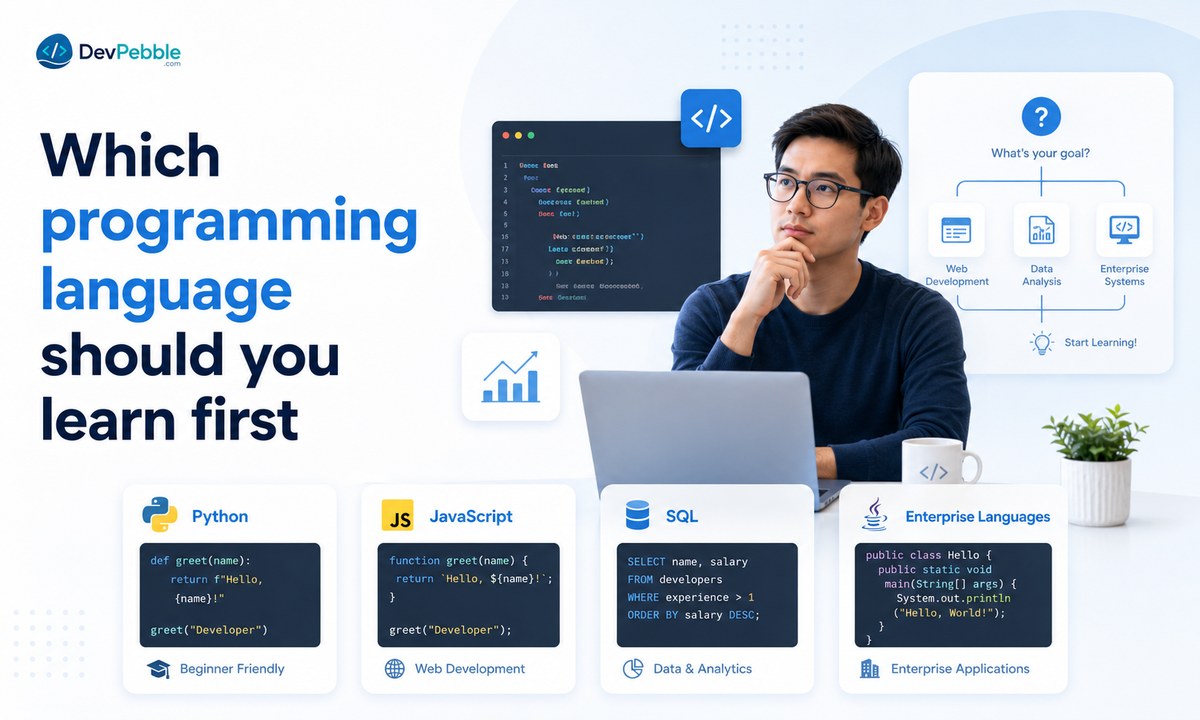
The right first language mostly comes down to the kind of work you're aiming for.
Python
Python is a common starting point because the syntax reads cleanly for beginners, and it shows up everywhere in data analysis, automation, and AI work. If you're not sure which direction you want yet, Python is a low-risk place to begin. Local Python classes in Atlanta, including Georgia Tech's FlexStack Python Fundamentals certificate, tend to spend real time on fundamentals before piling on tools.
JavaScript
If you want to build websites or web apps, JavaScript is close to non-negotiable. It runs in the browser and underpins most front-end frameworks, React included, so it pairs naturally with HTML and CSS in any web development track.
SQL
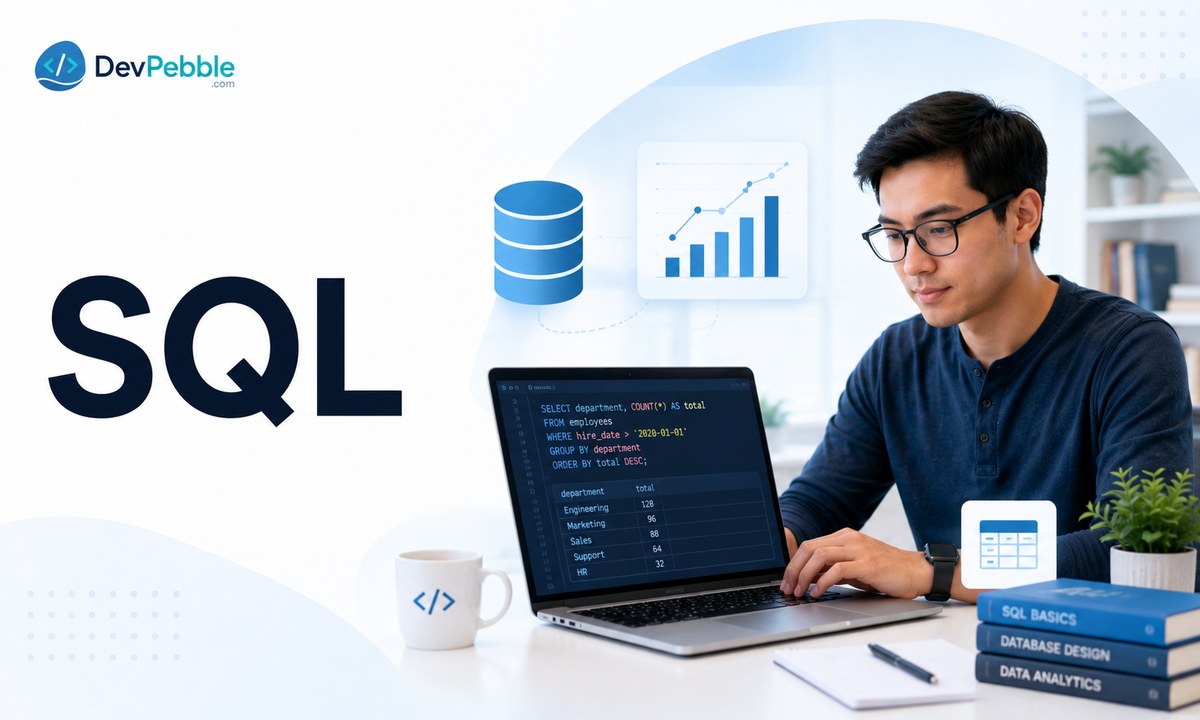
SQL is rarely someone's only language, but it's hard to avoid once you're touching data. Backend developers, data analysts, and even some product roles use it to query and manage databases, which is why so many software development courses fold it in alongside Python or JavaScript.
Java, C#, and enterprise languages
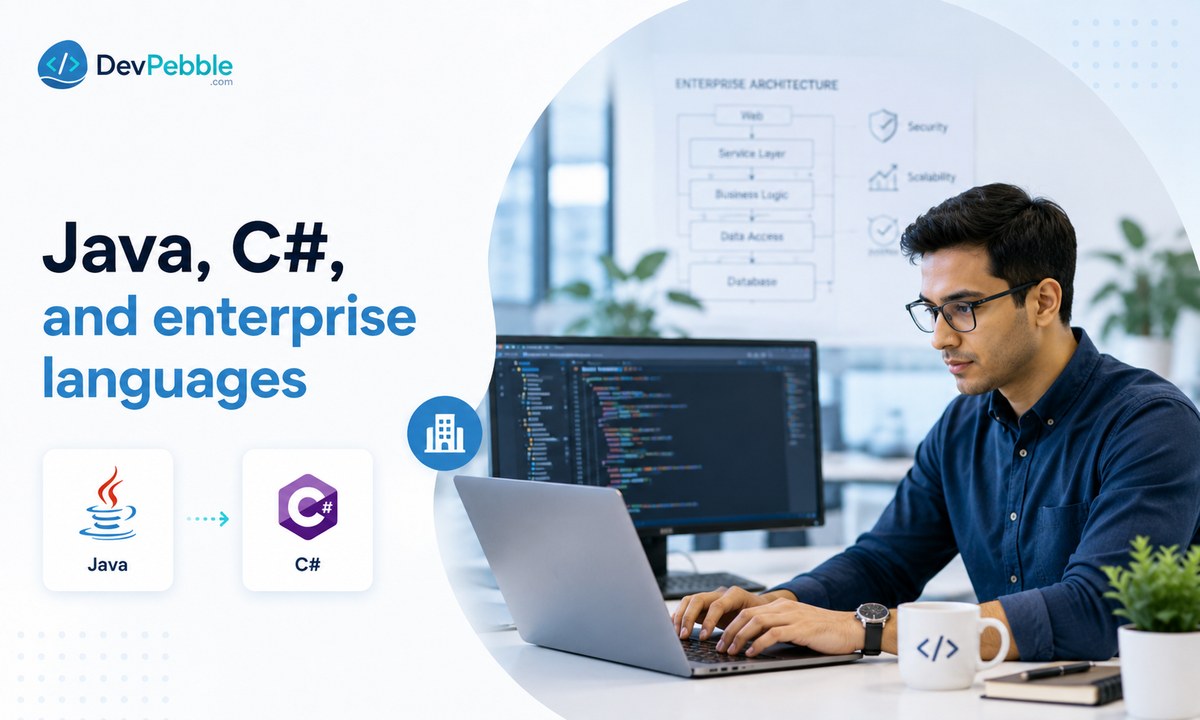
Java and C# show up more in corporate and enterprise software. If you already know you want a traditional company environment rather than a startup web role, dedicated tracks (like the Java and C++ certificates at Atlanta Technical College) can point you there.
Matching a course to your goal
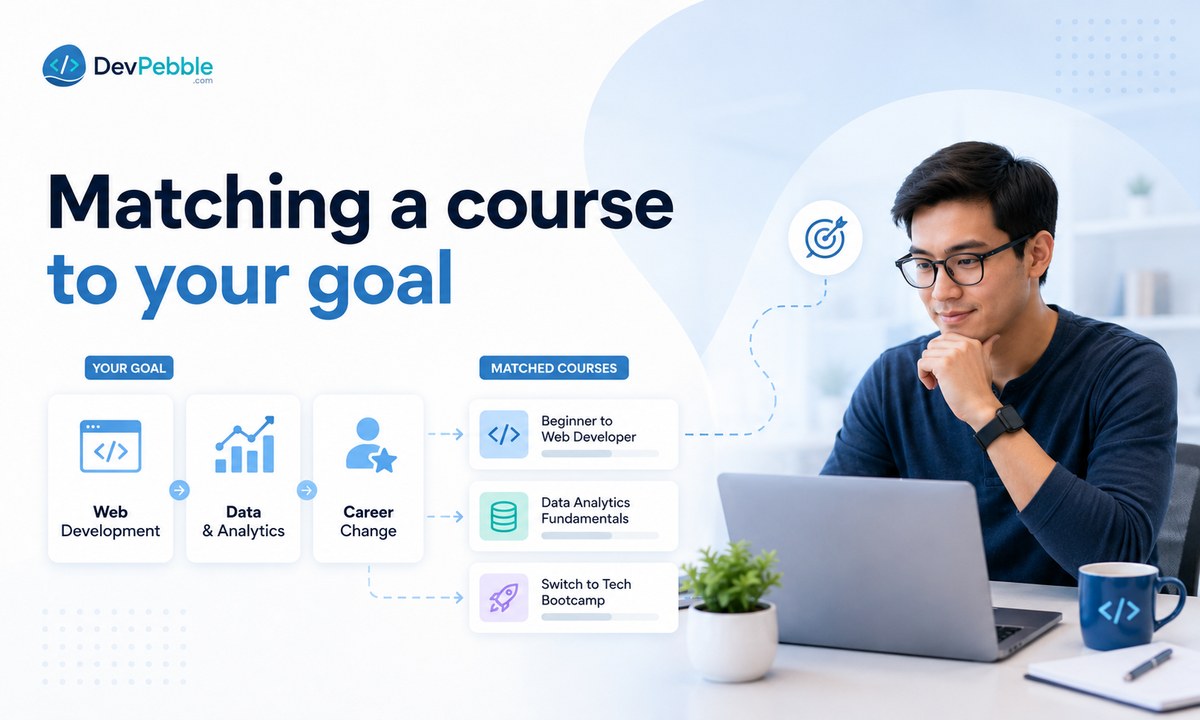
It helps to work backward from where you want to land. For web development, look for a program covering HTML, CSS, JavaScript, React, Git, and some deployment; a web development bootcamp or a broader software development track covers that combination most directly. For a general software engineering path, you want data structures, algorithms, and backend architecture on top of web basics, which is where a longer bootcamp or a structured Georgia Tech certificate fits. For data analytics or data science, prioritize Python and SQL plus some data visualization, exactly what FlexStack's data-focused certificates are built around. For AI or automation, a solid Python base is the common thread before you specialize. And if security interests you more than pure software, note that providers like Atlanta Technical College and Per Scholas also run cybersecurity certificates that pair well with programming skills.
Your life stage matters as much as your goal. Complete beginners do well starting small with a short course to confirm they enjoy the work. Working professionals should prioritize part-time or online formats over anything assuming full-time availability. Career changers usually get the most from a full-time or part-time bootcamp with strong career services, as long as the time and money are realistic. And if you're building your own products, focus on practical web and backend skills that let you ship ideas fast.
Online vs in-person: which format fits you

Neither format wins on its own; it comes down to how you learn. Online courses suit unpredictable schedules, existing jobs, and family duties, and they open doors to programs beyond your immediate area. In-person or hybrid classes help if you focus better with face-to-face accountability or want easier networking. The honest test is your own track record. If you've abandoned self-paced courses before, a structured live format, even a live online one, will probably serve you better than a fully self-directed program.
Green flags and red flags before you pay
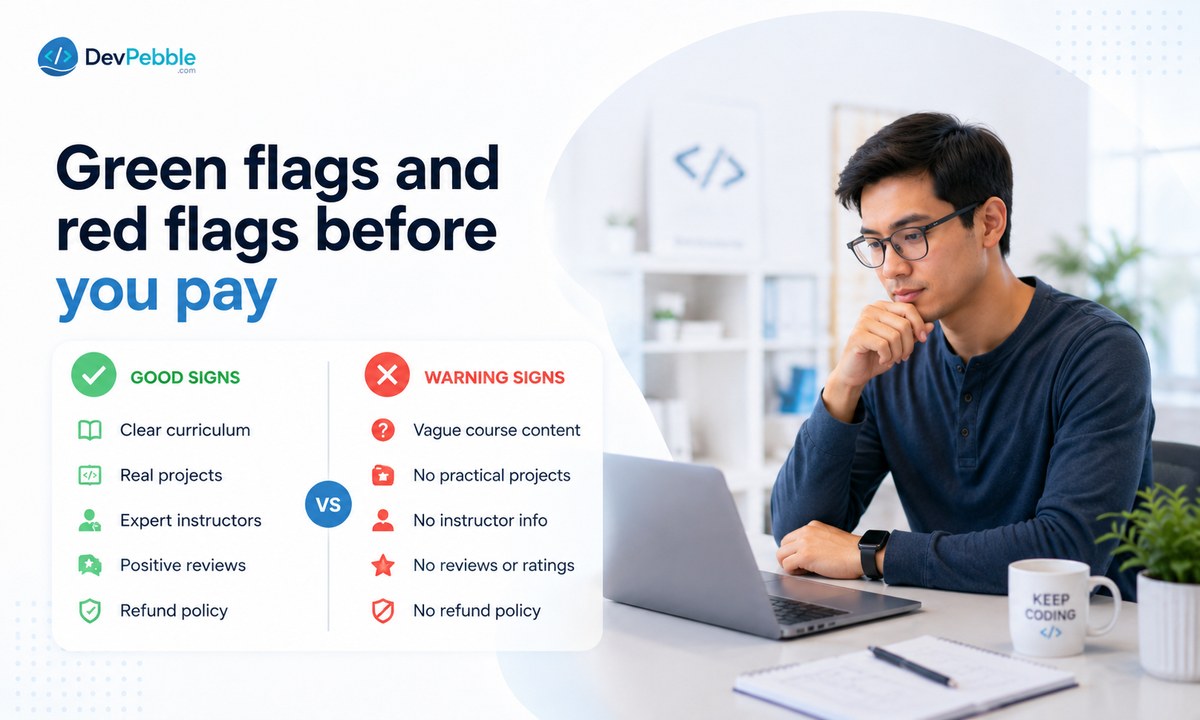
A strong program covers coding fundamentals (logic, variables, functions, loops, data structures) rather than syntax memorization, has you build real portfolio projects, and teaches the practical layer: Git and GitHub, working with APIs, basic databases and SQL, and deploying something so it's actually live. On the career side, it should offer concrete resume reviews, mock interviews, and technical interview practice.
The warning signs are the mirror image. Be cautious of a program with no real projects, vague or unverifiable job-placement claims, a curriculum that hasn't been updated in years, little instructor or mentor access, or a high price tag attached to fuzzy "support." Learning to code means getting stuck constantly, so thin mentorship is a bigger problem than it sounds.
What programming courses in Atlanta cost
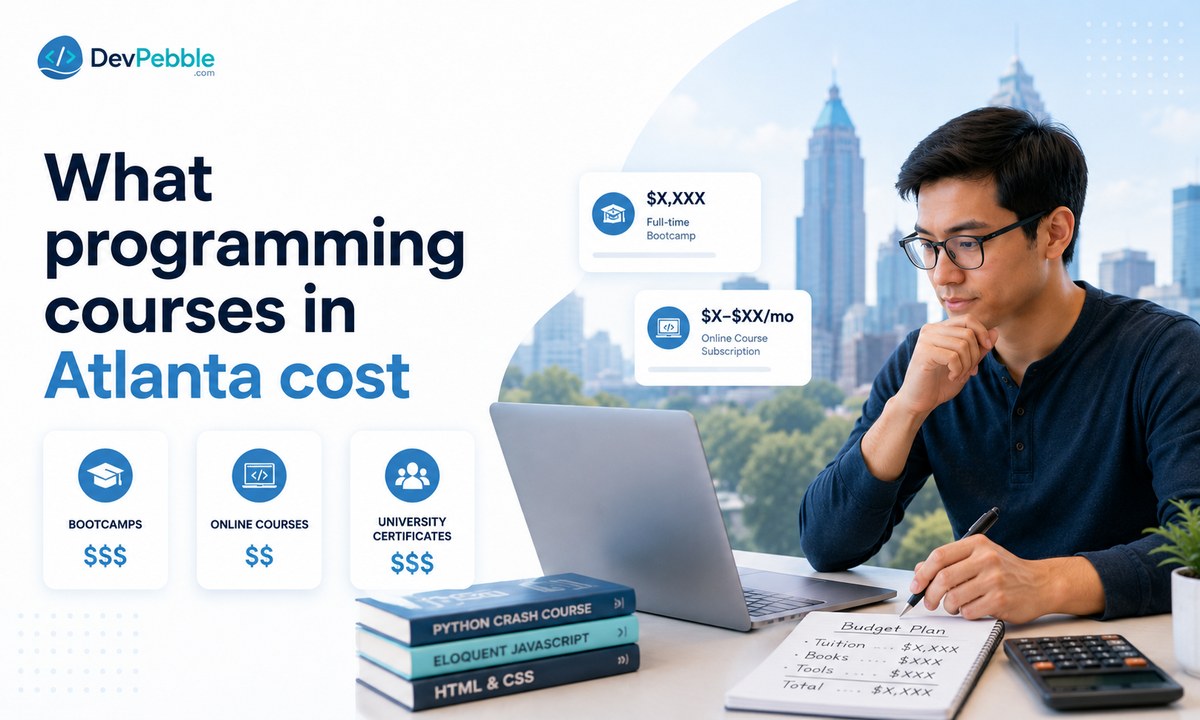
Cost depends heavily on the type of program, so treat any number online as a rough anchor and check the provider's current tuition page. Tuition-free workforce programs like Per Scholas cover training entirely through grants, though they carry eligibility and application requirements. Shorter certificates and workshops, like individual FlexStack courses or Noble Desktop classes, cost less than a full bootcamp because they cover a narrower set of skills. Private bootcamps are usually the most expensive upfront, often landing in the mid five figures, though many offer payment plans, deferred tuition, or scholarships that change the real number. Rather than comparing headline prices, compare what's included: mentorship, career services, and project reviews relative to cost.
Technical college is frequently the most affordable per credit hour. Georgia residents at a Technical College System of Georgia school like Atlanta Technical College may qualify for the state's HOPE Grant, and students in certain high-demand certificate or diploma programs can also receive the HOPE Career Grant, which together can cover full tuition for eligible programs. Federal Pell Grant funding may apply as well. Because eligibility depends on your program and residency, it's worth talking to a financial aid advisor directly.
A simple plan to get started
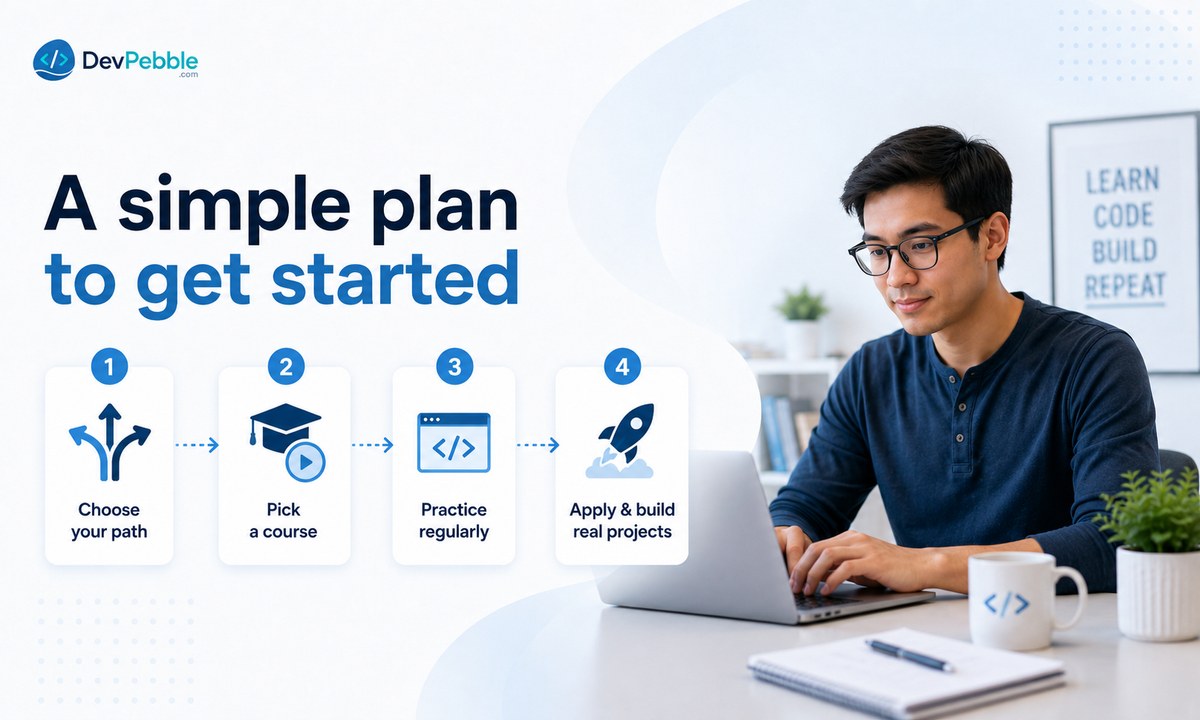
Pick a rough career direction first, even loosely, since web development, data, and general software engineering each point you toward different courses. Choose a starting language to match: JavaScript for web, Python for data or general-purpose work, SQL alongside either. Take a short, structured beginner course to build fundamentals before spending on anything longer. Then build small, real projects and push them to GitHub so you have something to point to. Finally, start applying for internships, junior roles, or freelance work before you feel fully ready. The feedback from real applications is part of the learning.
Bottom line
There's no single winner among the best programming courses in Atlanta, only the best fit for your situation. Beginners tend to do well starting small and cheap to confirm the work suits them. Career changers often need a full-time or part-time bootcamp with real career support. Working professionals need flexible, part-time, or online formats built around a job, and budget-conscious learners should look hard at tuition-free workforce programs and technical college pathways before paying for a private bootcamp. Whichever you choose, the course is the starting line, not the finish. Consistent practice and a portfolio you keep building are what turn a program in Atlanta into an actual career.