Programming Certificate Near Me: How to Find the Best Local Coding Course in 2026
Searching for a programming certificate near me? Learn what a programming certificate is, who it is for, online vs in-person options, costs, the jobs it leads to, and how to choose the best local coding course in 2026.
On this page⌄
- What is a programming certificate?
- Why people search for a programming certificate near me
- Who a local certificate program is for
- Online vs in-person programming certificates
- Which programming language should you learn first?
- How to choose the right program near you
- How much does a programming certificate cost?
- Are programming certificates worth it, and what jobs follow?
- How to get the most out of your certificate
- Conclusion
- FAQ
If you have typed "programming certificate near me" into a search bar, you have plenty of company. Every month, thousands of students, job seekers, and career changers look for the same thing: a real, nearby, career-focused way to learn how to code. Not a random YouTube playlist. Something structured and credible that fits a real life.
This guide is for that search. Whether you are a complete beginner, a professional weighing a career switch, or a student building skills alongside a degree, knowing your local options and how to compare them can save you months of trial and error.
What is a programming certificate?
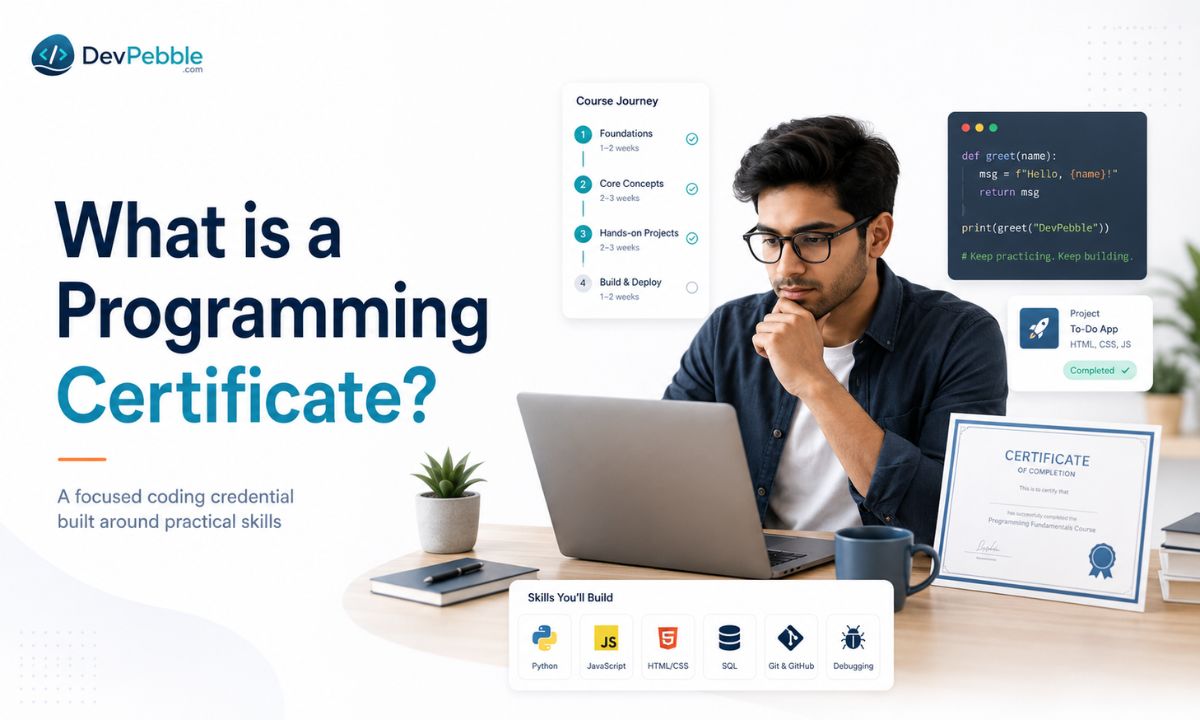
A programming certificate is a credential you earn after finishing a focused training program in coding or software development. Compared with a four-year computer science degree, a certificate is shorter, cheaper, and built around practical skills rather than academic theory.
Most beginner courses run from a few weeks to about a year, depending on intensity. Instead of sitting through general education requirements, you spend most of your time building things: writing code, finishing projects, and using tools employers rely on at work.
The languages you cover depend on the program, but most include some mix of Python, JavaScript, HTML and CSS, and SQL, plus the basics of software development such as version control and debugging.
Not every certificate carries the same weight. Quality depends on how deep the curriculum goes, how experienced the instructors are, how many real projects you build, and how closely the content tracks the current job market. A rigorous program is worth far more than a course that races through fundamentals.
Why people search for a programming certificate near me
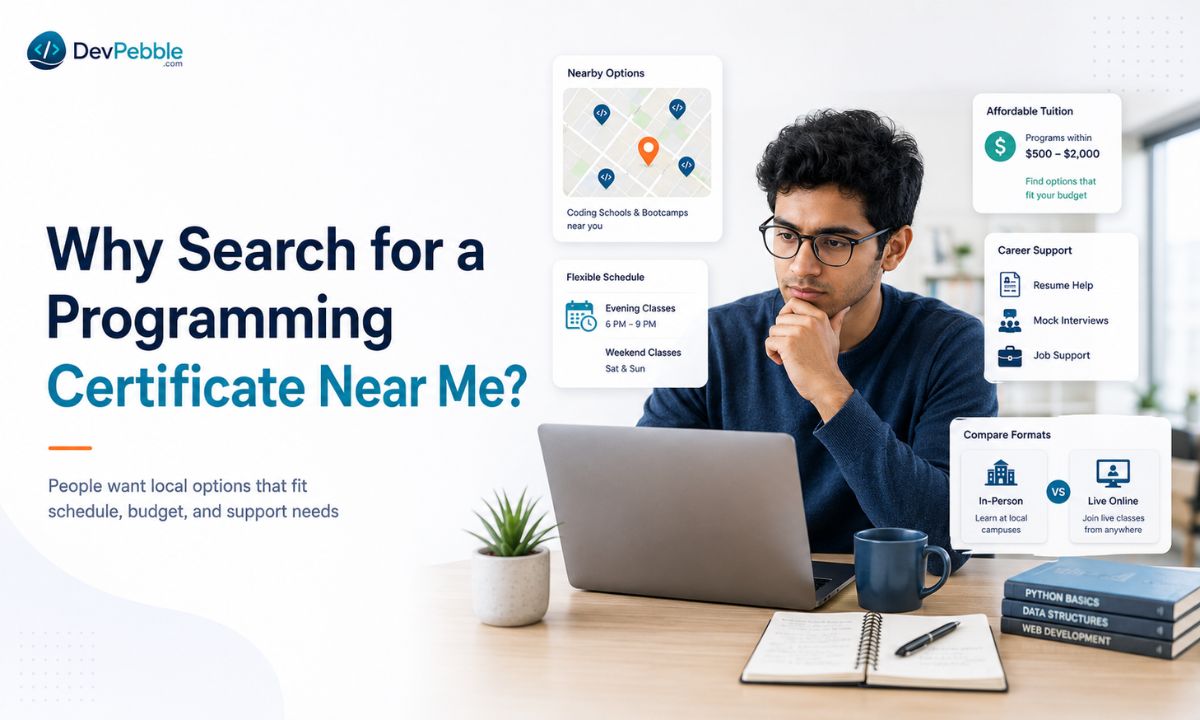
When someone searches for a certificate nearby, they usually want more than information. They want options that fit their real circumstances: location, schedule, budget, and whether the program leads somewhere.
Local coding schools, community colleges, career centers, and bootcamps offer something self-paced video courses often cannot: a human support system. In a classroom you can ask an instructor a question the moment you are stuck, work through problems next to other learners, and build a professional network that helps with placement later. Local programs also tend to offer face-to-face career support such as resume workshops, mock interviews, and connections to employers in your city.
There is a catch worth knowing. A "near me" search does not only return in-person options anymore. Plenty of online programs rank in local results because they are optimized to show up for your area. So you may end up comparing a local bootcamp against a fully remote program that runs live classes and mentorship from anywhere. Neither is automatically the better pick. The right answer depends on how you learn, what your schedule allows, and how much in-person support you actually need.
Who a local certificate program is for
These programs are built to be accessible, but they are not the right move for everyone.
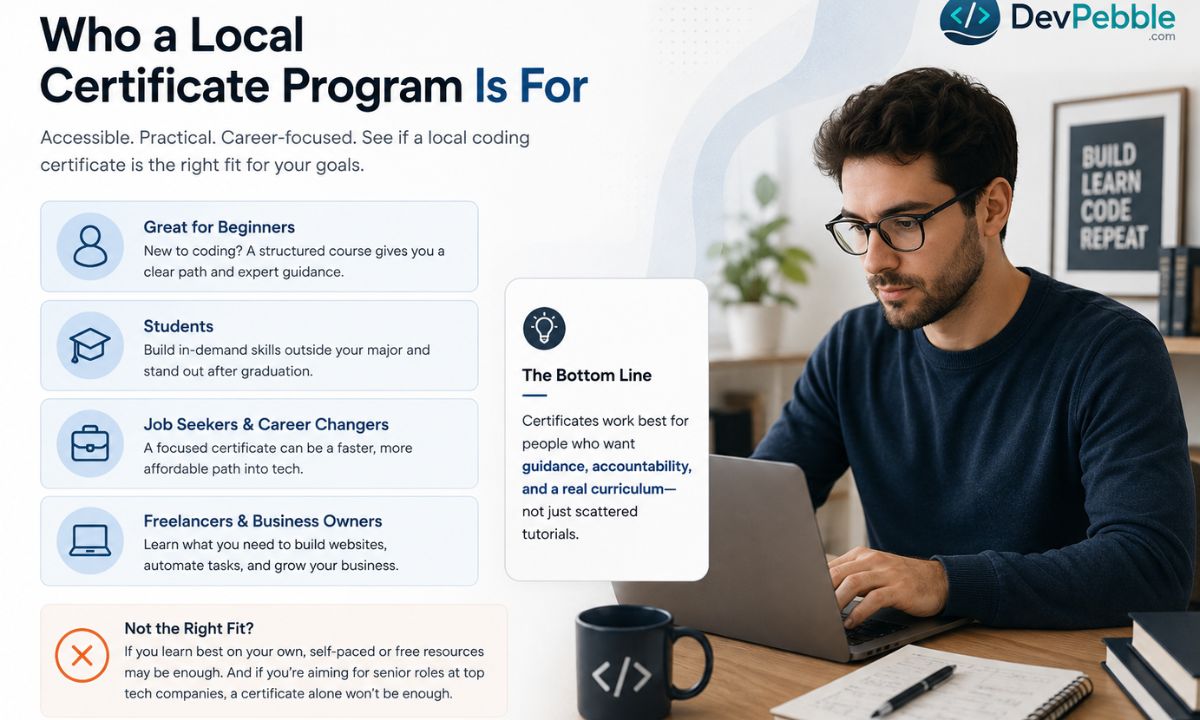
Absolute beginners tend to benefit the most: a structured course gives you a clear path and someone to guide you through it. Students can pick up career skills their regular coursework skips, and a certificate next to a business or design degree makes a graduate more competitive. Job seekers and career changers often find a focused certificate a faster route into tech than another full degree, and freelancers or small business owners who want to build their own sites benefit from shorter, targeted courses too.
If you already have strong self-discipline and learn well on your own, a self-paced course or free resources might serve you fine without the extra structure. And if your goal is a senior engineering role at a major tech company, a certificate alone will not get you there, though it can be a solid first step. The pattern is simple: certificates work best for people who want guidance, accountability, and a real curriculum instead of scattered tutorials.
Online vs in-person programming certificates
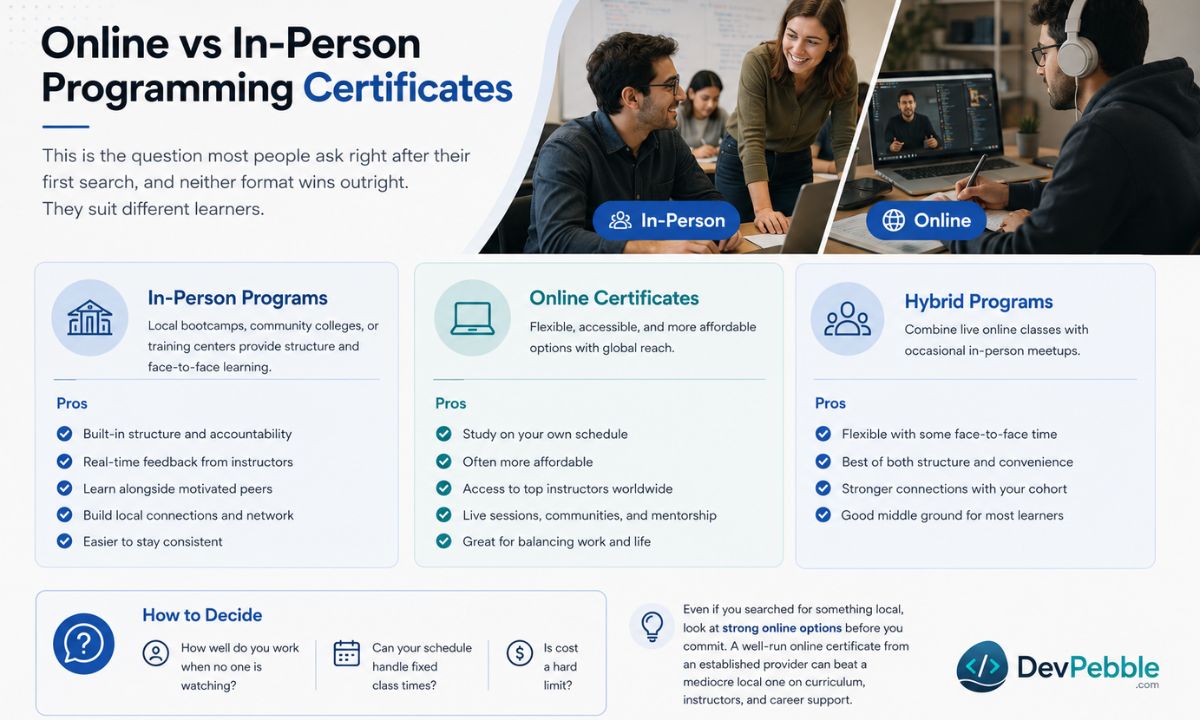
This is the question most people ask right after their first search, and neither format wins outright. They suit different learners.
In-person programs, whether at a local bootcamp, community college, or training center, give you structure that is easy to underestimate. You show up at a set time, sit with other learners, and get real-time feedback from an instructor. That accountability matters more than most beginners expect. You also build local relationships that can turn into referrals or collaborations.
Online certificates have their own advantages. They are often cheaper and let you study around a job, family, or an unpredictable schedule. Many now run live sessions, peer communities, and dedicated mentorship, so the gap with in-person learning has narrowed a lot, and they give you access to instructors and curricula that may not exist in your city. Hybrid programs, mixing live online classes with occasional in-person meetups, sit in the middle and work well for a lot of people.
To decide, be honest with yourself. How well do you work when no one is watching? Can your schedule handle fixed class times? Is cost a hard limit? Even if you searched for something local, look at strong online options before you commit. A well-run online certificate from an established provider can beat a mediocre local one on curriculum, instructors, and career support.
Which programming language should you learn first?
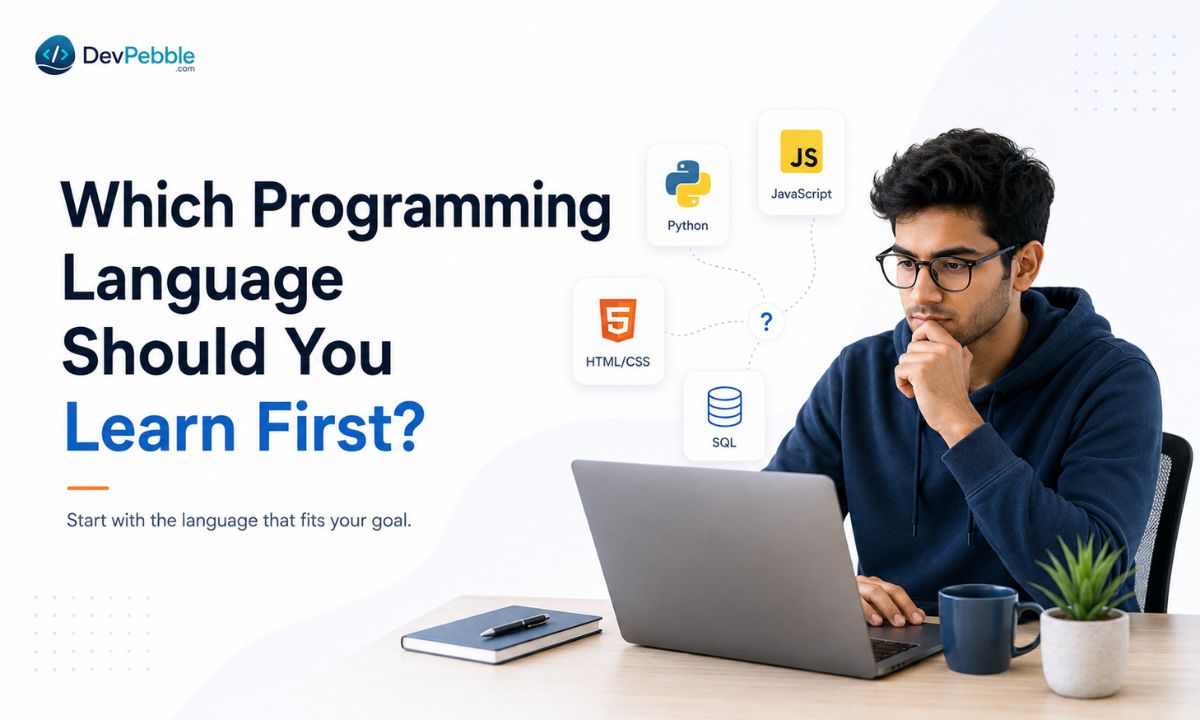
Beginners almost always ask which language to start with. The answer depends less on raw popularity and more on what you want to do afterward.
Python is the friendliest starting point and remains one of the most in-demand languages in 2026, used heavily in data analysis, automation, AI, and backend development. If you are unsure, it is a safe first choice. JavaScript is the one to learn for web development; it runs the interactive parts of nearly every site and works on both frontend and backend, so most web certificates treat it as core. HTML and CSS are not programming languages in the strict sense, but they are the foundation of front-end work. SQL is underrated as a first skill: if you are drawn to business roles, data analysis, or backend work, querying databases is useful right away and quick to pick up. Java and C# are worth a look for enterprise software, mobile apps, or larger organizations, though they have steeper learning curves.
A good program makes this choice clearer based on the career track it is built around. Be wary of courses that cram in too many languages at once. Breadth without depth rarely builds either confidence or hireability.
How to choose the right program near you
Finding a program is easy. Picking a good one takes more work. Run any candidate through this checklist.
Read the full curriculum. A solid program publishes what it teaches, in what order, and why; vague promises like "you will learn to code" are a warning sign. Check that the projects are real and hands-on, since employers want to see what you can build. Look into who teaches the course too, because instructors with real development experience bring context that academics-only teachers cannot.
Match the schedule to your life. A full-time intensive bootcamp is a different animal from a part-time evening course even when both end in the same certificate. Read student reviews on third-party platforms rather than the testimonials cherry-picked on the school's own site, and look for patterns rather than a single rave or rant. Ask directly about career support: job placement help, portfolio review, and connections to local employers separate strong programs from weak ones. Ask whether local companies have hired graduates, since a certificate only carries weight if employers in your region recognize who issued it.
Add up the real cost, not just tuition, and ask about financing or income share agreements before you sign. Finally, confirm the content is current. In a field that moves this fast, a curriculum that has not been refreshed in a while may be teaching workflows already on their way out.
While you compare, look at what a strong program teaches beyond syntax. The best ones train problem-solving, the habit of breaking down a messy problem and working through bugs on your own. They cover the fundamentals deeply, treat version control with Git and GitHub as non-negotiable, and build in debugging and portfolio projects from the start rather than tacking them on at the end. They touch APIs and databases where the track calls for it and take teamwork seriously, since developers write documentation and work in groups. Many now add sensible guidance on AI coding assistants too: use them as a support layer, not a crutch that hides gaps in your understanding.
How much does a programming certificate cost?
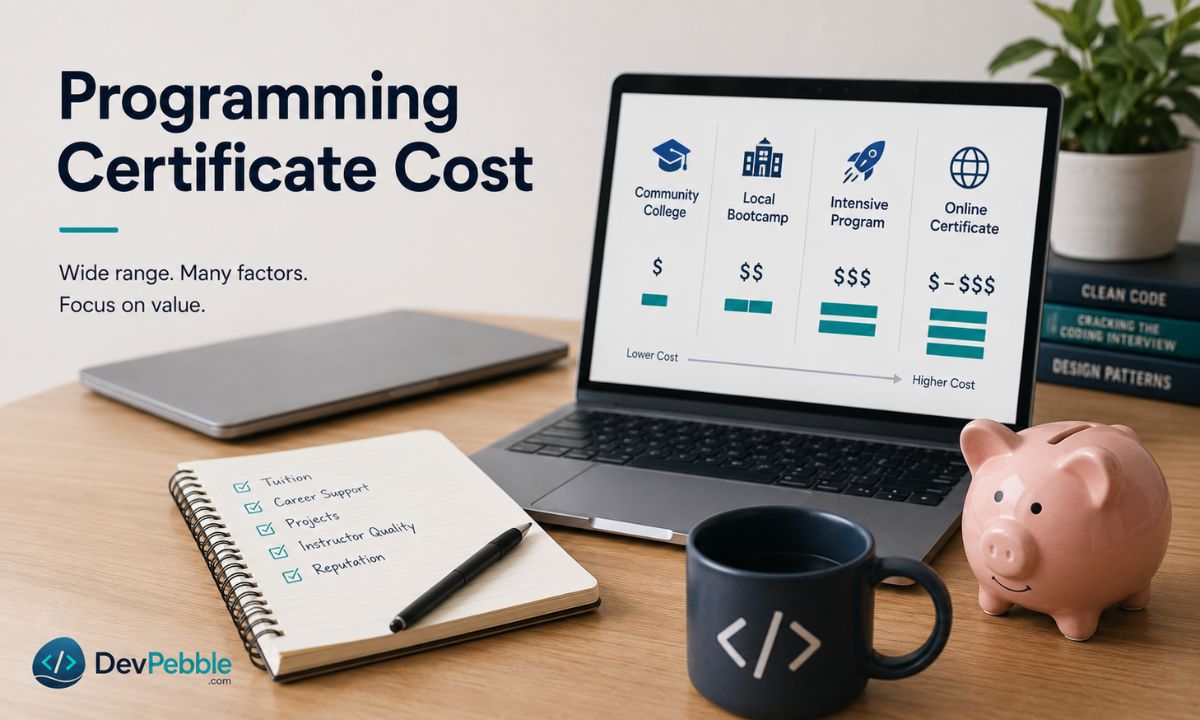
Cost is one of the first practical questions, and one of the hardest to pin to a single number, because the range is wide.
A short course at a community college might run a few hundred dollars. A private local bootcamp or software development program can reach several thousand, and longer, intensive options with career services and industry connections cost more still. Online certificates vary just as much, from low monthly subscription platforms to bootcamp-style programs with comparable price tags. What drives the difference is usually course length, instructor involvement, project quality, whether career support is included, and the institution's reputation. Location plays a part too; classes in major cities often cost more than equivalent programs in smaller towns or fully online.
Watch the costs that do not show up on the tuition line: a laptop if you do not own one, required software or subscriptions, exam fees for any external credential, transport for in-person sessions, and reliable internet if you study remotely. Weigh value over price. A cheap course that leaves you with no portfolio, no skills, and no direction is not the cheaper option once you count what you walked away with. Pricing shifts often, so check current figures directly with providers; what was accurate six months ago may not match June 2026 numbers or the funding options where you live.
Are programming certificates worth it, and what jobs follow?
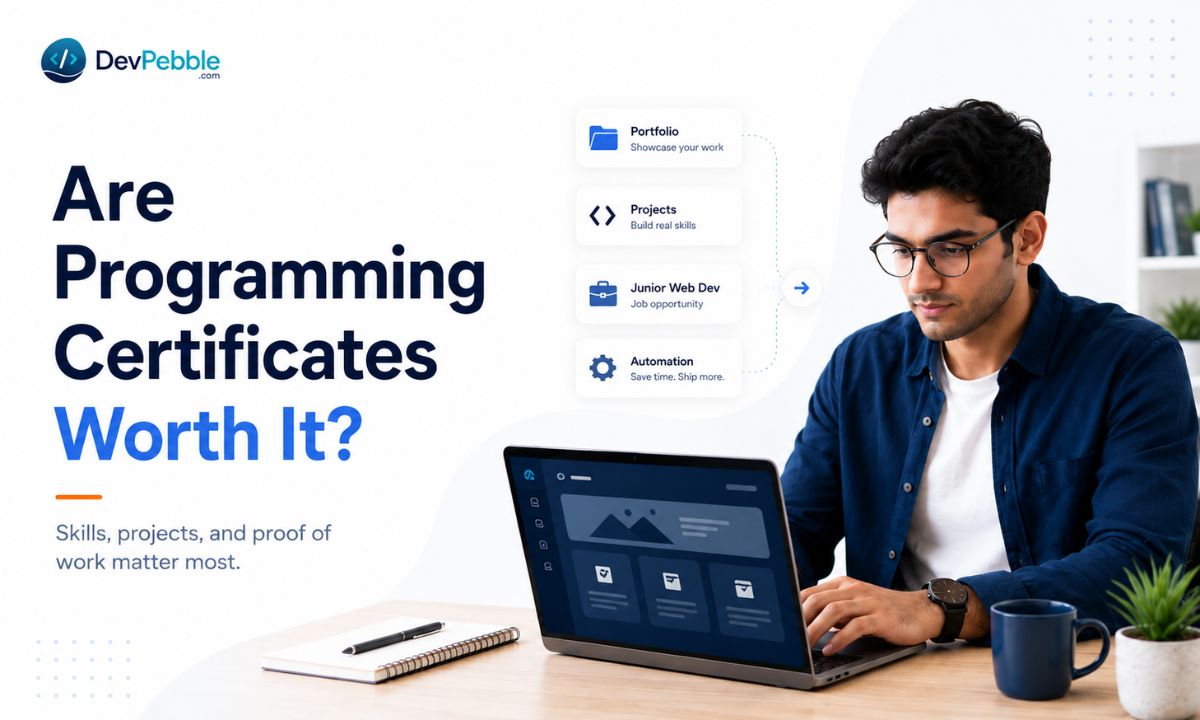
This is the question that matters most, and it deserves a straight answer. A certificate can help you start a tech career, but it does not guarantee one. The 2026 market is competitive, and entry-level is the most crowded tier of it. What employers look for is evidence that you can do the work: write code, solve problems, finish projects, and contribute to a team.
So the most valuable thing a program can do is help you build real, demonstrable skills. The graduates who get hired are usually the ones who spent their training time creating GitHub repositories, finishing independent projects, and putting up a portfolio site. Treat the certificate as a foundation, not a finish line: it gives you structure and something concrete to point to for entry-level roles, but it cannot replace practice or a visible body of work.
The roles certificate holders move into depend on what the program covered and how much effort went in afterward. Common entry points include junior web developer (often after a course covering HTML, CSS, JavaScript, and a backend language), frontend or backend developer trainee positions, and junior Python roles in automation or scripting. QA tester roles suit people who understand the development workflow before they write production code full-time, and WordPress or CMS work fits graduates who want to build sites for small businesses. Many also pick up freelance web work alongside the job hunt or land data and automation assistant roles in finance, logistics, and marketing. In each, what you build shapes the outcome as much as the certificate does.
How to get the most out of your certificate
Enrolling is only the start. How you engage with the material decides most of what you take away.
Build projects while you learn instead of saving them for the end, and apply each new concept to something real as soon as it clicks. Small, rough projects teach more than passive review. Practice in short, regular sessions; thirty minutes a day beats one four-hour stretch a week for habit and retention. Use GitHub from day one and commit often, even unfinished work, because an active profile over several months tells a story a certificate cannot. Ask questions freely, and stay in touch with your cohort, who often become colleagues and referrals.
Before you apply, put up a simple portfolio site with three to five real projects, each with a working link and short description. Keep learning once the course ends, since a 2026 certificate ages quickly if you stop. Use AI coding tools with care: they can speed up learning when used thoughtfully, but leaning on them to produce code you do not understand catches up with you fast, especially in interviews. When you update your resume and LinkedIn, list the technologies you used and link to your work rather than just naming the certificate. "Built a full-stack booking app with React and Node" says far more than "completed a web development certificate."
Conclusion
Searching for a programming certificate near me is a good first move; it means you are ready to stop thinking about learning and start doing it. But the search is only the opening. The best program is not always the closest, the most advertised, or the cheapest. It is the one that gives you a real curriculum, practical projects, experienced teaching, and enough structure to keep you showing up until the skills stick. Compare your options, ask hard questions before you enroll, then commit once you begin. The certificate opens a door. What you build walking through it is what counts.