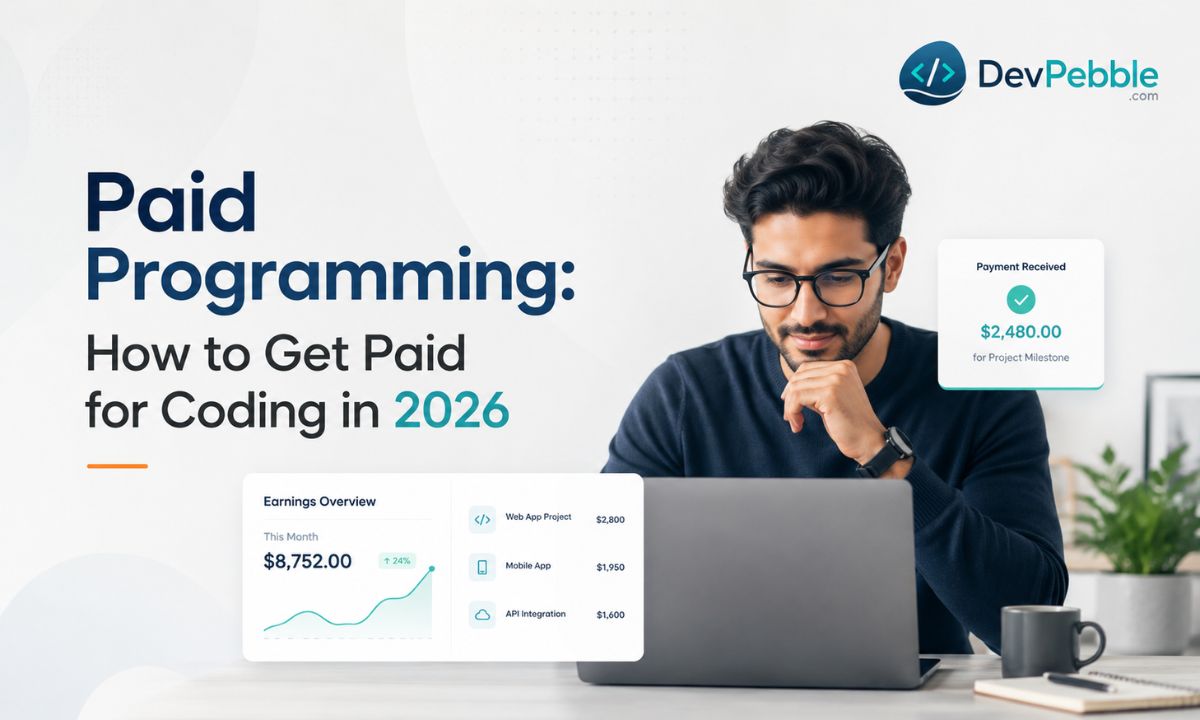
Paid Programming: How to Get Paid for Coding in 2026
Paid programming means earning money by writing code. Learn how it works, the best paid programming jobs for beginners, the skills and languages you need, where to find work, and how much you can earn in 2026.
On this page⌄
- What paid programming is and how it works
- Why more people are choosing it as a career path
- Best paid programming jobs for beginners
- Skills you need to start earning
- Best programming languages for paid work
- How to build a portfolio that gets you hired
- Where to find paid programming jobs online
- Getting your first freelance client
- How much can you earn?
- Common mistakes to avoid
- Final thoughts
- FAQ
If you have ever wondered whether your coding skills can put money in your pocket, the answer is yes, and more people figure that out every year. Paid programming just means earning money by writing code, building software, or solving technical problems for clients, companies, or online platforms. It is not one job title or one fixed path; it covers everything from a full-time developer role to a small freelance project on the side. Whether you are starting out or already know the basics, understanding how paid coding work actually operates is the first real step toward turning a skill into income.
What paid programming is and how it works
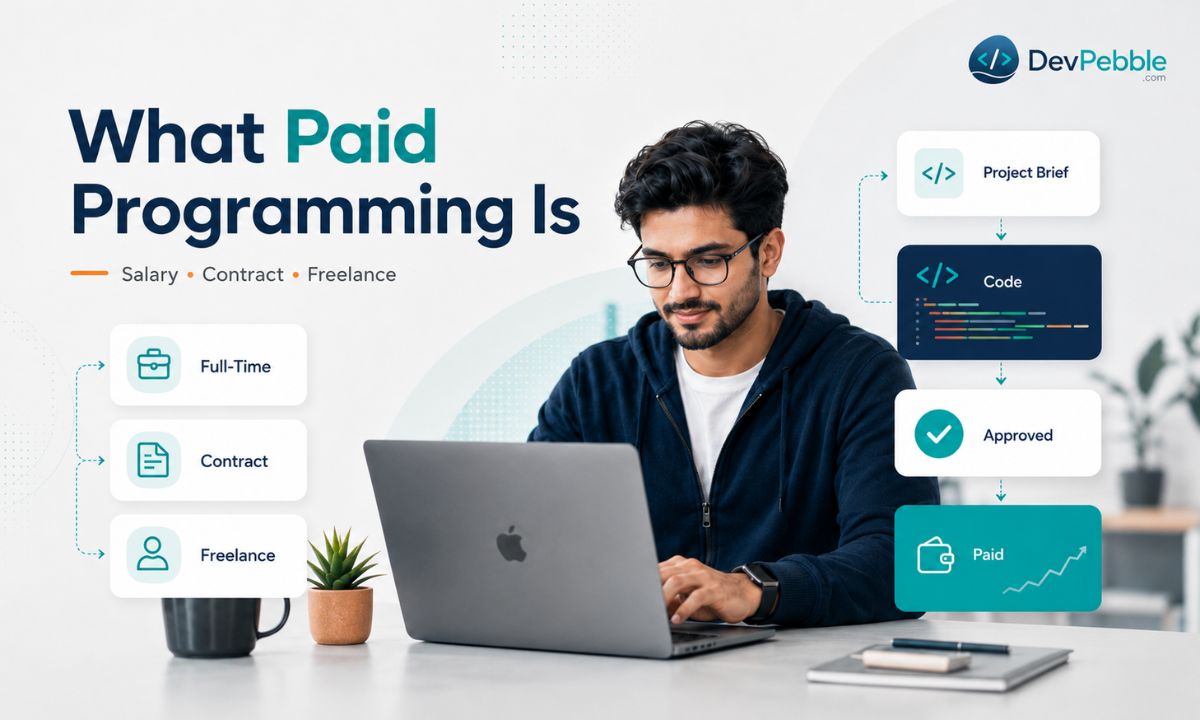
At its simplest, paid programming is any situation where someone pays you for coding work, but the earning models behind it vary. You might draw a salary as a full-time software developer, take part-time contract work on a fixed-scope project, or freelance, where clients post projects, you pitch, and you get paid on delivery. Some developers also pick up short remote tasks through platforms that match programmers with one-off assignments.
It helps to separate this from simply learning to code. When you practice on tutorials or build personal projects for fun, you are building skills, but no money changes hands. The moment you solve a real problem for a real client, with expectations, deadlines, and payment attached, it becomes paid work. That shift matters more than it looks: paying clients expect the work on time, to their requirements, actually solving their problem, and tutorials do not prepare you for that. Knowing the earning model early helps you choose the right skills and projects.
Why more people are choosing it as a career path
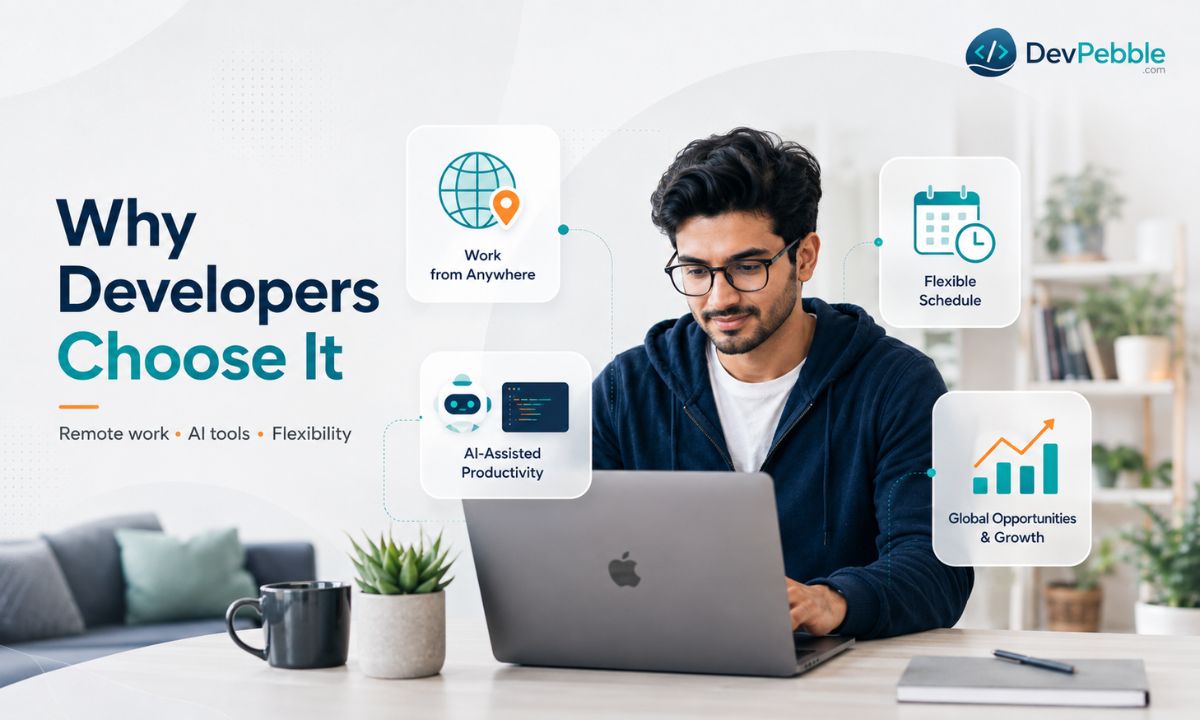
Demand for developers in 2026 has grown more specific and more urgent, and a few shifts explain why.
Remote work is now the default for a large share of programming jobs, though the picture has split in two. Big tech and enterprise mostly settled into hybrid schedules. The companies born remote during the pandemic never built offices to return to, and that is where most of the fully remote opportunity now sits: startups, mid-size companies, and agencies, a real door-opener for anyone in a smaller city or a country with a thin local tech market. The kind of work has widened too: beyond websites and mobile apps, there is steady demand for automation tools, AI-integrated software, data pipelines, and custom internal tools, and small businesses that once could not justify custom software now hire affordable freelance help to keep pace.
Then there is the question everyone asks: will AI tools just replace programmers? What has happened by 2026 is messier than the headlines. Most professional developers now use AI tools daily, and those tools handle repetitive code generation and speed up routine work, but businesses still need people who can define the problem, review the logic, and ship something that survives the real world. Developers who use AI well have become more valuable, not less. Flexibility is the other draw: freelancers set their own hours and pick their clients, and even salaried developers often get schedules rare elsewhere.
Best paid programming jobs for beginners
One of the biggest mistakes beginners make is waiting until they feel "ready." Plenty of work does not require years of experience, just one useful skill and the discipline to deliver reliably.
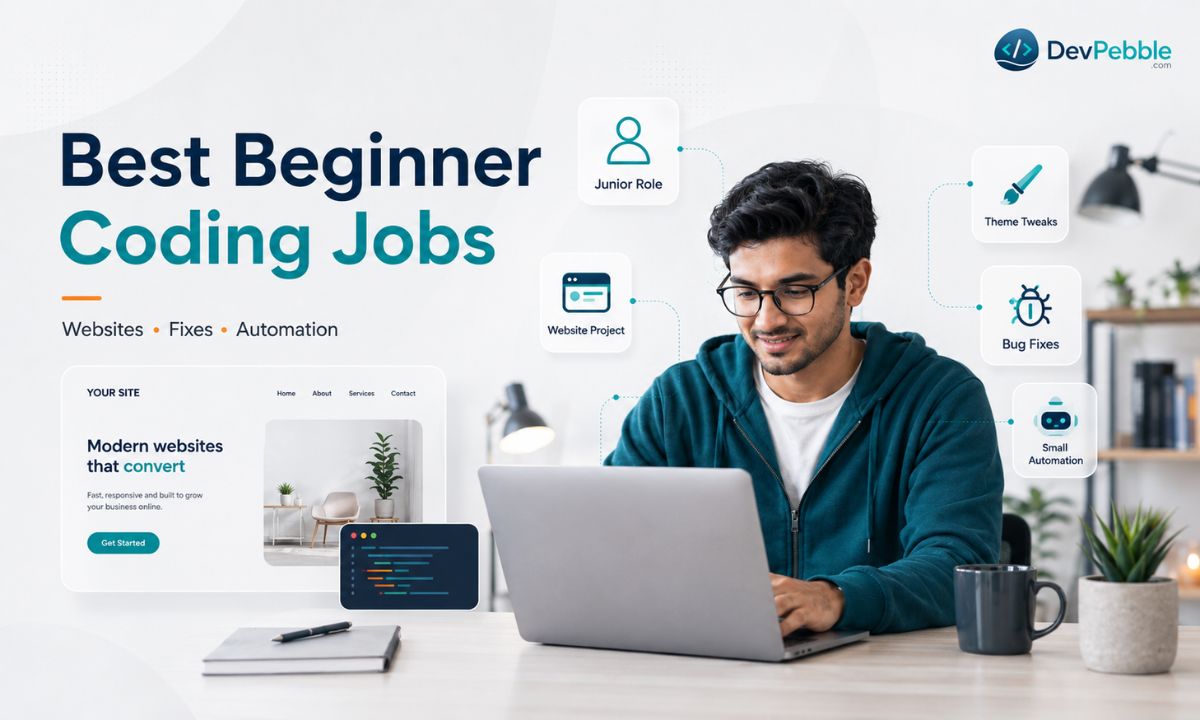
Junior developer roles are the most traditional starting point, with companies hiring developers who have six to twelve months of practical experience for internal tools, admin panels, or supporting a senior team. One caveat for 2026: the bar for remote junior roles runs higher than for in-office ones, since hand-holding a beginner over Zoom is harder, so you need to show more independence.
If you lean toward freelancing, small website projects are often the first real paid task. A local restaurant, trainer, or shop needs a basic site and is not shopping for a ten-thousand-dollar agency, and a beginner who can deliver a clean site with HTML, CSS, and a CMS like WordPress is exactly what they want. WordPress customization is its own accessible entry point, since a huge share of the web runs on it and clients constantly need theme tweaks, plugin setups, and layout fixes. A few others:
- Bug fixing, where developers and small businesses post jobs specifically to repair a broken feature in existing code
- Small automation scripts, like a Python script that automates a spreadsheet chore or scrapes some data
- Landing page development, a single marketing page with a clean layout and a working contact form
- Basic tool development, simple things like a form validator, a price calculator, or a quiz widget in beginner JavaScript
Sticking to simpler tasks early is about managing expectations. Finishing a small project well, communicating like a professional, and delivering on time builds the reputation that leads to bigger work.
Skills you need to start earning
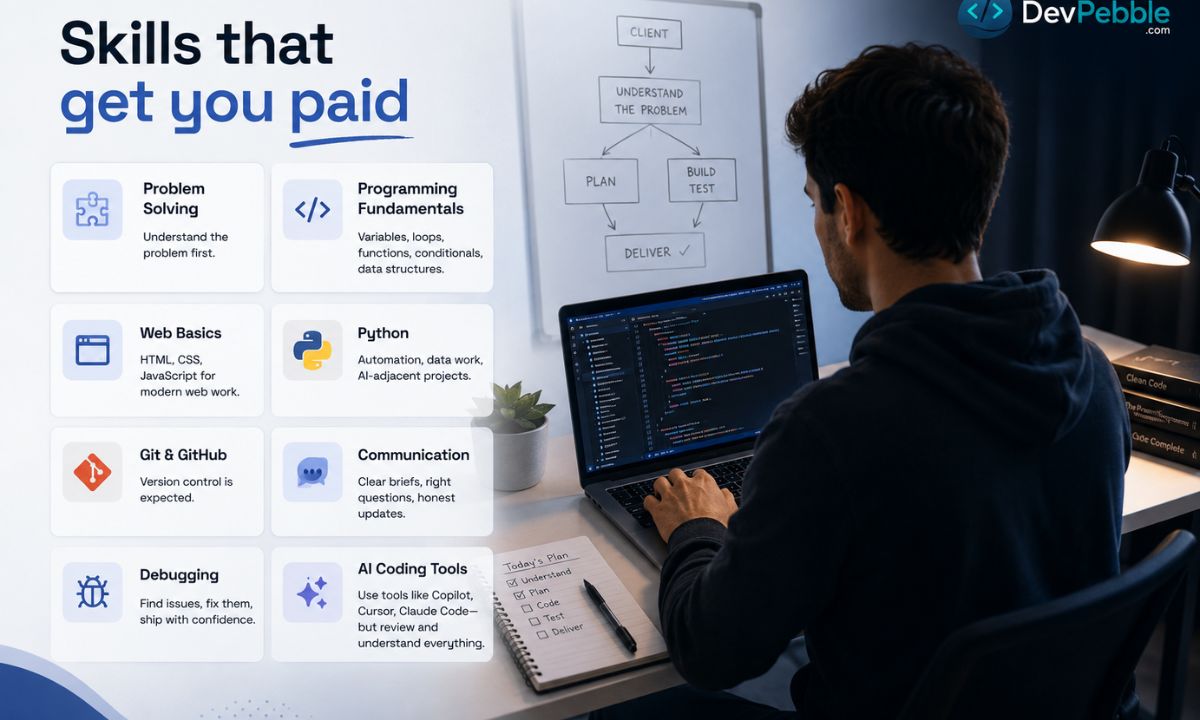
Technical knowledge alone does not get you paid. The developers who land steady clients pair fundamentals with a few habits that make them easy to work with. Problem solving is the most transferable skill in any programming career, since clients hire you to fix, build, or improve something, and how well you understand the actual problem before writing a line of code decides most of the outcome. On the technical side, you need a comfortable grip on the fundamentals: variables, loops, functions, conditionals, and data structures, which carry across every language. For specific languages, HTML and CSS are essential for any web work, JavaScript opens up interactive development, and Python is the go-to for automation, data work, and anything AI-adjacent. You do not need all of them; pick one or two that match the work you want.
Git and GitHub are non-negotiable, since employers and clients expect you to manage code properly. Communication matters more than most beginners expect, too: reading a brief carefully, asking the right questions upfront, and giving honest progress updates separates a reliable developer from a frustrating one. Debugging is the other underrated skill, since real projects break, and isolating a problem and fixing it without panicking is something clients notice fast.
AI coding tools belong on the list too, with a caveat. Tools like GitHub Copilot, Cursor, and Claude Code are worth learning in 2026 but not worth leaning on blindly. Understanding what the generated code does, and being able to review and edit it, is what makes you useful; copying AI output you cannot explain just buys you bugs that are hard to trace.
Best programming languages for paid work
Picking a language off hype is a classic beginner trap. The best language for paid programming is the one that fits the work you actually want to do.
JavaScript is still dominant for web projects. It runs in the browser, drives front-end interactivity, and with Node.js handles back-end logic too, so if you want to build sites or web apps for clients, it is the most versatile place to start. Python is the strongest pick for automation, scripting, data processing, and anything touching AI or machine learning, in steady demand from businesses trying to cut manual work.
PHP stays relevant, mostly for WordPress and the older applications many small businesses run. Java and C# are the languages of enterprise and backend systems, less common in beginner freelance work but standard in full-time junior roles. SQL is easy to overlook and consistently valuable, since almost every application stores data, so writing queries and understanding how a database is structured makes you more useful on any project.
How to build a portfolio that gets you hired
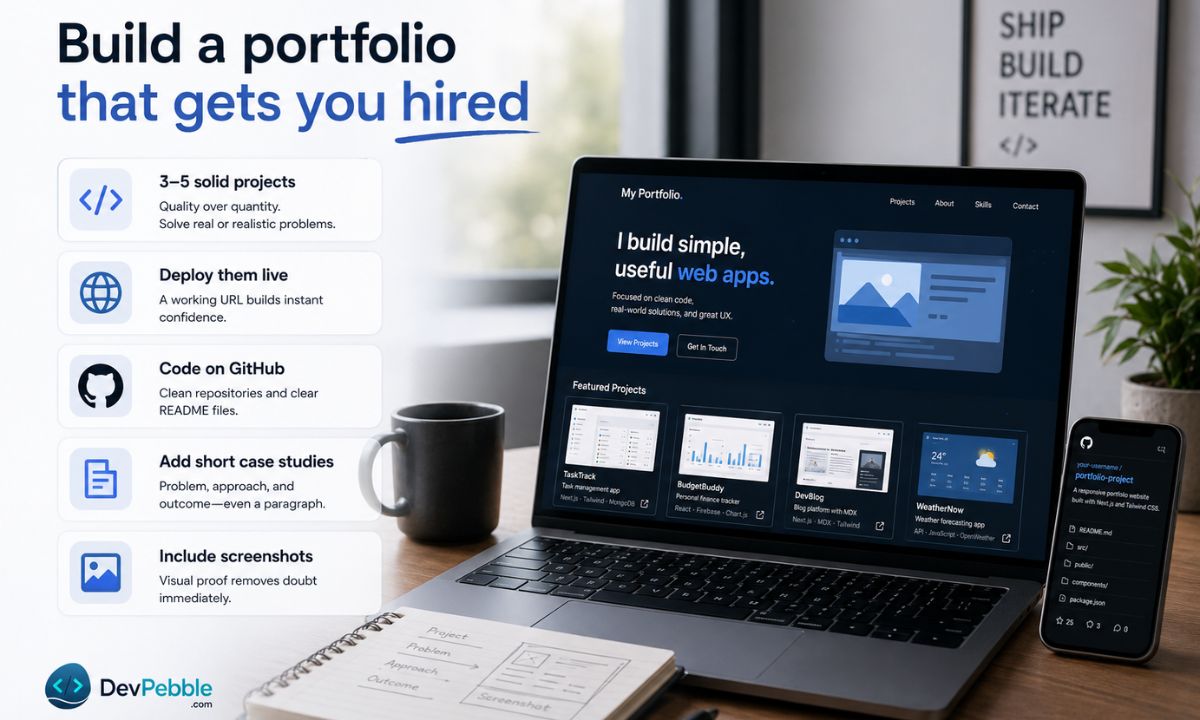
Your portfolio is the single most important thing standing between you and your first paid project, since certificates and course completions matter far less to most clients than proof you can build something real.
Aim for three to five solid projects rather than ten half-finished ones, each solving a real or realistic problem rather than just showing that you finished a tutorial. Where you can, deploy them live; a working URL convinces people far more than a screenshot, and free hosting through GitHub Pages, Vercel, or Netlify makes that easy. Host the code on GitHub with clear README files explaining what each project does and how to run it, and add a short case study for each, even a paragraph, describing the problem, your approach, and how it turned out. A few screenshots help too, since visual proof removes doubt immediately.
When a potential client looks at your portfolio, they should be able to picture you working on their project, and that mental leap is what turns a portfolio visit into a paid opportunity.
Where to find paid programming jobs online
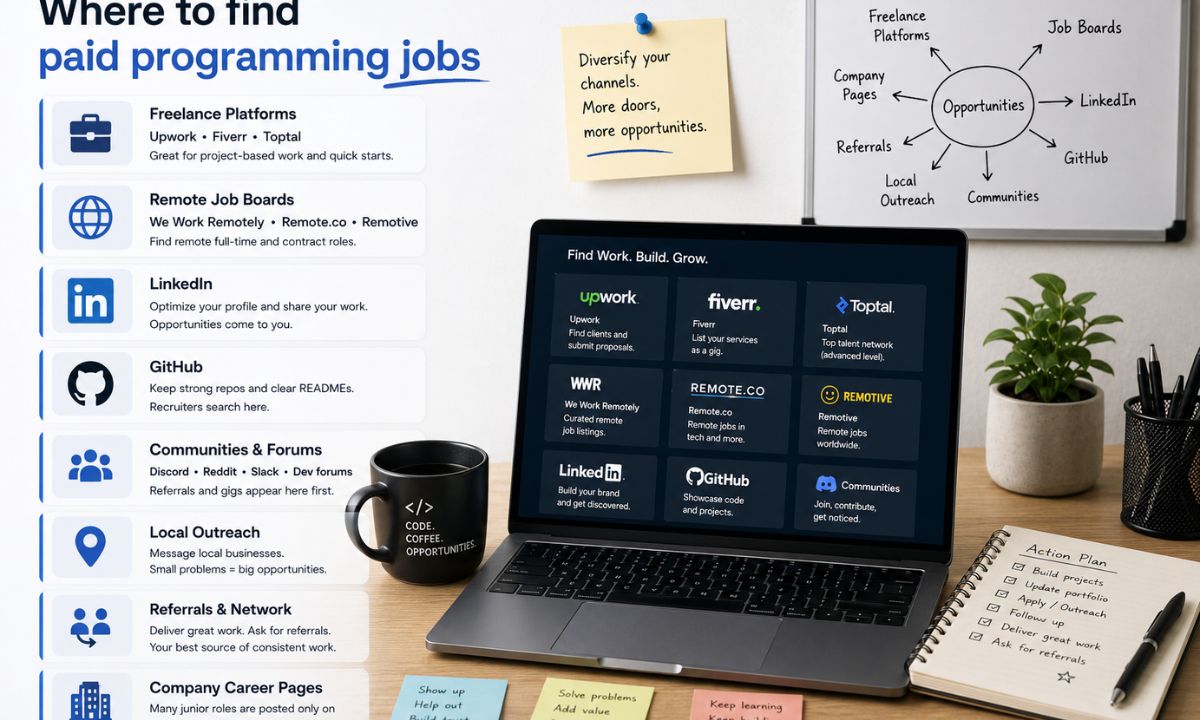
Knowing where to look is half the job, and the mistake is relying on one channel.
Freelance platforms like Upwork, Fiverr, and Toptal connect developers with clients posting projects. They are competitive for beginners, so a narrow, specific offer ("I fix WordPress layout bugs" or "I build landing pages for small businesses") helps you stand out. Toptal screens hard and is not really open to beginners, while Fiverr's gig model lets you list a service and start without bidding, a gentler entry point.
Remote job boards such as We Work Remotely, Remote.co, and Remotive list full-time and contract roles, worth checking regularly for junior openings at smaller companies. LinkedIn is still one of the most practical tools for finding beginner developer jobs; an updated profile with a portfolio link, a clear headline, and a few posts showing your work can pull in inbound interest.
GitHub visibility is underused: recruiters do search it, and an active profile with clean, documented repositories signals a working developer. Developer communities, forums, Discord servers, subreddits, and niche Slack groups, regularly surface freelance work and referrals that never get posted publicly, and being helpful there beats posting "looking for work."
Local outreach is overlooked too. Many nearby businesses need a website, a booking system, or a simple automation tool and have no idea where to start, and a short, friendly message with a portfolio link costs nothing. Referrals become your best source once you have a few wins behind you, and company career pages are worth bookmarking, since plenty of firms post junior roles only on their own site. The point is to diversify, because no single platform delivers consistent work.
Getting your first freelance client
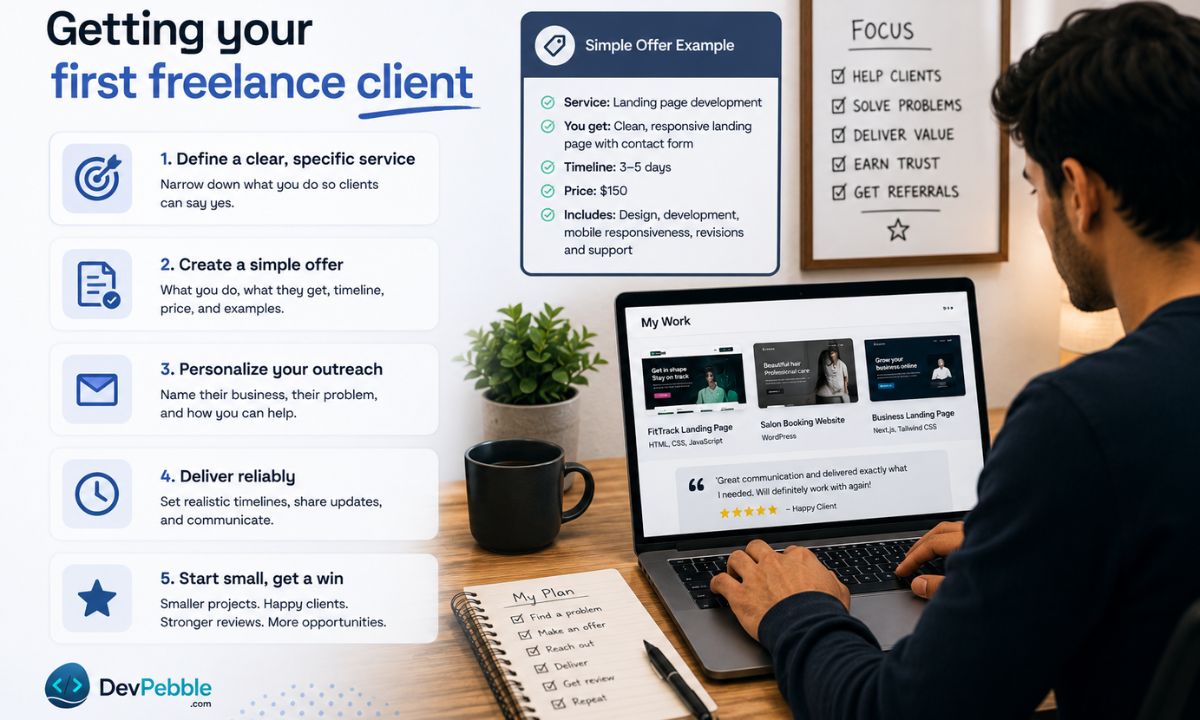
Landing the first client is the hardest part; after that, momentum builds. Start by defining a clear, specific service. "I'm a developer" is too broad; "I build landing pages for small service businesses" or "I fix WordPress errors for existing site owners" is something a client can immediately say yes or no to. From there, put together a simple offer, what you do, what they get, roughly how long it takes, and what you charge, plus portfolio examples that match the service. You do not need an agency structure, just clarity.
When you reach out, write personalized proposals. One that names the client's business, their problem, and your relevant experience converts far better than a copy-paste template. Offer realistic timelines with buffer built in, since delivering early beats apologizing for being late, and send a brief update at the halfway mark even when nothing has gone wrong. Start with smaller, lower-risk projects where you can execute confidently, because one strong review does more for your next proposal than any credential.
How much can you earn?
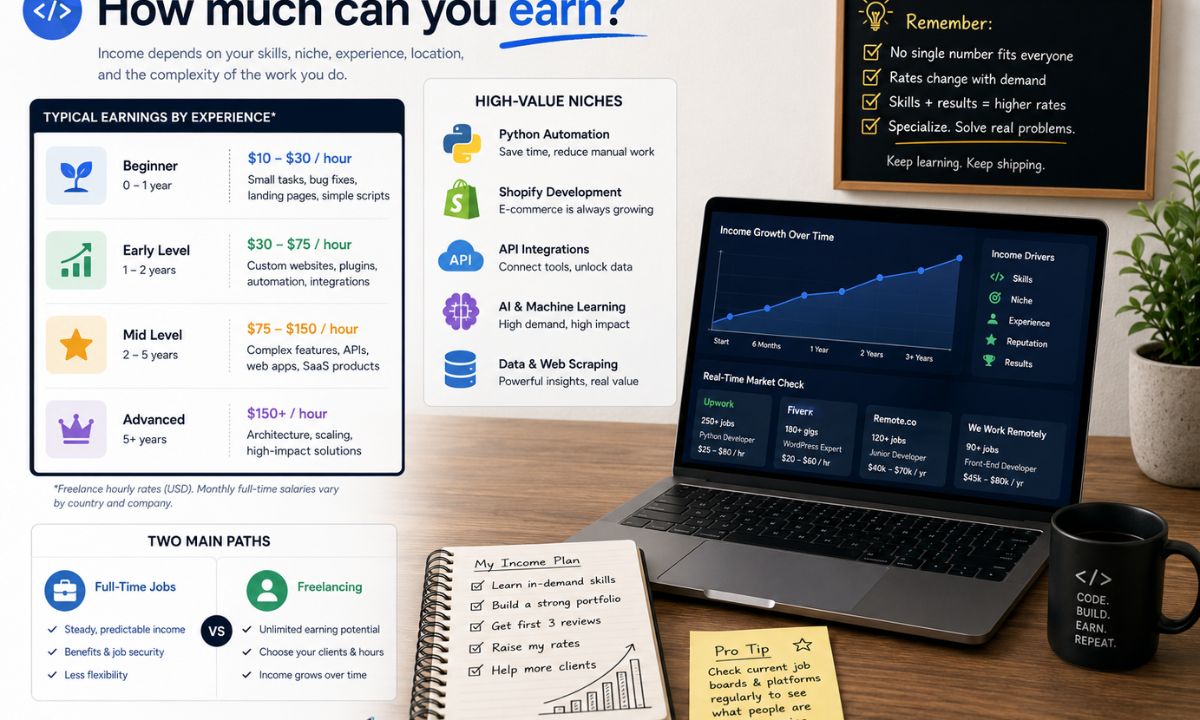
Coding income varies more than most beginner guides admit. What you earn depends on your skill level, niche, country, platform, experience, and the complexity of the work, so there is no single number that fits everyone. Beginners taking on first small jobs, bug fixes, basic landing pages, simple scripts, usually earn modest amounts, and that is normal; those early projects are about building a track record as much as income.
As you develop more specialized skills and ship more work, your rates can climb meaningfully, especially with a clear niche like Python automation, Shopify development, or API integrations, where the value you deliver is easier for a client to justify paying for. Full-time jobs trade flexibility for more income stability, while freelance income can grow a lot over time but builds slowly. One practical note: do not trust income figures from articles written a year or two ago, since rates move with demand and competition. Check current listings on the job boards and freelance platforms to see what people are actually paying for your kind of work right now.
Common mistakes to avoid
Most beginner setbacks trace back to the same handful of mistakes. The first is learning forever without building, since tutorials are comfortable and real projects are not, but at some point you have to ship. Closely related is picking a language because it is trending rather than because it fits the work, and taking on complex projects too early, like a full e-commerce build with custom payment logic before you have shipped anything paid.
Communication is where a lot of beginners lose clients. Missing messages, vague answers, or disappearing for days breaks trust quickly, and so does missing a deadline without warning, since most clients can absorb a timeline shift but not silence followed by a blown date. Copying code you cannot explain, whether from Stack Overflow or an AI tool, will eventually surface a problem you cannot fix. The rest are quieter: skipping the portfolio, underpricing forever, and ignoring contracts. For anything beyond a tiny scope, get it in writing what gets built, what it costs, when payment is due, and what happens if the scope changes.
Final thoughts
Getting into paid programming in 2026 is achievable, but not instant and not effortless. The developers who make it work combine real technical skill with professional habits: they build things, communicate clearly, manage their time, and get a little better with each project. Some start with a junior role; others land a first freelance client after a small portfolio. The common thread is that they stopped waiting for the perfect moment. If you are serious about earning from your coding skills, the next step is the same one: build something, put it in front of people, and go from there.