Car Key Programming Near Me: complete 2026 guide
Looking for car key programming near me? This 2026 guide covers costs, key types, mobile locksmiths, timing, and how to pick a trusted local service fast.
On this page⌄
- What car key programming is and when you need it
- How car key programming near me services work
- Signs you need car key programming
- Types of car keys that can be programmed
- How much car key programming costs near you
- Locksmith vs dealership
- How long programming takes
- How to choose a service near you
- Conclusion
- FAQ
Losing a key, getting locked out, or buying a car that came with a single key are all annoying in the same way: the fix feels mysterious until you have done it once. Then you realise that finding car key programming near me is usually quick, and rarely as expensive as the dealership quote that probably scared you onto this page.
A programmed key is not the same as a cut key. Cutting shapes the metal blade. Programming syncs the electronic chip inside the key with your car's computer so the immobiliser actually lets the engine start. Get a blade cut at a hardware store and you will have a key that fits the ignition and does nothing else.
What has changed over the past decade is who can do this work. Mobile auto locksmiths now operate in most cities and suburbs, often reaching you within the hour, and their tools cover a far wider range of vehicles than they did even five years ago. The dealership is no longer the only option, and for most cars it is not the fastest or cheapest one either. So this guide covers how the process works, the signs that point to a key problem rather than a mechanical one, what the different key types cost, and how to pick someone you can trust.
What car key programming is and when you need it
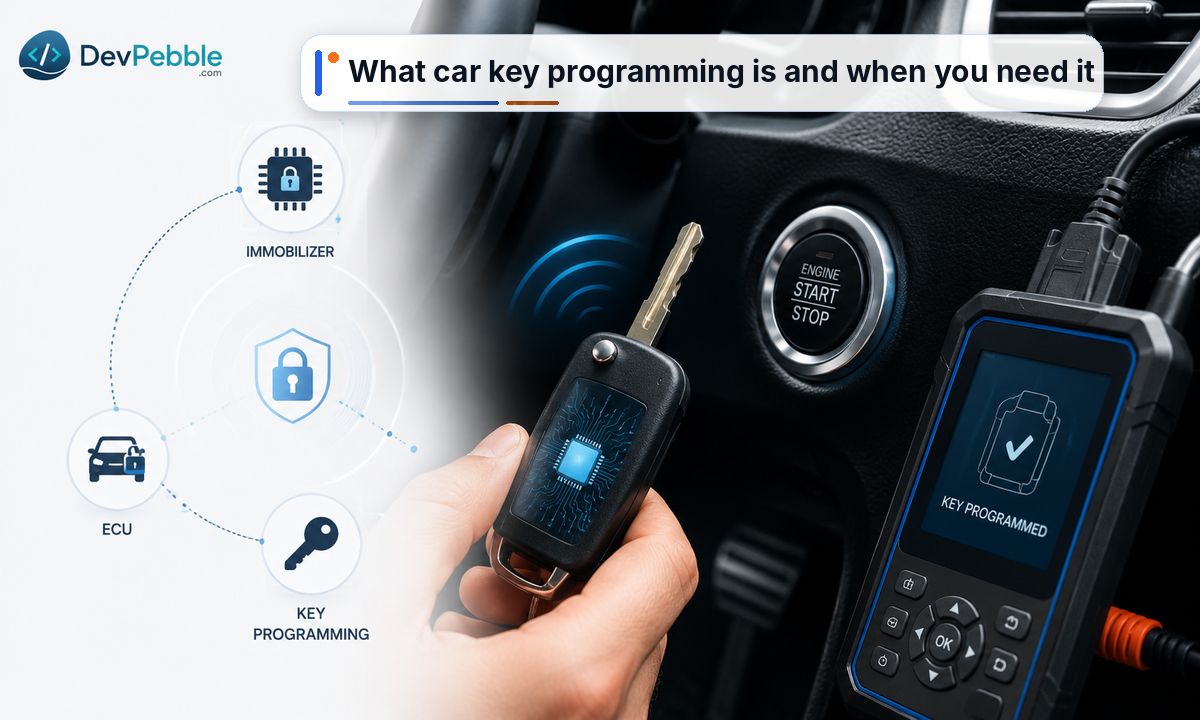
Car key programming syncs a key's chip, or its fob, with your vehicle's onboard computer so the car recognises the key as legitimate. Without that sync the immobiliser blocks the engine, even when the blade turns in the ignition perfectly.
Almost every car built since the late 1990s relies on this. Insert the key, or approach the car with it, and a small chip sends a unique signal to the immobiliser. If the signal does not match what the car expects, the system cuts fuel or ignition and the car stays put.
A few situations tend to send people looking. You have lost your only key and need a replacement cut and coded from scratch. You bought a used car that came with one key and want a spare before you get stuck without one. Your fob has stopped locking the doors, and a fresh battery did not fix it. Or you have had the ignition, the engine control unit, or the body control module replaced, and your existing keys stopped working afterwards.
The short version: if your car is from the last 25 years or so, it almost certainly needs a programmed key, not just a cut one.
How car key programming near me services work
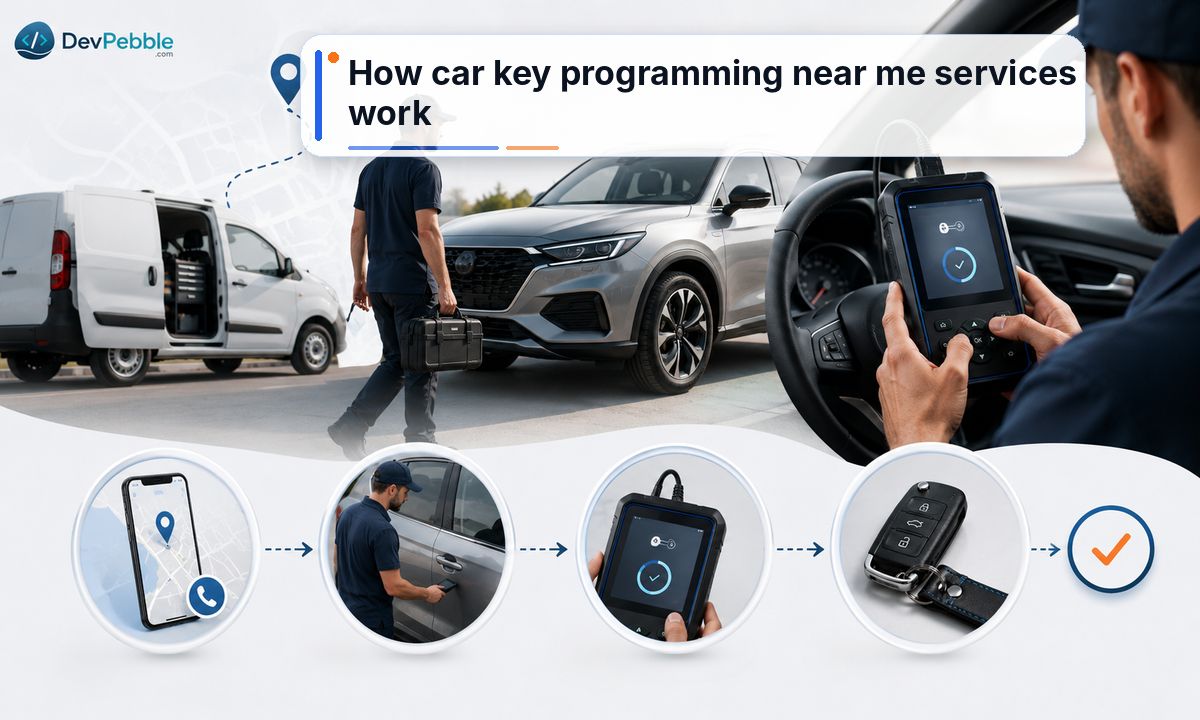
Most of this work now happens wherever your car is. A mobile locksmith turns up at your driveway, your office car park, or the roadside with everything needed: a diagnostic programmer, a key-cutting machine, and compatible blanks. That matters most when the car cannot move, which is exactly the situation a lost or dead key creates. Towing to a dealership is expensive and usually pointless when the job can be done on the spot.
The programmer plugs into your car's OBD-II port, the same socket used for emissions checks. Its software talks to the immobiliser or body control module, reads the current key data, and writes the new key into the system. For a standard transponder job, the technician normally needs one working key already paired to the car, which puts the system into key learning mode. With no working key at all, the process is slower and more involved, because the locksmith has to reach the security modules more directly. That second scenario is called all keys lost, and it costs more for a reason.
Smart keys and proximity fobs follow the same logic with more advanced equipment, since they talk to the car by radio rather than through a chip touching the ignition. Once the new key is written, the technician tests everything: engine start, locking, unlocking, and any remote buttons.
A typical visit covers cutting, transponder coding, fob pairing, and testing. Physical repairs like a worn ignition barrel or a cracked key shell are usually separate, so ask what is included before anyone starts.
One practical note worth knowing in advance: have proof of ownership ready. A V5C logbook, registration document, or insurance certificate is standard, and any reputable locksmith will ask for it before touching the car. It is a security check, not red tape, and a technician who skips it is a small warning sign in itself.
Signs you need car key programming
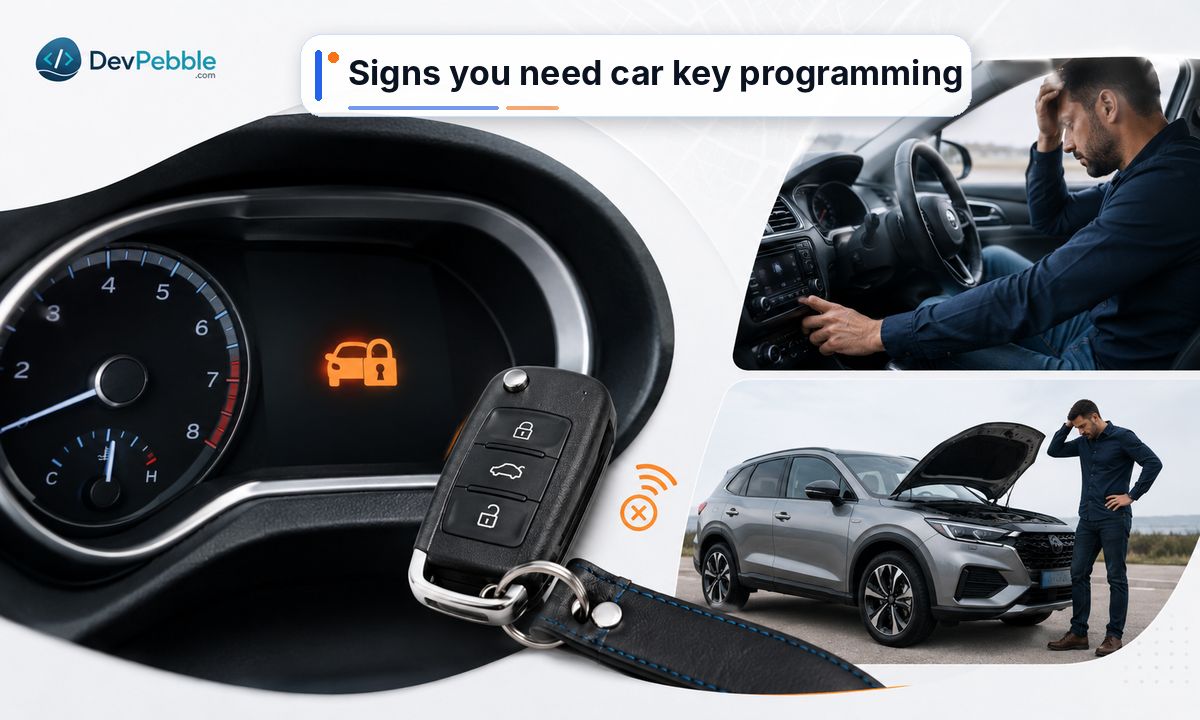
Key faults do not always look like key faults. Some are obvious, others get blamed on the battery or the starter motor. These are the ones that point at programming rather than mechanics.
The engine cranks but will not catch. You hear the starter turning but nothing fires. That is the classic sign of an immobiliser refusing a key it cannot recognise.
The security light stays on. That little padlock or car-and-key symbol should go out once the engine runs. If it stays lit, or flashes during startup, the car is flagging a transponder problem.
The fob has stopped locking or unlocking the doors. Often that is just a dead battery. If a new battery changes nothing, the fob has probably lost its pairing and needs reprogramming.
The key works on and off. Sometimes it starts the car, sometimes it does not. A worn transponder chip behaves exactly like that, and it tends to get worse over time.
You have recently had the ignition, the ECU, or the BCM replaced. Any of those jobs can wipe the stored key data, so your old keys will not work until they are paired again.
If you are seeing any of these, the fix is usually an auto locksmith, not a new battery or a trip to the garage.
Types of car keys that can be programmed
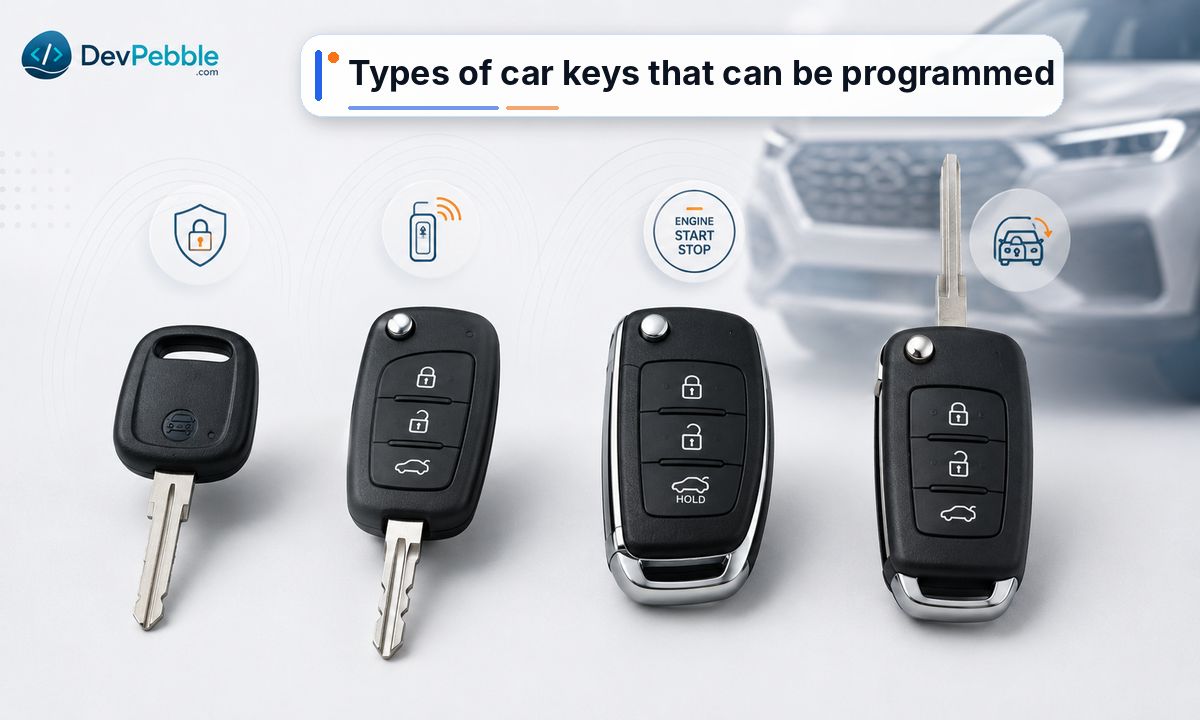
The key your car uses decides how long the job takes, which tools are needed, and what you will pay.
Transponder keys are the common type from the late 1990s onward. They look ordinary but carry a chip in the plastic head that answers the immobiliser when the key is in the ignition.
Remote head keys combine that chip with a built-in fob, so the lock and unlock buttons are part of the key itself. They need the transponder coded and the remote paired, which is two jobs in one body.
Smart keys and push-start keys never go into the ignition. They talk to the car continuously, so as long as the key is inside the cabin you can press a button to start. Programming these takes higher-end equipment and a little more time.
Switchblade keys fold the blade into the fob body. They look sleek, but underneath they are a standard chip key and need the same coding as any transponder.
The exception is older non-transponder keys, common before the mid-1990s. Those are cut-only, with nothing to program.
Not sure which you have? Your make, model, and year is usually enough for a locksmith to confirm the key type before they set off.
How much car key programming costs near you
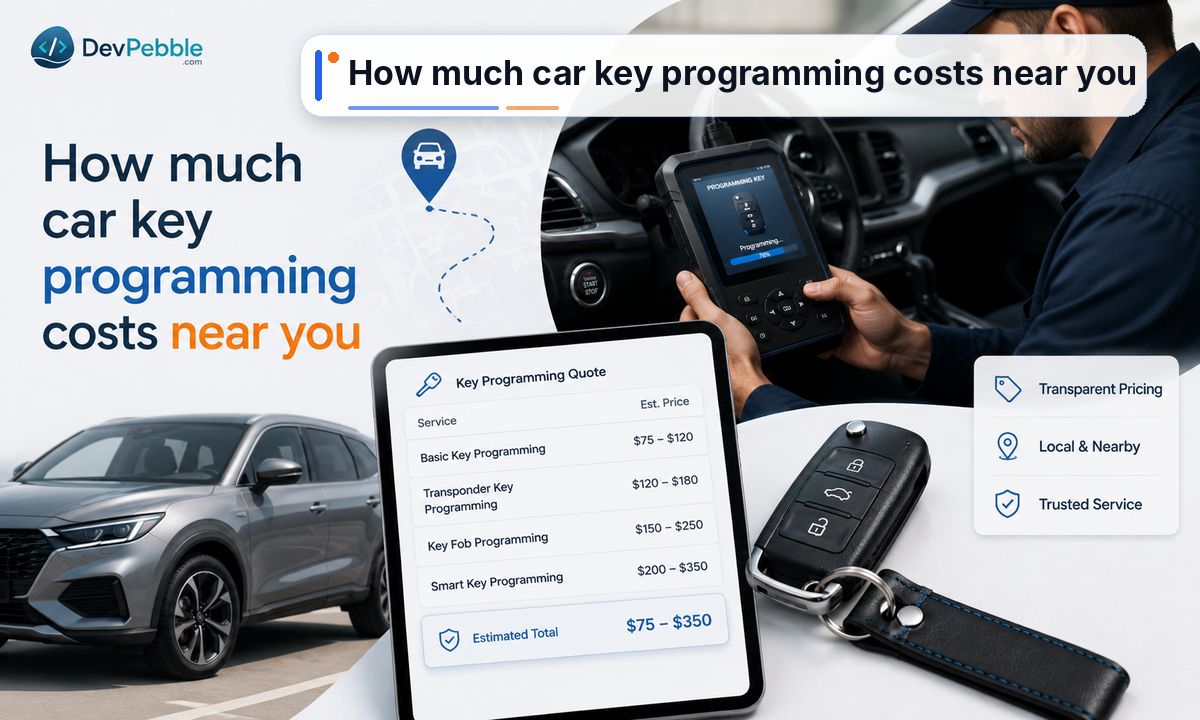
This is the first thing most people ask, and the honest answer is that it depends. Your make and model, the key type, whether you already hold a working key, your location, and the provider all move the number.
The rough order, cheapest to dearest, looks like this. A standard transponder key sits at the bottom, often bundling the cut and the coding into one visit fee. A remote fob replacement lands in the middle, especially when a new shell and chip come with it. A smart or push-start key is usually the priciest, reflecting both the hardware and the more involved programming. All keys lost then adds a premium on top of any of those, because the process simply takes longer.
Mobile locksmiths often add a call-out fee, more so for out-of-hours or emergency jobs. Even with that, they usually come in well under a dealership for the same work, commonly somewhere around 25 to 50 percent cheaper, mostly because they are not carrying showroom and service-bay overhead. If a quote looks suspiciously low, ask whether it covers both the key hardware and the programming, or only one of them. That gap is where surprise bills hide.
Locksmith vs dealership
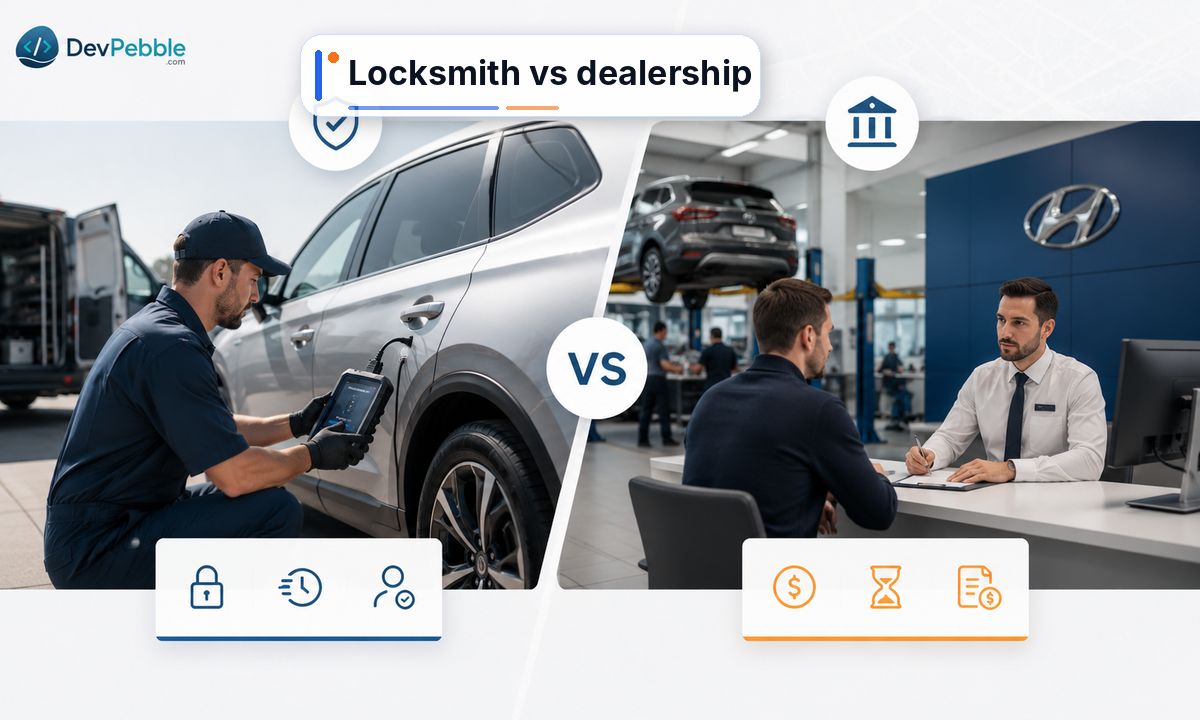
Both can do the job. The real question is which one suits your situation.
A dealership has direct access to the manufacturer's software, which matters for a small set of cars: very new models, anything under warranty where you would rather not take a risk, or brands with proprietary security the aftermarket has not reached yet. The trade-offs are real, though. Waits can stretch to days rather than hours, prices tend to run higher, and you have to get the car to them, which is impossible when you are locked out with no key.
Mobile locksmiths come to you, often within the hour. For the vast majority of cars, mainstream brands and common key types up to a few years old, their tools handle the coding just as well as dealer equipment, and they are faster, more flexible on hours, and cheaper. The gap between the two has narrowed a lot. Aftermarket programmers have improved, and experienced auto locksmiths now cover far more makes and models than they could five years ago.
Where a locksmith can still fall short: brand-new models before the key data reaches the aftermarket, and some newer luxury vehicles with locked-down security systems. For everyone else, calling a couple of local locksmiths and comparing quote, wait time, and convenience is the sensible move. Most of the time, the mobile option wins on all three.
How long programming takes
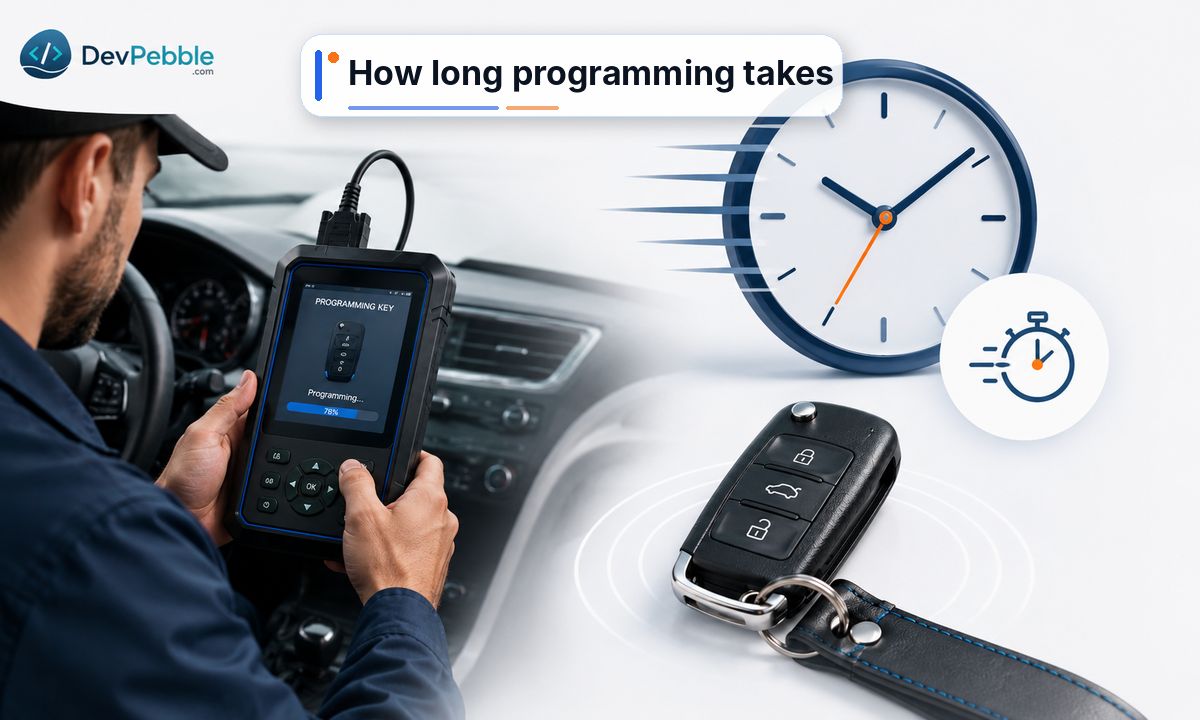
Usually less time than people expect.
A straightforward spare, where you already have a working key and just want a second one coded, is often done in 20 to 45 minutes on-site. A fob that only needs re-pairing, with the car otherwise fine, can be sorted in under 20 minutes.
All keys lost is the slow one. With no reference key to read from, the technician works through extra verification and reaches the security modules directly, so allow 60 to 90 minutes, sometimes more. Smart keys and keyless entry also run a little longer, because the proximity side has to be set up and tested, not just the chip. Older or unusual cars can drag too, less because the technology is complex and more because the steps are manual.
The easiest way to slow any of this down is bad information. Have your registration number, make, model, and year of manufacture ready when you call, and the whole thing moves faster.
How to choose a service near you
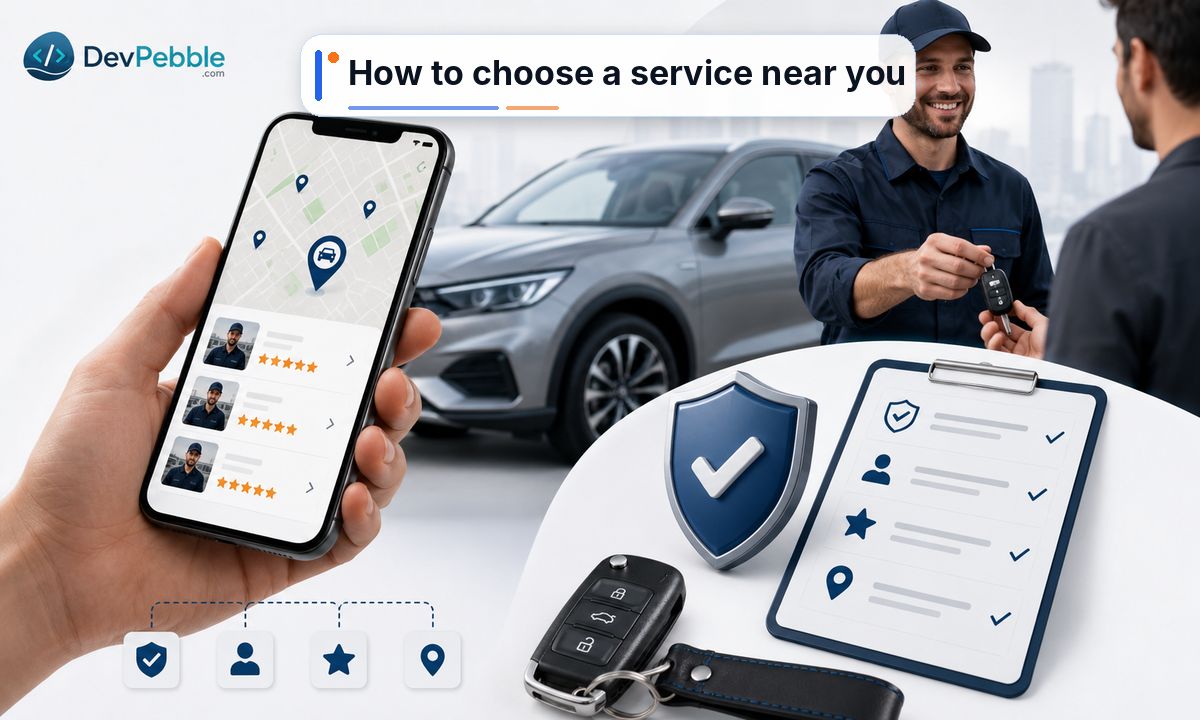
Plenty of people advertise vehicle key coding online, and the quality varies wildly. A few checks sort the reliable ones from the rest.
Read the written reviews, not just the star rating. Look for mentions of cars like yours, punctual arrivals, clear pricing, and jobs finished in one visit. A run of complaints about hidden charges or return trips tells you most of what you need.
Confirm they cover your vehicle before booking. Not every auto locksmith carries kit for every make, so give them your exact year, make, model, and key type, and let them check compatibility. A good one does this without being asked.
Get a full quote up front: hardware, programming, and any call-out fee. Asking to see the car first is fair, but they should still give you a range. Vague pricing often becomes a surprise on the final bill.
Check credentials, and here the right badge depends on where you are. In the UK, look for a Master Locksmiths Association approved company, which means the firm has been vetted, inspected, and tested rather than simply self-declared, since locksmithing carries no government licence. In North America, look for a technician listed with the National Automotive Service Task Force, the registry that vets legitimate vehicle key programmers. Elsewhere, check business registration, insurance, and how long they have traded.
Be wary of the lowest quote by a wide margin. Lost-key work needs real equipment and training, and a price far under everyone else's is worth questioning before you commit, not after. And if you think you might ever need help at 2am, check whether they genuinely offer 24-hour cover and how that is priced, rather than assuming it is included.
Conclusion
Lockout, lost key, or a spare you are sorting before you actually need it, the right local service makes the whole thing painless. Mobile auto locksmiths handle most vehicle key jobs faster and for less than people expect, usually without towing the car anywhere.
Ask the right things first: confirm they cover your car, get a clear quote, check their credentials, and make sure they handle your key type. Do that and you will sidestep most of the bad experiences out there. And if everything is working right now, getting a spare coded today is about the cheapest insurance you will ever buy.