Object-oriented programming explained: concepts, examples, and best practices
Object oriented programming explained through classes, objects, the four OOP pillars, practical examples, language choices, design principles, and tradeoffs.
On this page⌄
- What is object-oriented programming?
- Why object-oriented programming matters
- Classes and objects
- The four pillars of object-oriented programming
- How object-oriented programming works in practice
- How objects and classes relate
- Advantages of object-oriented programming
- Disadvantages and limitations
- Object-oriented programming vs procedural programming
- Object-oriented programming vs functional programming
- Popular object-oriented programming languages
- Design principles and best practices
- Common mistakes to avoid
- When should you use object-oriented programming?
- How to learn object-oriented programming
- Conclusion: is object-oriented programming worth learning?
- FAQ
Open up almost any large application and you will find code organized around things: a User, a Product, an Order, a ShoppingCart. That is object-oriented programming at work, and it is one of the most common ways developers structure software today. This guide explains what object-oriented programming (OOP) is, how it works, and when it actually helps, from plain-language definitions to the classes, objects, and four principles that hold it together. Whether you are writing your first class or trying to understand why OOP shows up everywhere, you will find practical examples and honest tradeoffs, not just textbook definitions.
What is object-oriented programming?
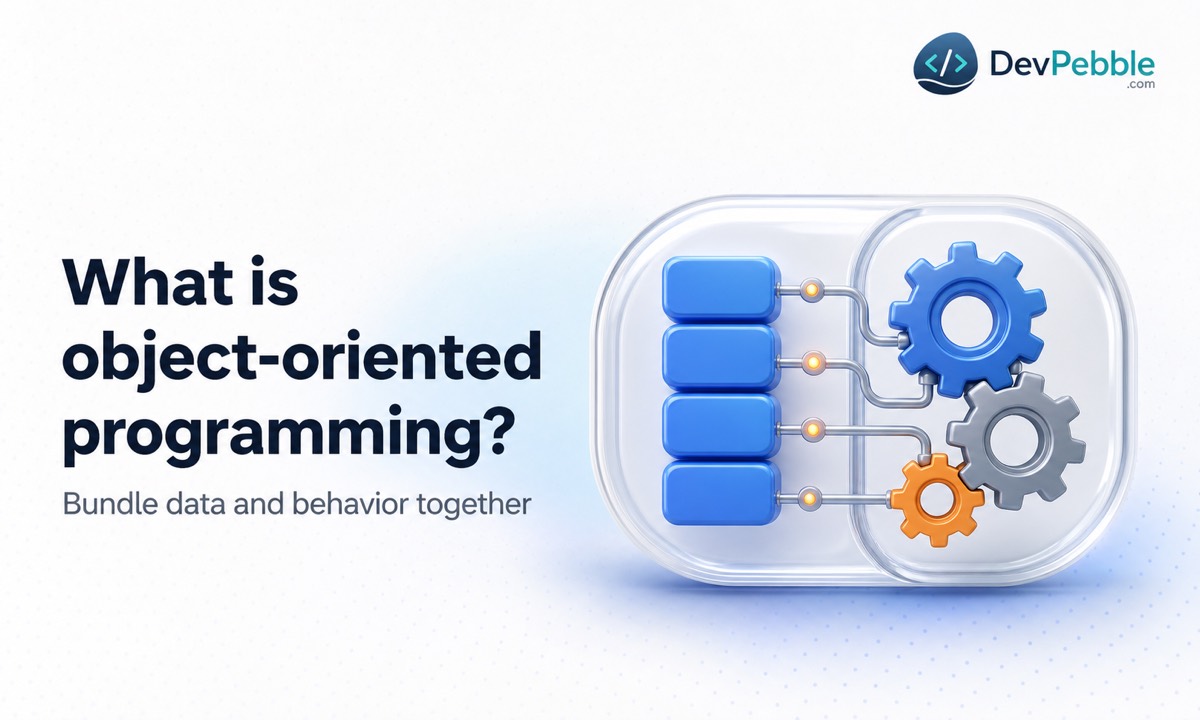
Object-oriented programming is a way of writing software, a programming paradigm, that organizes code around objects instead of around functions alone. An object bundles two things: data, called attributes, and behavior, called methods. Rather than scattering related information and the actions that use it across a program, OOP keeps them together.
The easiest way to picture this is a car. A car has properties like its color, current speed, and fuel level, and actions it can perform, like accelerating, braking, and turning. An object works the same way: it pairs properties (the data) with methods (the actions that read or change that data). That pairing is the idea everything else in OOP builds on.
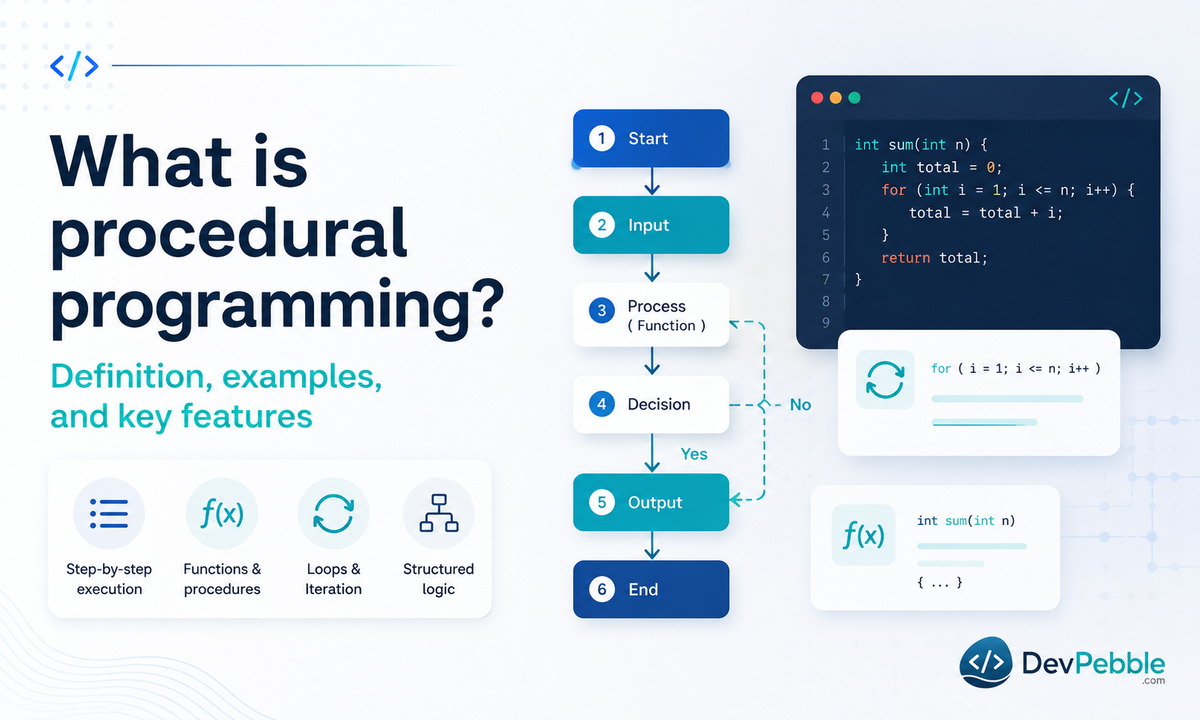
This differs from procedural programming, which runs a program as a sequence of functions with data passed between them. OOP groups data and behavior into single units; procedural code keeps them separate. A fuller comparison comes later.
Why object-oriented programming matters
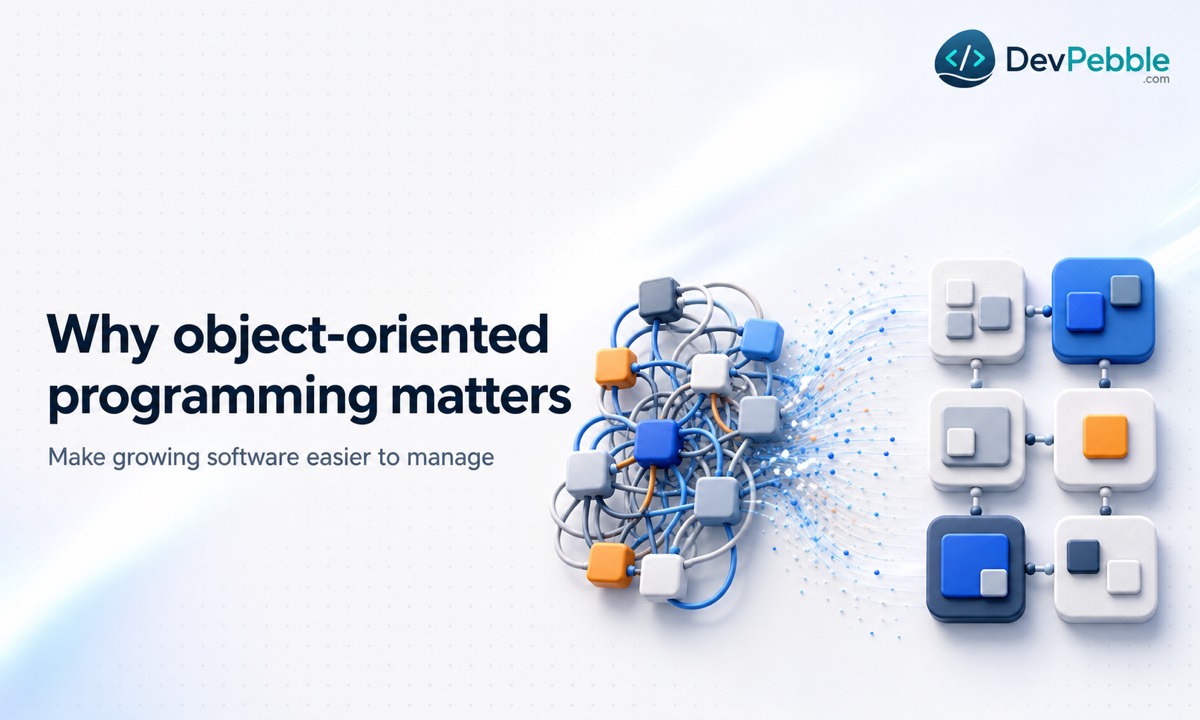
As a project grows, tracking every piece of data and every function that touches it gets hard. OOP breaks the system into smaller, self-contained objects, each responsible for one part, so you can reason about the piece you are working on without holding the whole codebase in your head.
Grouping related data and behavior also makes code easier to maintain: when a bug shows up, you can usually go straight to the object responsible instead of hunting through unrelated files. And because one class can produce many objects, you write less duplicated code. Still, OOP is not the right tool for every job. Small scripts and data- or math-heavy problems often fit procedural or functional styles better.
Classes and objects
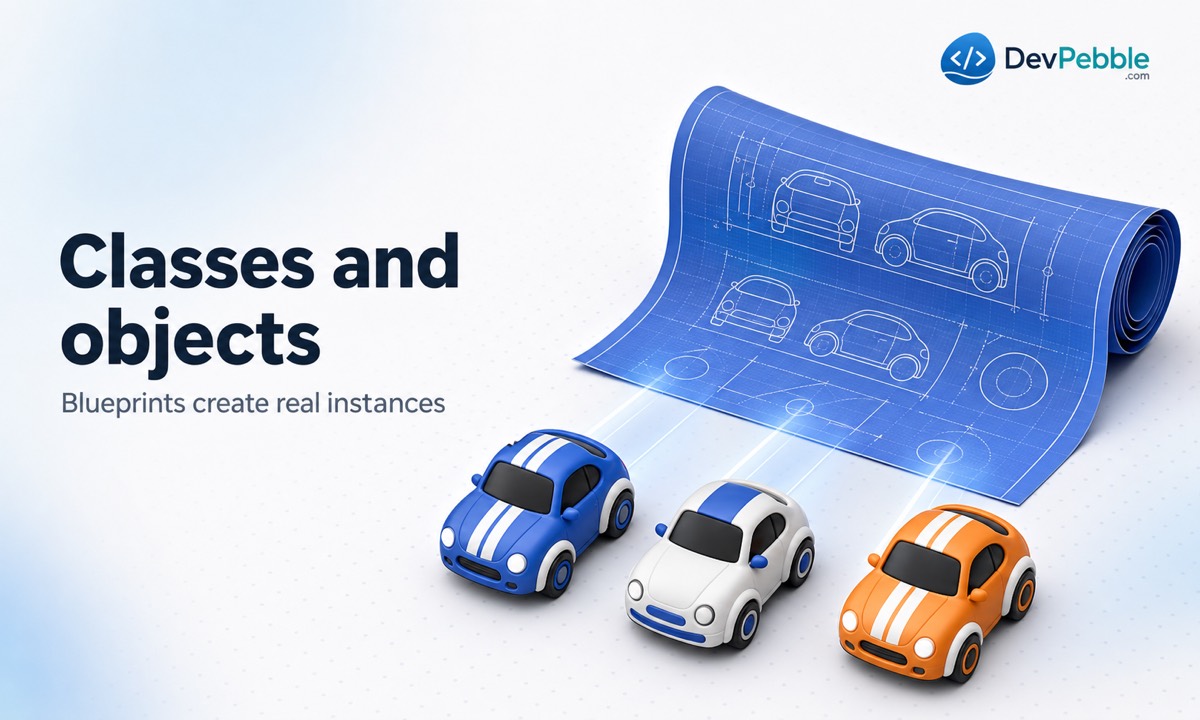
Classes and objects are the first building blocks you meet, and they are easy to mix up.
What is a class?
A class is a blueprint. It defines what data and behavior its objects will have without being any specific item itself. A Car class might say every car has a color, a speed, and an accelerate method, without describing one real car.
What is an object?
An object is a specific instance created from a class, with its own real values. If Car is the class, one particular red car doing 60 is an object. Each object has its own state (its current data), its own identity, and access to the behavior its class defines.
Class vs object: what's the difference?
| Aspect | Class | Object | |---|---|---| | Definition | A blueprint describing data and behavior | A specific instance made from a class | | Purpose | Defines the structure objects will follow | Represents an actual item with real data | | Creation | Written once by a developer | Instantiated from a class, often many times | | At runtime | Exists as a definition in code | Exists in memory, holding actual values | | Example | A Car class defining color and speed | A red Car object with color "red" and speed 60 |
Attributes, properties, and methods
Attributes (also called properties or instance variables) are the data stored inside an object, like a car's color or a bank account's balance. Methods are the actions an object can perform, like accelerating or depositing money. Languages use these terms slightly differently, but "attribute," "property," and "instance variable" usually point at the same idea.
Constructors and object initialization
A constructor is special code that runs when a new object is created, usually to set its starting data, so objects begin with valid values instead of empty or undefined attributes.
class Car:
    constructor(color, speed):
        this.color = color
        this.speed = speed

newCar = Car("red", 0)
The constructor sets the color and initial speed each time a new Car object is created.
The four pillars of object-oriented programming
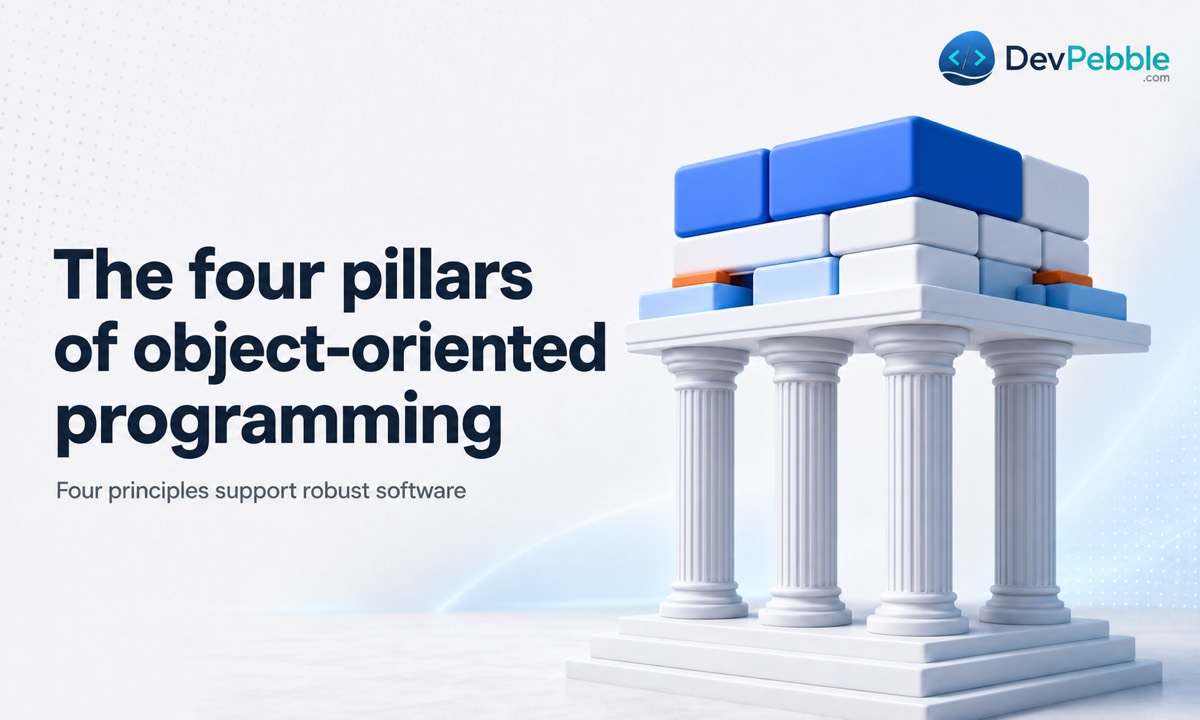
Four principles come up in almost every description of OOP: encapsulation, abstraction, inheritance, and polymorphism. They shape how objects are designed and how they work together.
Encapsulation
Encapsulation means protecting an object's data and controlling how other code reads or changes it. Instead of letting any part of a program modify data directly, changes go through defined methods. A bank account object might keep its balance private and only expose deposit and withdraw methods, blocking a withdrawal that would push the balance below zero.
Abstraction
Abstraction means hiding the messy internal details and exposing only what you need. At an ATM you pick options like withdraw cash or check balance, without knowing how the machine talks to the bank. In OOP, abstraction lets you work with an object through a clean interface without knowing every internal step.
Inheritance
Inheritance lets one class, the child, reuse and extend the data and behavior of another, the parent. It is an "is-a" relationship, since the child is a more specific version of the parent, like a SportsCar inheriting from a general Car. Inheritance cuts duplicated code, but leaning on it too hard, or building deep, tangled chains, makes software harder to follow.
Polymorphism
Polymorphism lets different objects respond to the same method call in ways that fit their own type. A makeSound() method behaves differently on a Dog than on a Cat, though the name is identical. It usually shows up in two forms. Method overriding lets a subclass replace a method it inherited, which is the runtime behavior most people mean by polymorphism. Method overloading lets several methods share a name but take different parameters, in the languages that support it.
How object-oriented programming works in practice
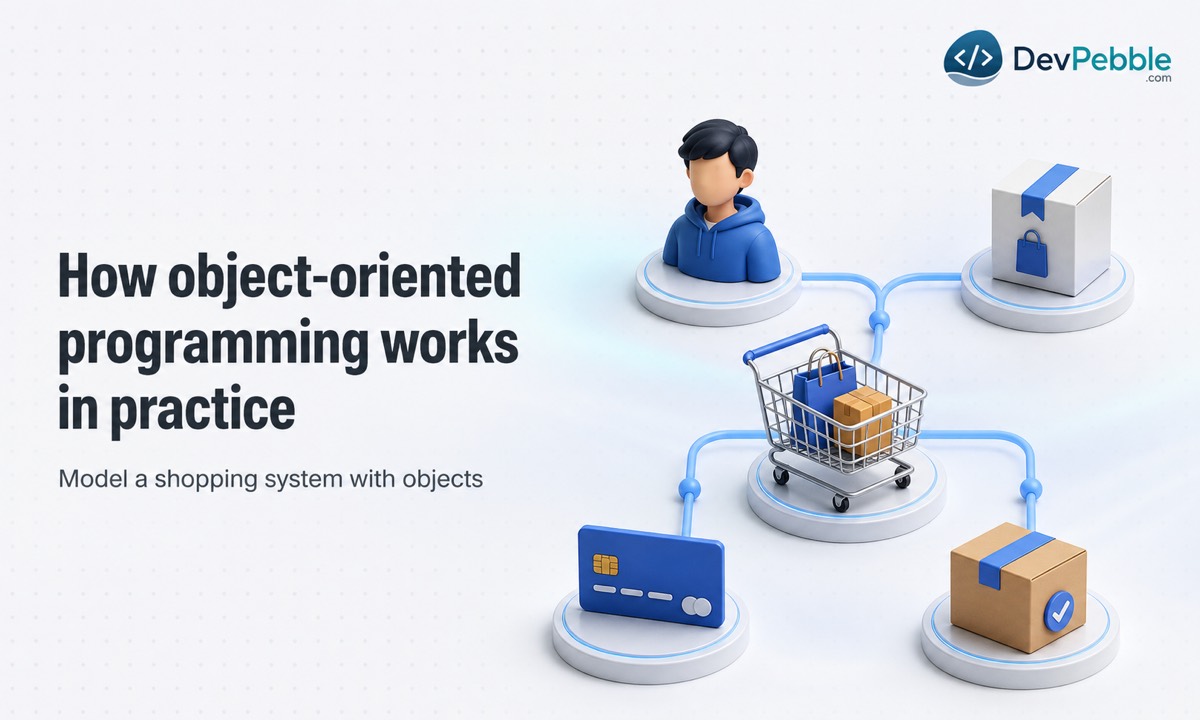
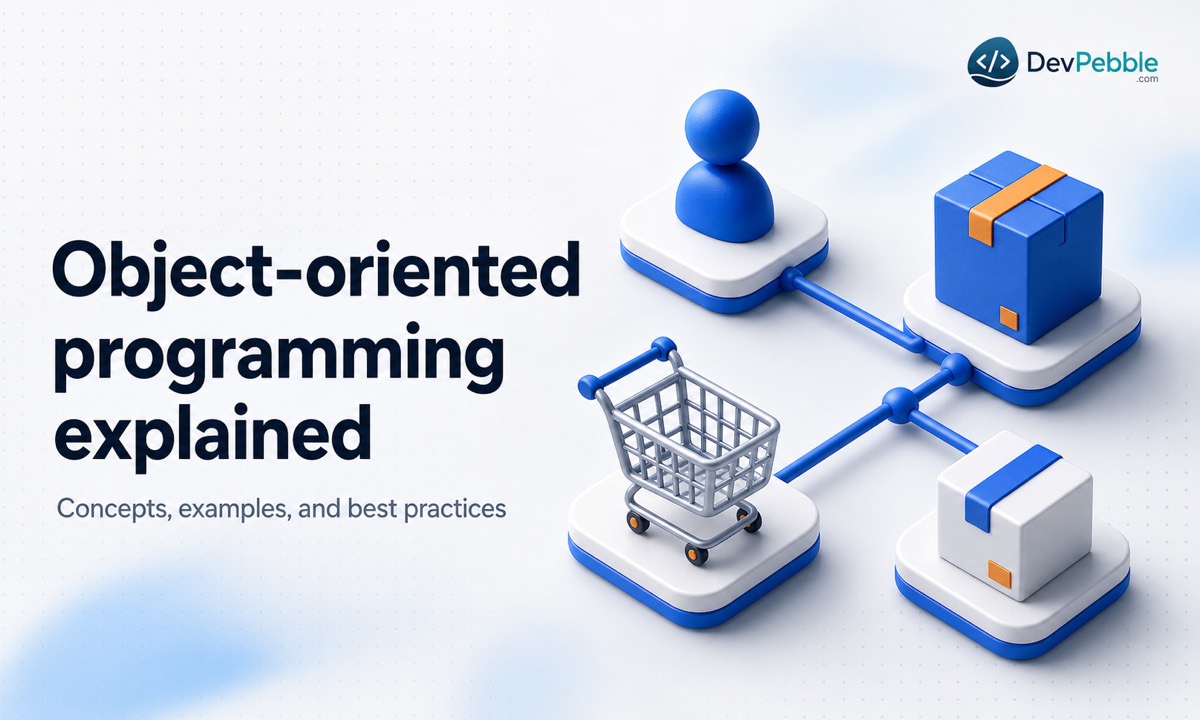
A small online shopping system shows the pieces clicking. You might model it with objects like Customer, Product, ShoppingCart, Order, and Payment.
Start by identifying the real-world entities: a Customer who browses, a Product for sale, a ShoppingCart of selected items, an Order for a completed purchase, and a Payment for the transaction. Then give each one data and responsibilities. A Product has a name, price, and stock; a ShoppingCart holds products and totals them; an Order tracks its items, shipping, and status.
Next you write classes for that structure and create objects from them. A shopper becomes a Customer object, and the items they pick land in their own ShoppingCart, each with its own state. Finally the objects talk to each other: the cart calls a Payment object to process the transaction, and a completed cart becomes an Order. That path, from a real-world problem to interacting objects, is what writing OOP feels like day to day.
A simple code example
A small ShoppingCart class shows the ideas without tying them to one language.
class ShoppingCart:
    constructor():
        this.items = []

    method addItem(product):
        this.items.append(product)

    method getTotal():
        total = 0
        for item in this.items:
            total = total + item.price
        return total
To use it, a program creates a cart and calls its methods:
cart = ShoppingCart()
cart.addItem(Product("Notebook", 4.50))
cart.addItem(Product("Pen", 1.25))
print(cart.getTotal())
This tiny example touches several OOP ideas. The class defines the structure while cart is one instance with its own state. Items are managed through methods rather than direct access (encapsulation), and the total sits behind a single getTotal() call (abstraction). The same class can spin up many independent carts, so reuse and object interaction appear too.
How objects and classes relate
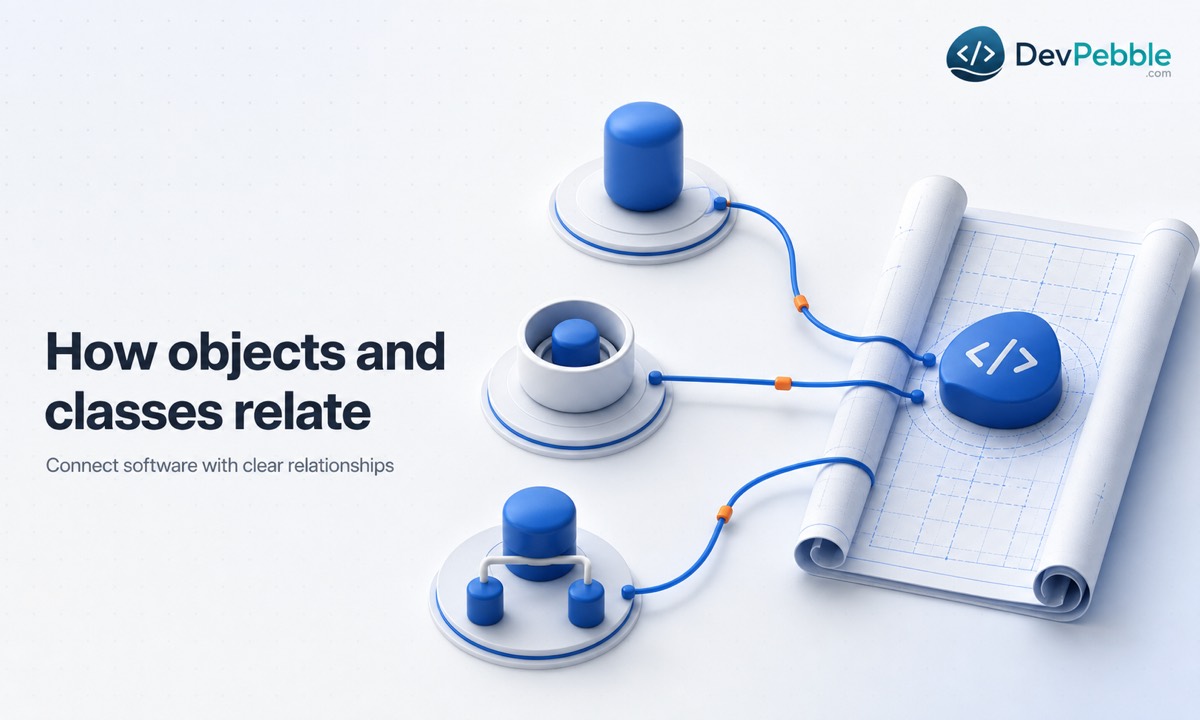
Objects rarely work alone, and how they connect is a big part of good design. Four relationships matter.
Association is a general link where two objects interact but exist independently: a Customer places an Order, but neither needs the other to exist.
Aggregation is a looser "has-a" relationship where one object contains another that can stand on its own: a ShoppingCart has Product objects, but a Product exists in the catalog whether or not it is in any cart.
Composition is a stronger "has-a" where the part cannot exist without the whole: an Order composed of OrderLine objects loses those lines the moment the Order is deleted.
Inheritance is the "is-a" relationship: a subclass is a more specific kind of superclass, like a DigitalProduct that inherits from Product. Unlike composition, it extends and specializes one class hierarchy rather than combining separate objects.
| Relationship | Type | Dependency | Example | |---|---|---|---| | Association | General interaction | Independent | Customer places an Order | | Aggregation | Has-a | Contained object can exist alone | ShoppingCart has Products | | Composition | Has-a (stronger) | Part depends on the whole | Order made of OrderLines | | Inheritance | Is-a | Subclass depends on superclass | DigitalProduct is a Product |
Advantages of object-oriented programming
Used well, OOP pays off in a few ways. Related data and behavior stay grouped, so code is easier to read. Classes can be reused to create many objects and extended through inheritance. Changes often stay isolated to a single class, which keeps maintenance and testing contained. New object types can usually be added without disrupting existing code, polymorphism lets different objects stand in for each other, and clear class boundaries let a team work in parallel. The caveat worth repeating: these benefits come from thoughtful design, not the paradigm by itself.
Disadvantages and limitations
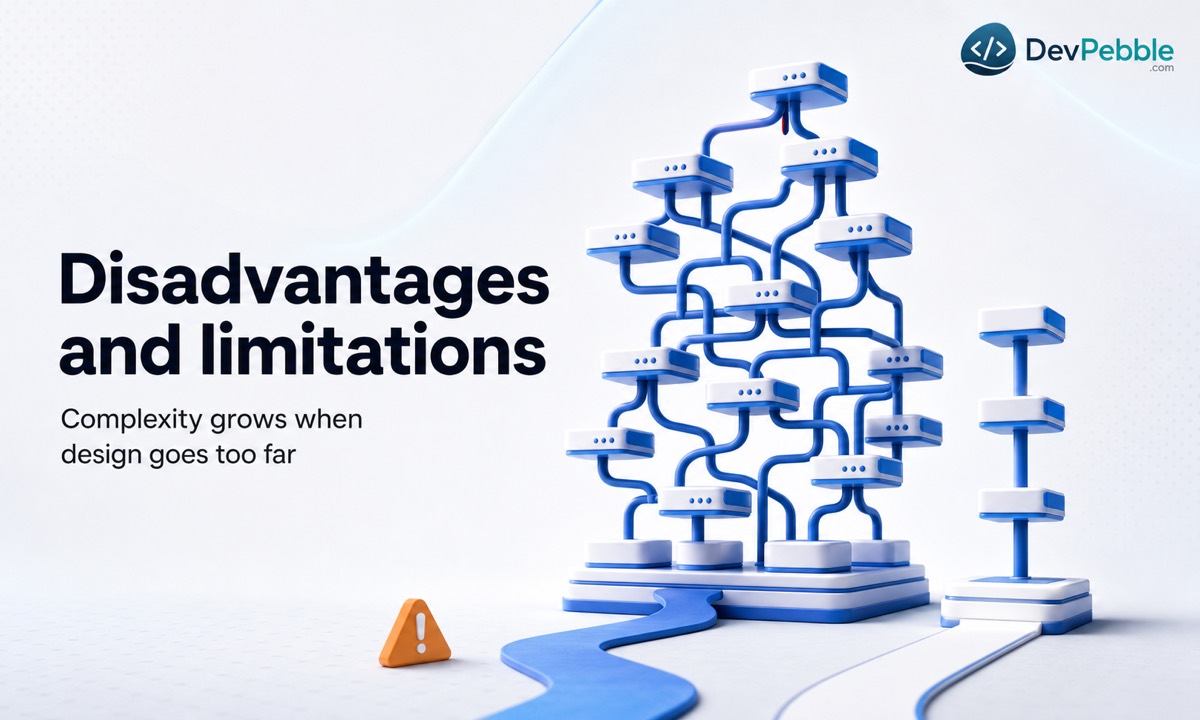
OOP has real downsides too. Small programs can pick up needless complexity when every bit of logic gets wrapped in a class it never needed. Designing a solid class hierarchy takes planning that a short procedural script skips, and deep inheritance chains get hard to trace and change safely. The extra layers of abstraction and object creation can add memory or performance overhead, and some problems, especially data transformation and heavy math, do not map cleanly onto objects. OOP is one tool among several, not a default answer.
Object-oriented programming vs procedural programming
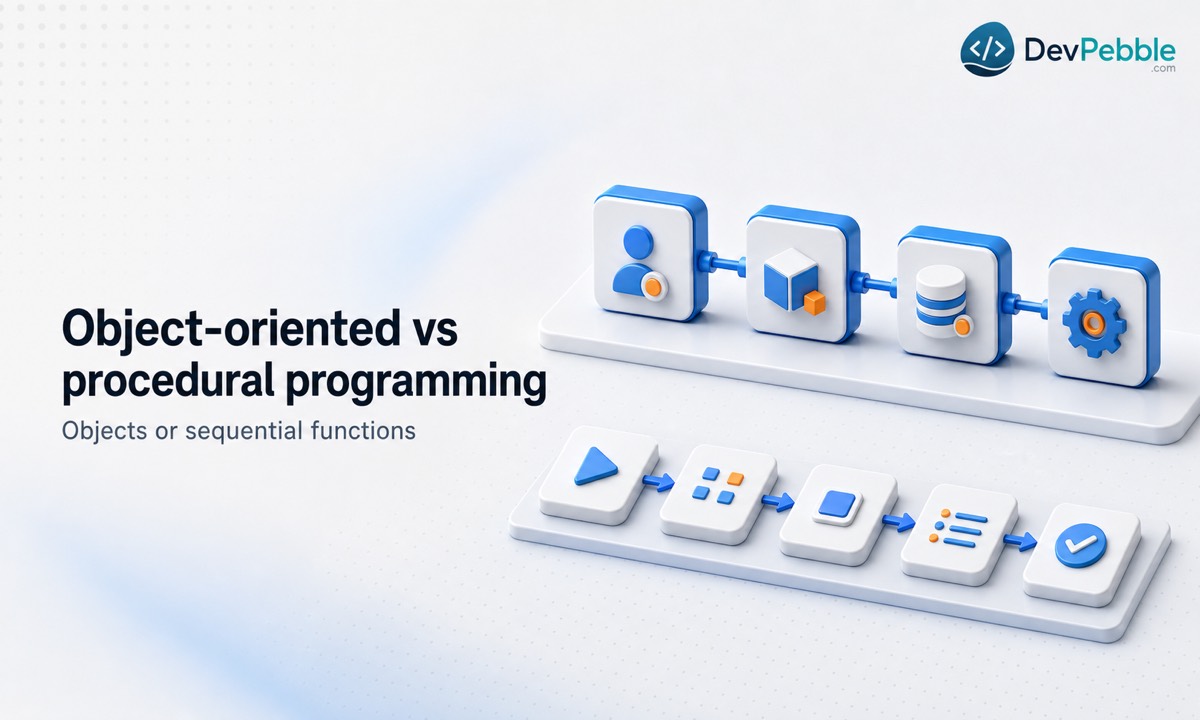
The clearest way to understand OOP is to set it next to the style it often replaces.
| Aspect | Object-oriented | Procedural | |---|---|---| | Main focus | Objects combining data and behavior | Functions operating on data | | Structure | Built around classes and objects | Built around sequential functions | | Data handling | Data usually kept inside objects | Data usually passed between functions | | Reuse | Classes, inheritance, and objects | Reusable functions | | State | Managed within individual objects | Often held in shared variables | | Fits | Systems with many interacting entities | Simple scripts and linear processing |
Procedural programming suits small scripts, automation, and cases where data flows through a clear sequence of steps. OOP fits problems with many interacting entities, complex rules, and applications expected to grow. Neither wins by default; the problem decides.
Object-oriented programming vs functional programming
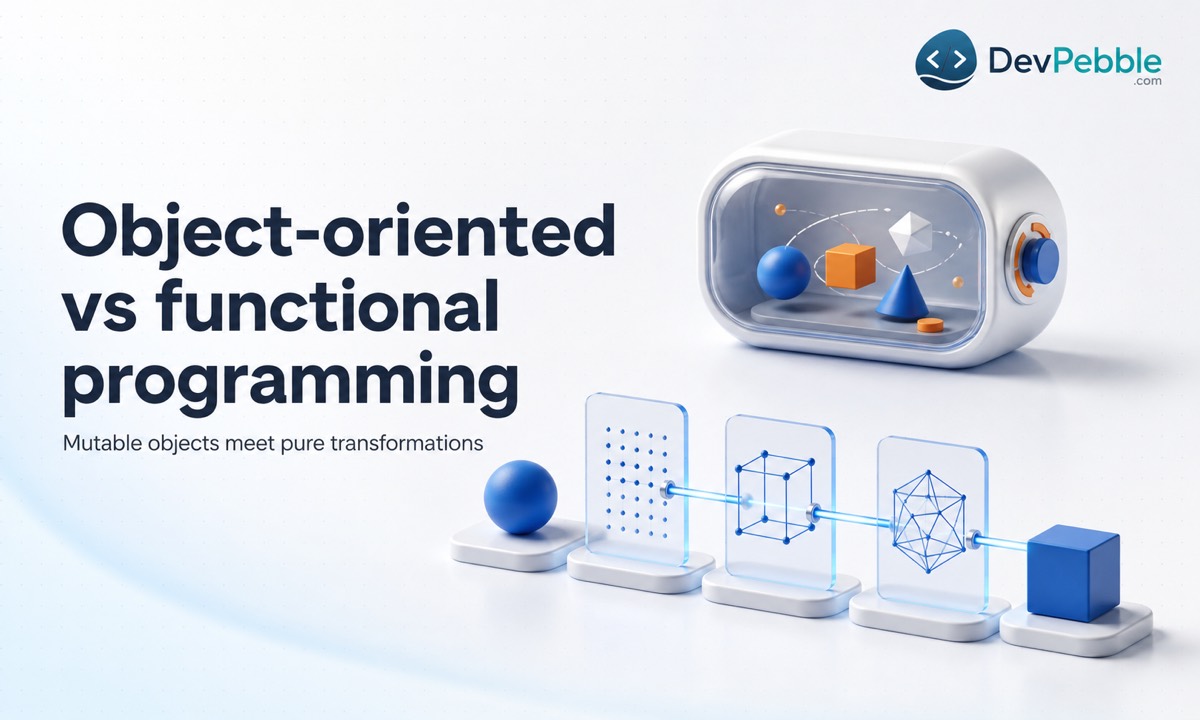
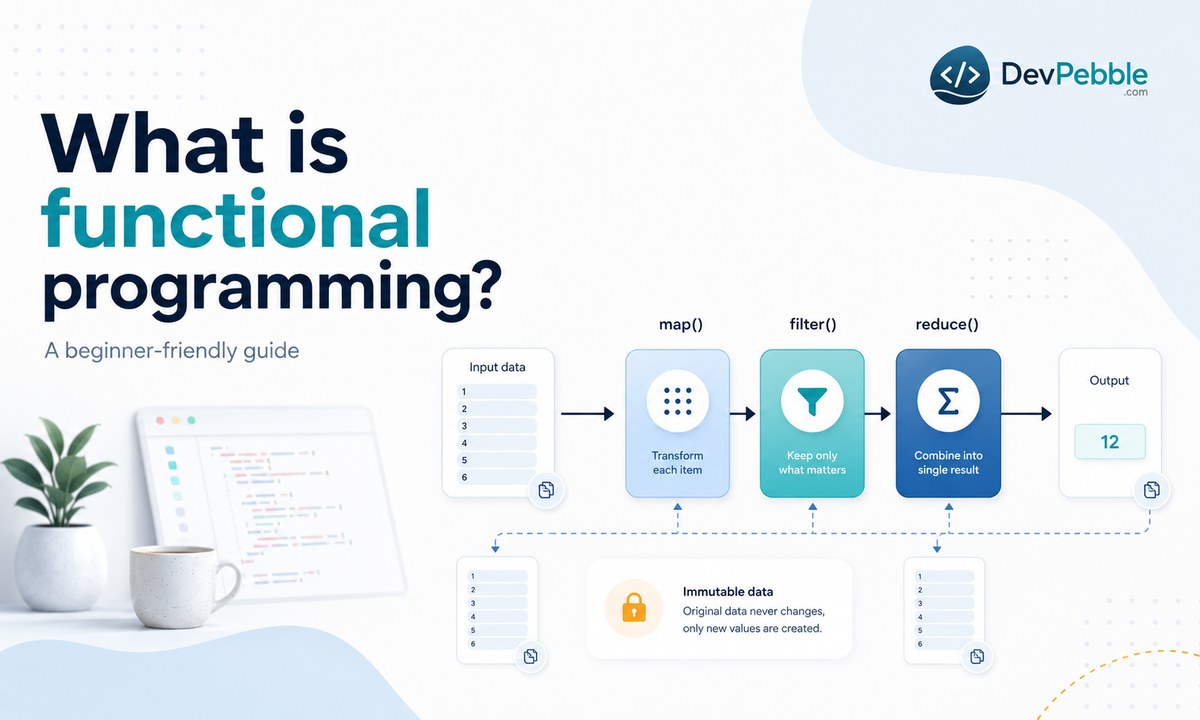
OOP groups state and behavior inside objects and lets that state change through method calls. Functional programming takes a different stance: it leans on pure functions, which return the same output for the same input and avoid changing outside data, and on immutability, where data is transformed into new values rather than modified in place. Many modern languages support both, so you can keep an object-oriented structure while using functional techniques where they fit.
Popular object-oriented programming languages
Most mainstream languages support OOP, though they implement it a little differently. Java is class-based, with nearly everything organized through classes, and is common in large, long-running applications. C++ supports object-oriented, procedural, and generic programming, so you can mix styles. C# centers on classes, interfaces, and inheritance and is tied to the .NET ecosystem. Python supports classes, inheritance, and method overriding while also allowing procedural and functional code in the same file. Ruby is built around objects, with most values being objects, and Kotlin blends class-based OOP with functional features.
JavaScript is the interesting one. Under the hood it is prototype-based, even though it offers class syntax. That syntax is mostly a more readable layer over the same prototype system. So it does not behave identically to strictly class-based languages like Java or C#.
Design principles and best practices
Applying OOP well comes down to a handful of habits, not memorizing syntax. These are the ones I reach for on real projects.
Give each class one clear responsibility
A class should have one reason to change. When it handles several unrelated jobs, an update to one can quietly break another and it gets harder to test. If it starts sprawling, split it into smaller, focused classes.
Favor composition over inheritance
Combining smaller, independent objects is usually more flexible than deep inheritance, and it ages better because it avoids tying unrelated behavior to one hierarchy. Reach for inheritance only when there is a genuine "is-a" relationship, not just to borrow a method.
Program to an interface, not an implementation
Write code that depends on a general contract rather than one concrete class, so you can swap or extend behavior later without rewriting everything that relied on it.
Keep coupling low and cohesion high
Loose coupling means objects lean on each other as little as possible, so a change in one is less likely to break another. High cohesion means a class stays focused on one purpose. Together they keep a codebase easy to change over time.
Protect internal state, and name things clearly
Keep an object's data behind its own methods instead of letting outside code edit it directly, which prevents invalid states. Pair that with names that say what they mean, like calculateTotal() rather than a vague process().
Common mistakes to avoid
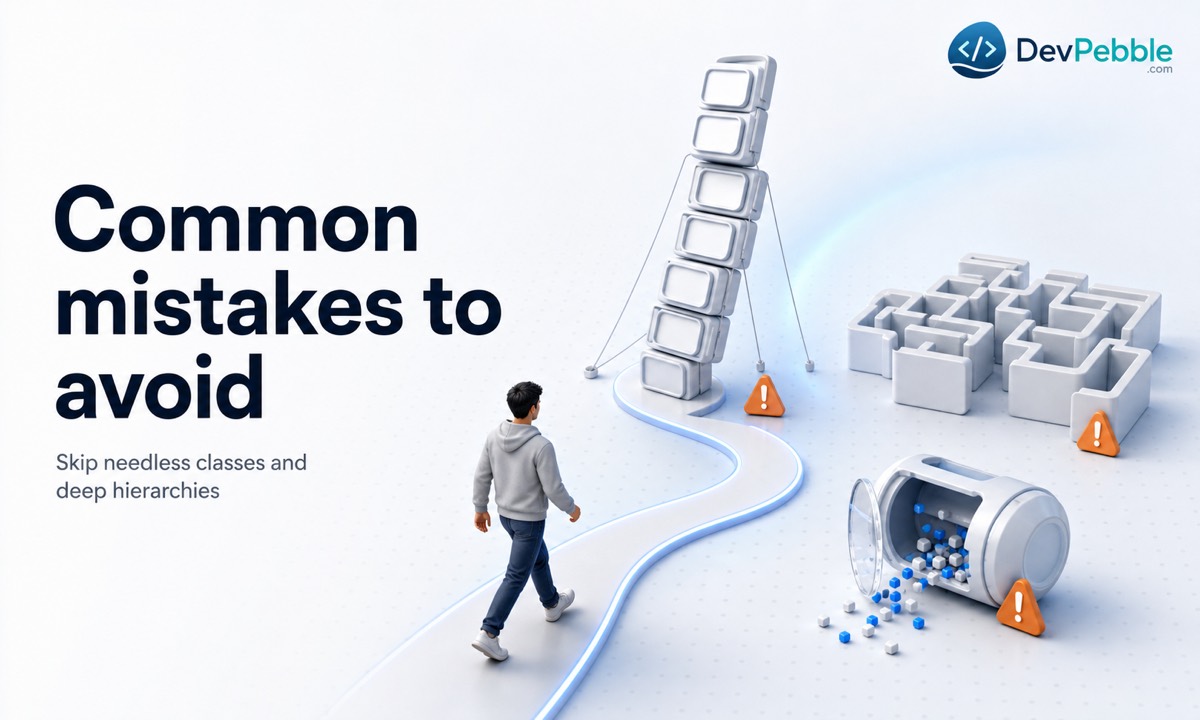
A few traps come up again and again. The most common is creating classes for everything, wrapping simple operations that a plain function would handle better. Close behind is building deep inheritance hierarchies that become hard to follow. Using inheritance purely to reuse a method, with no real "is-a" relationship, produces the same fragile result; composition fits better there. Another is exposing internal data by letting external code read or change it directly, which throws away the protection encapsulation provides. Finally, people confuse encapsulation with data hiding. Data hiding is one technique that supports encapsulation, but encapsulation is the broader idea of bundling data with the behavior that acts on it; treating them as the same thing leads to designs that hide data without organizing anything.
When should you use object-oriented programming?
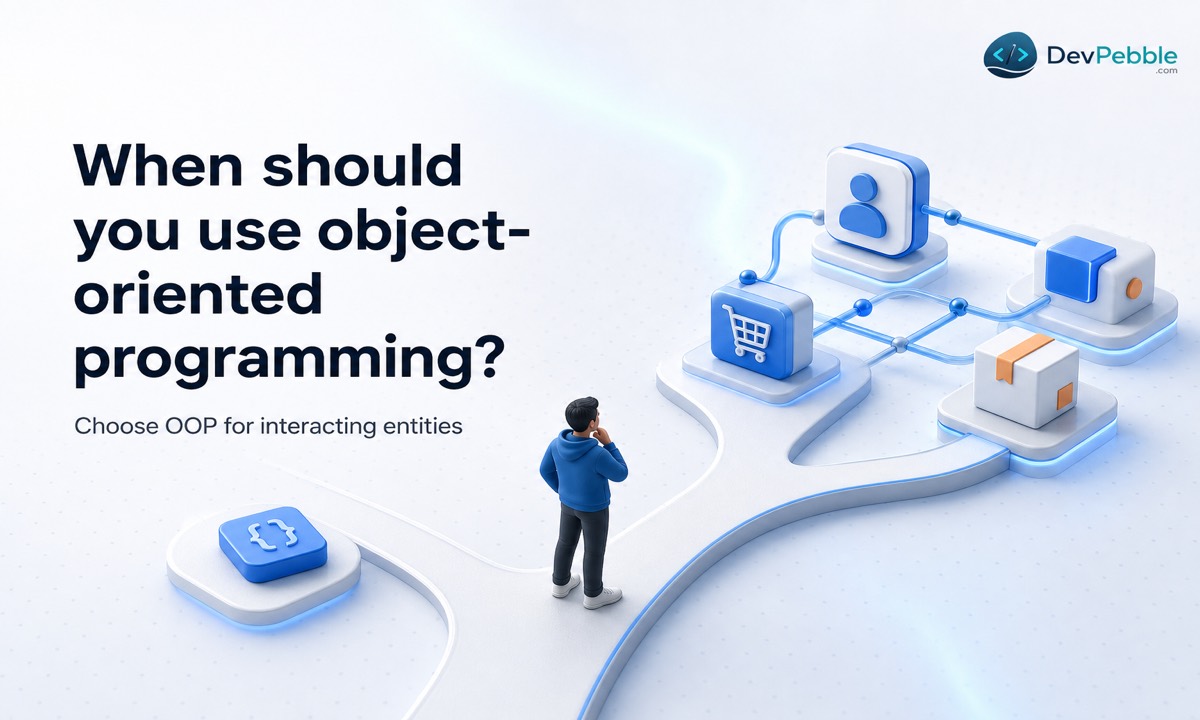
OOP shines when a problem has many interacting entities that carry their own state and behavior. Ecommerce maps naturally, with products, customers, carts, and orders as obvious objects. Banking apps benefit because encapsulation controls access to sensitive account data, and games fit because characters and items each hold their own state. Graphical interfaces, enterprise systems, and desktop or mobile apps benefit too, since they involve many moving parts and long-term upkeep.
It is a weaker fit elsewhere. Very small scripts rarely justify designing classes when a few functions do the job. Data transformations and pure math usually fit procedural or functional code better, and simple linear tasks do not need the structure OOP adds.
How to learn object-oriented programming
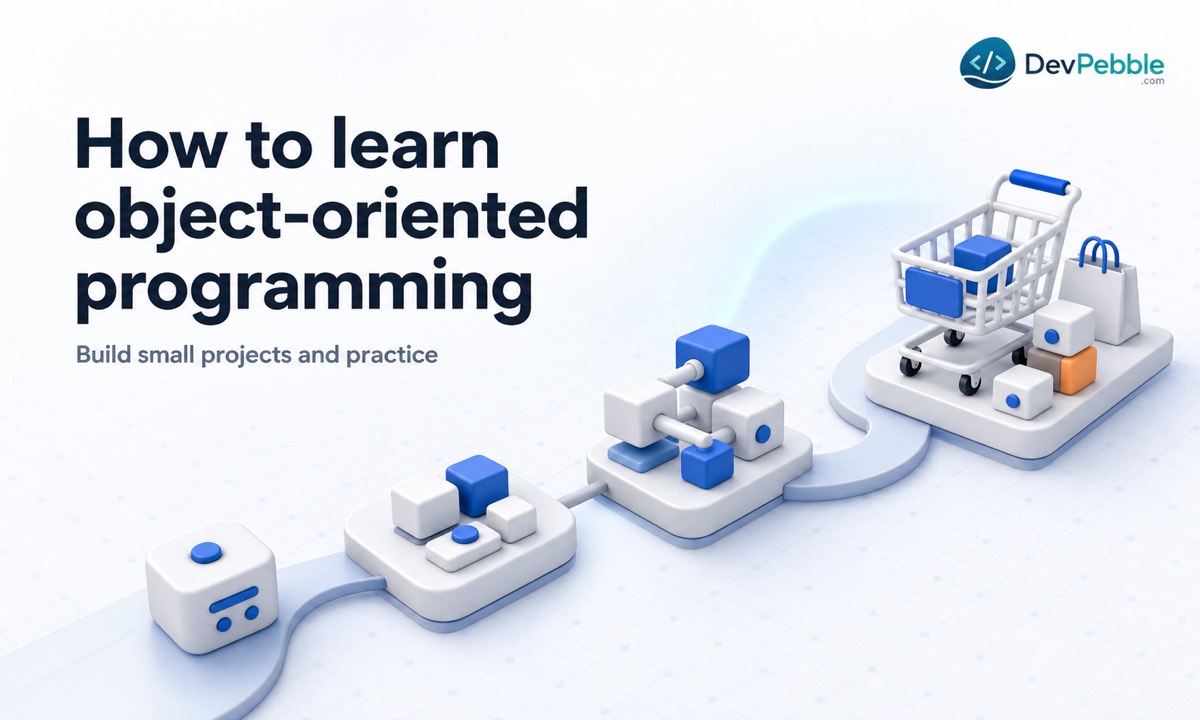
The fastest path is building, not reading. Write simple classes and create objects from them until attributes and methods feel natural, then practice the four pillars in small examples instead of just reading definitions. Once those click, build a small project: a library catalog, a student record system, a banking app, or a shopping cart like the one above. Study how objects relate through association, aggregation, and composition as you go. One exercise teaches more than most tutorials: take a procedural program you understand and refactor it into classes and objects. Feeling where the structure helps, and where it just adds ceremony, is what turns theory into judgment.
Conclusion: is object-oriented programming worth learning?

Object-oriented programming gives you a practical way to organize software around classes and objects, using encapsulation, abstraction, inheritance, and polymorphism to keep complexity in check as an application grows. It is not the only right approach; procedural and functional programming still earn their place, and picking the right paradigm for the problem matters more than following one style everywhere. The most useful next step is not reading another definition but building something small, like a shopping cart, and applying these ideas to it.