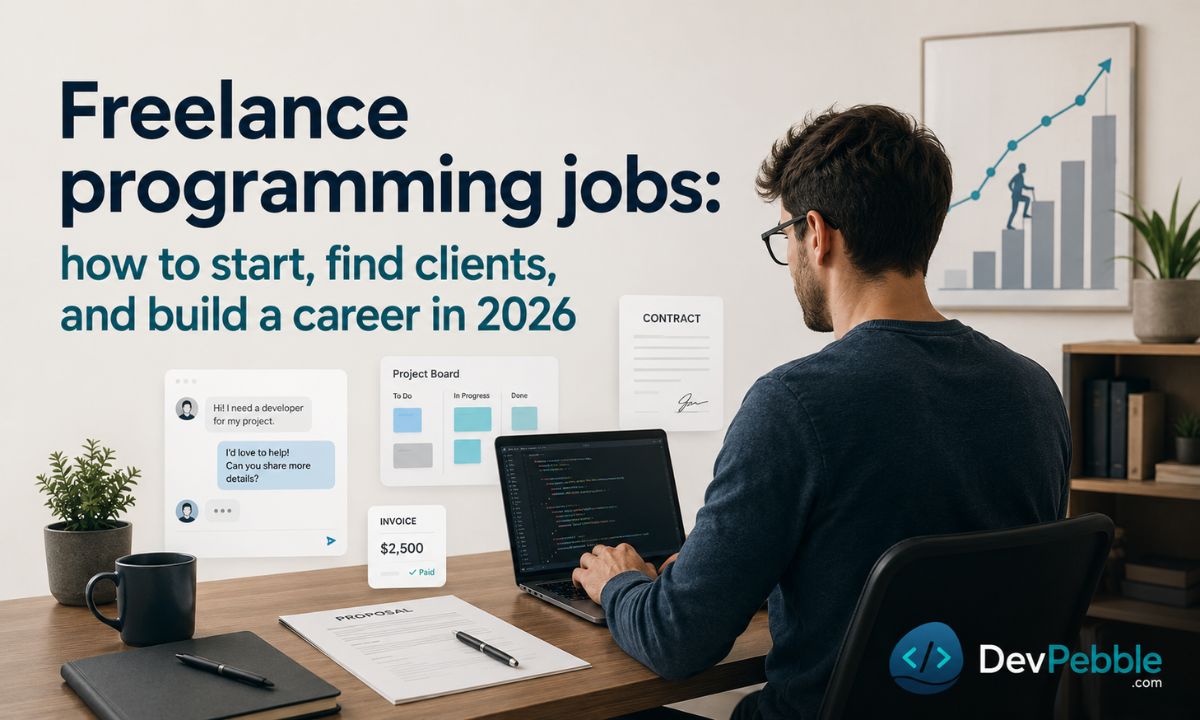
Freelance programming jobs: how to start, find clients, and build a career in 2026
A practical guide to freelance programming jobs — how to start with no experience, the skills that get you hired, where to find clients, what you can earn, and how to win work and dodge scams in 2026.
On this page⌄
- What are freelance programming jobs?
- How it works when you're starting out
- The skills that get you hired
- Where to find freelance programming jobs
- Types of work you can start with
- How to build a portfolio with no clients yet
- What you can actually earn
- How to apply for freelance programming jobs and win clients
- Mistakes that cost beginners clients
- Spotting scams and dead-end jobs
- Is freelance programming still worth it in 2026?
- Bringing it together
- FAQ
If you can already write code, or you're learning right now, freelance programming jobs are one of the more flexible ways to earn online. You don't need a degree, an office, or years of experience to start. You do need a clear sense of how the work runs, which skills get you hired fastest, and how to position yourself so clients can find you.
What are freelance programming jobs?
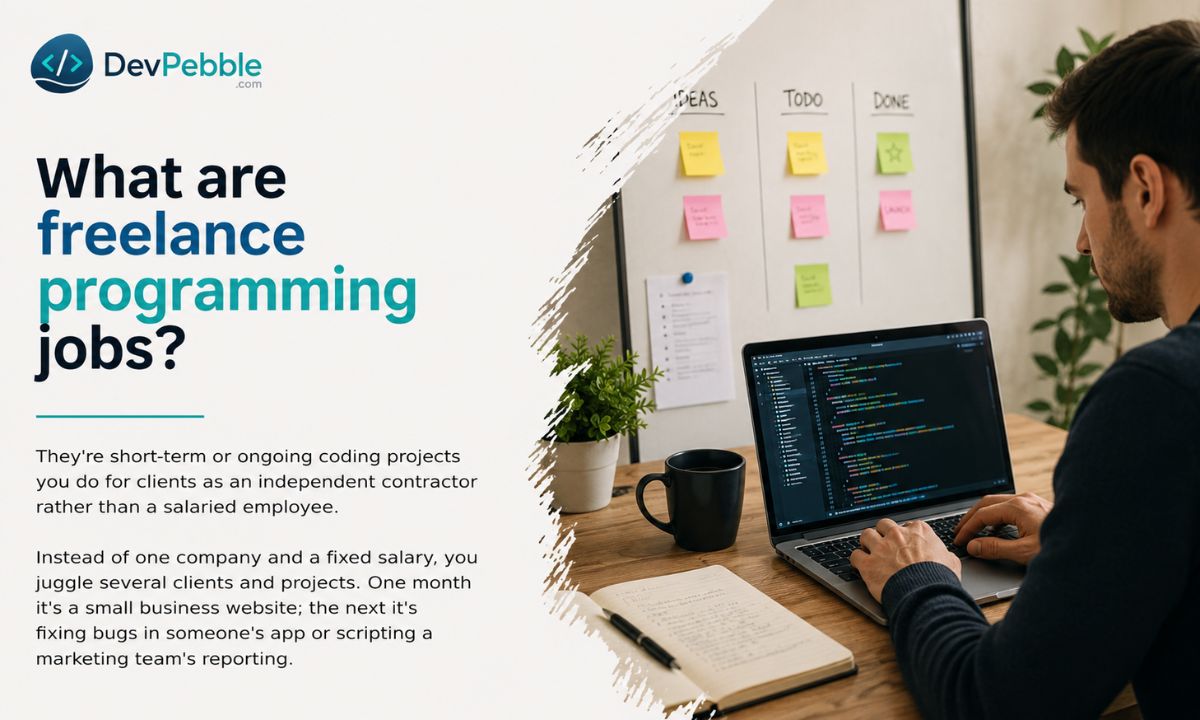
They're short-term or ongoing coding projects you do for clients as an independent contractor rather than a salaried employee. Instead of one company and a fixed salary, you juggle several clients and projects. One month it's a small business website; the next it's fixing bugs in someone's app or scripting a marketing team's reporting.
Who hires freelance developers?
More people than beginners expect: small businesses that want a site but can't justify a full-time hire, startups racing to ship an MVP cheaply, agencies that outsource their coding, founders with an app idea and no technical background, and larger companies covering a gap on the team.
How freelancing differs from a regular job
In a normal job, your employer sets your hours, tasks, and pay. Freelancing flips that: you set your rates, pick your projects, and decide when and where you work. Most of it happens online, so it's location independent in a real sense. The catch is that everything else lands on you too: finding clients, chasing invoices, managing your workload. Knowing how the process works before you start keeps it manageable.
How it works when you're starting out
A lot of people assume they need years of experience before anyone will pay them to code. Not true, but you do need a realistic picture of how a job flows.
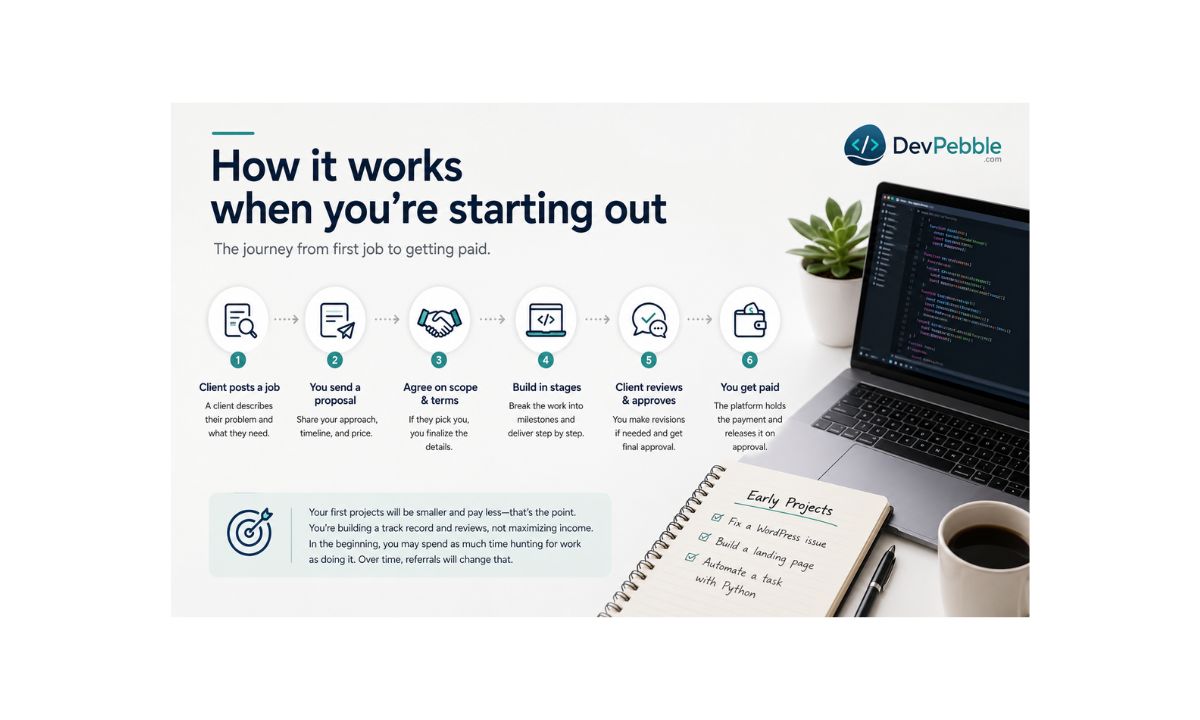
Most follow the same arc: a client posts a job, you send a proposal with your approach and price, you agree on scope and terms if they pick you, you build in stages, and you get paid on approval. Upwork, Fiverr, and Freelancer.com handle the contract and payment side, which is why they're a sensible place to start. Later, many developers move toward landing clients directly.
Your first projects will be smaller and pay less, and that's the point. Early on you're building a track record and reviews, not maximizing income. Most working freelancers started with unglamorous jobs: fixing a broken WordPress site, building a landing page, writing a small Python script to kill a repetitive task. That's the work that leads to better-paid jobs later. Just don't expect passive income; in the first months you may spend as much time hunting for work as doing it, and that ratio only improves once referrals start selling for you.
The skills that get you hired
You don't have to know everything. You need one area you know well enough to solve real problems.
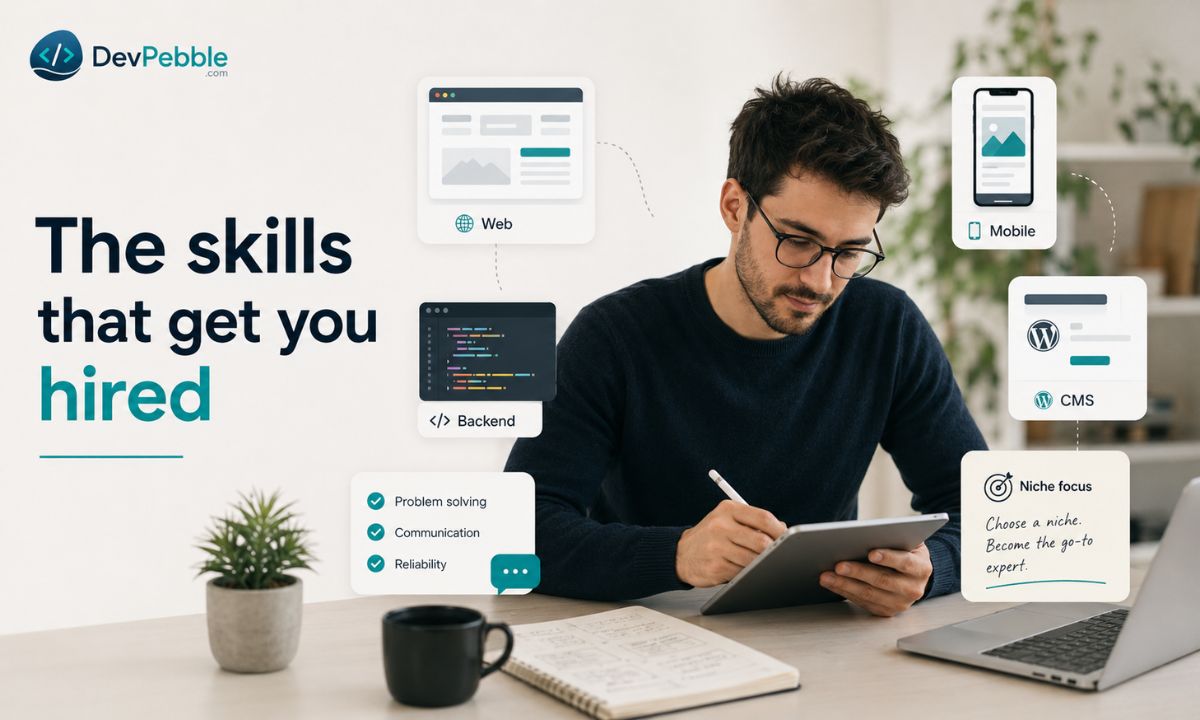
Web development is the most consistently in-demand. HTML, CSS, and JavaScript get you into front-end work; add React or Vue and you can charge more. On the back end, Node.js, Python, or PHP open up full-stack jobs. Python is worth singling out as the go-to for data tasks, automation, API work, and anything AI-adjacent, and plenty of small clients have simple scripting needs a beginner can handle. Mobile pays more but asks more: native Android (Kotlin or Java) and iOS (Swift) at the demanding end, with Flutter and React Native requested by clients who want one codebase for both. And don't dismiss WordPress and CMS work; a huge share of small business sites run on it, and those owners constantly need themes, plugins, and speed fixes, some of the steadiest beginner work there is.
Technical skill alone won't win the work. The freelancers who last write clearly, since most of the job happens over email and chat; they break a project into deliverables and estimate it without wishful thinking; and even back-end developers do better when they grasp how users move through an interface.
One more thing: pick a niche. Offering everything to everyone is the classic beginner mistake. Clients trust "I build Shopify stores with React" far more than "I do programming." Start with one or two areas where you're strongest, build a couple of portfolio pieces, and widen your range later once the reviews back you up.
Where to find freelance programming jobs
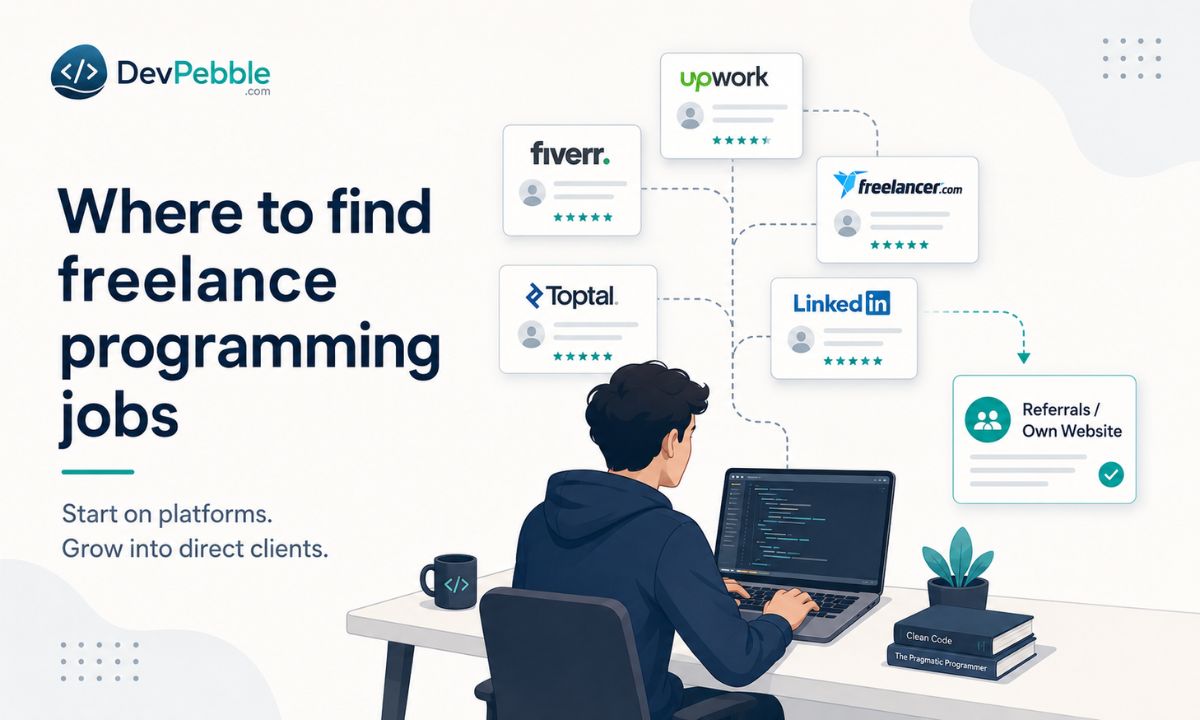
Once your skills are solid, the problem is getting in front of clients. For beginners, platforms are the practical answer: they handle contracts, payments, and disputes so you can focus on the work.
Upwork is one of the biggest marketplaces, covering everything from one-off tasks to long contracts. You bid on listings with proposals, and competition is tough for new accounts, so a complete profile matters. It charges a service fee on earnings; since 2025 that's a variable rate up to about 15% depending on the contract, with most freelancers near 10%, shown before you submit. Check Upwork's current fee page before pricing, since these change.
Fiverr runs the other way. Instead of bidding, you publish "gigs," fixed listings clients browse and buy, like "I'll build a responsive React landing page." It works for beginners when the gig is specific and searchable. "I will do programming" goes nowhere; a narrow, clear offer gets bought.
Freelancer.com is another bidding site with lots of small, task-based work, especially bug fixes and WordPress jobs. Rates skew low and competition is heavy, but it's a reasonable place to land first paid jobs and build a review history.
Toptal is a network for top-tier developers. The screening is hard, with technical tests and a trial project, so it isn't an entry point, but it's worth keeping as a goal since the clients on the other side pay well.
Many experienced freelancers eventually leave platforms and find work through LinkedIn, referrals, and their own sites. LinkedIn works especially well for business clients and SaaS companies; a profile stating what you build and that you're available can pull in inbound leads over time.
One caveat worth repeating: platform rules, fees, and ranking algorithms change often, so check a platform's official help docs before you sign up.
Types of work you can start with
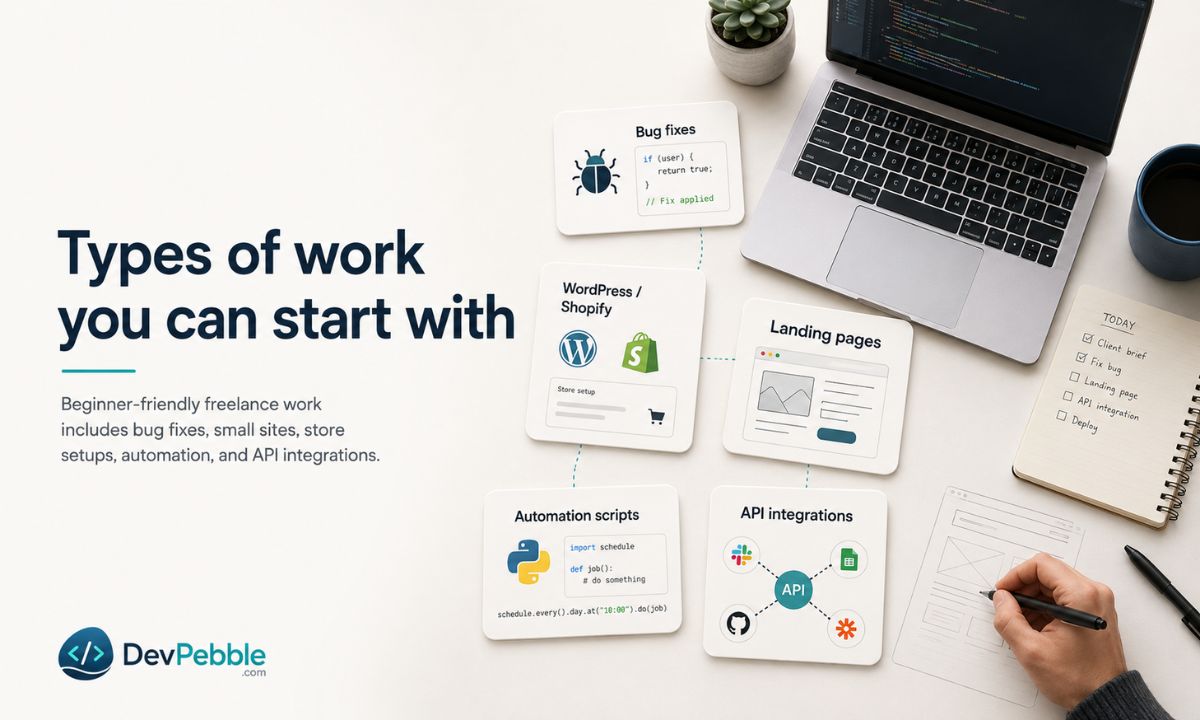
Not every coding job suits a beginner, but plenty do. Bug fixing and small code reviews are among the most available entry-level work, usually small and well defined, which is ideal for building a track record fast. WordPress and Shopify work is a huge slice of freelance web jobs, custom themes, plugin setups, speed fixes, WooCommerce setups, and you don't have to be senior to be useful. Landing pages and simple sites never stop being in demand, since anyone launching a product or brand needs one. Automation scripts are growing too: bulk-renaming files, scraping data, scheduling emails, cleaning up spreadsheets, often a working knowledge of Python covers it. And API integrations, connecting two tools so they share data, are reachable if you understand REST and can write a clean integration.
How to build a portfolio with no clients yet
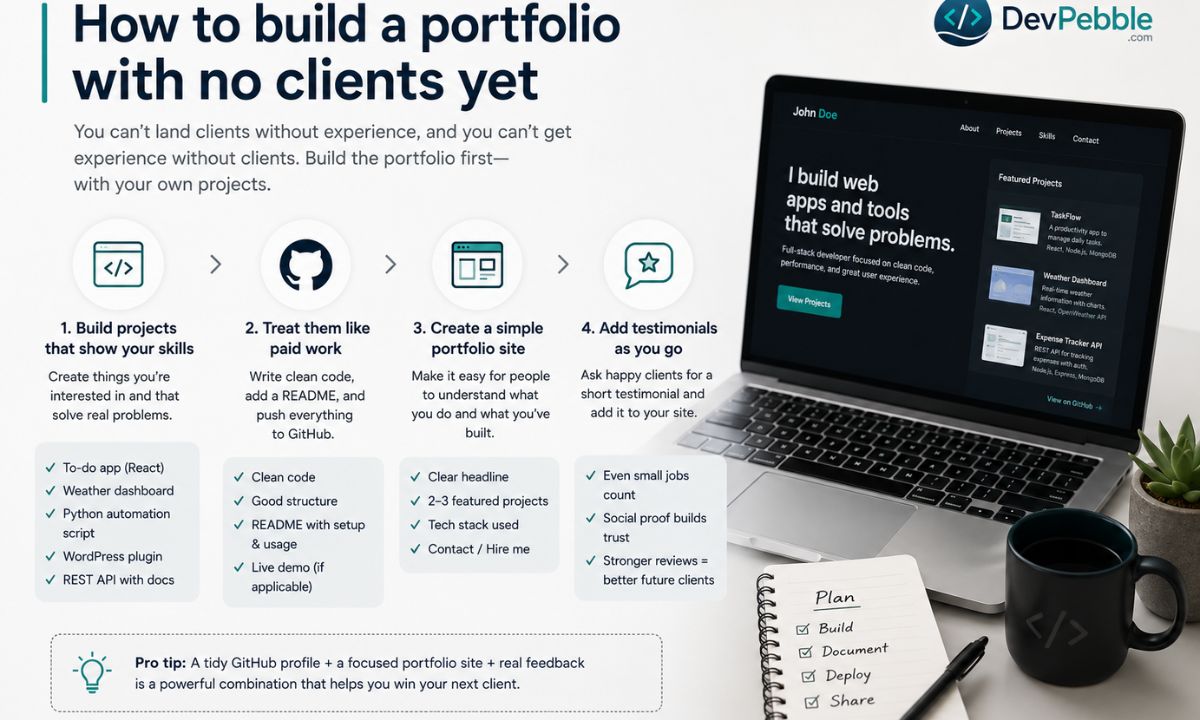
The classic trap: you can't get clients without experience, and you can't get experience without clients. The way out is to build the portfolio before you need it, using your own projects.
You don't need a paying client to have something to show: a to-do app or weather dashboard in React, your own portfolio site, a Python script that automates something annoying, a WordPress plugin, a small REST API with docs. Treat each like paid work, clean code, a README, everything on GitHub. A tidy GitHub profile is one of the strongest signals you can send a technical client.
Then build a simple portfolio site: a clear line on what you do, two or three projects with a note on what each does and the stack, and a way to contact you. Once you start landing clients, ask for a line of written feedback and add it. Testimonials, even from tiny jobs, carry real weight with the next buyer.
What you can actually earn

Earnings vary a lot, and any source that hands you one confident number is overselling. A few factors set your rate: specialized skills like machine learning or React Native pay more than generalist web work; a visible portfolio lets you charge more; long-term clients with well-scoped projects pay more reliably than one-off bargain hunters; and being easy to work with pays best of all, since people who get rehired and referred waste far less time chasing the next job.
The rough shape: beginners, especially on Fiverr or Freelancer.com, work cheap to build reviews, with small fixed-price jobs from a modest fee to a few hundred dollars. Mid-level freelancers with a real portfolio charge hourly rates that hold up against entry-level employment, sometimes well above it. Experienced freelancers with a reputation and repeat clients often out-earn salaried developers in comparable roles. Whatever the band, income is lumpy at the start, so build a cushion before you lean on it.
How to apply for freelance programming jobs and win clients
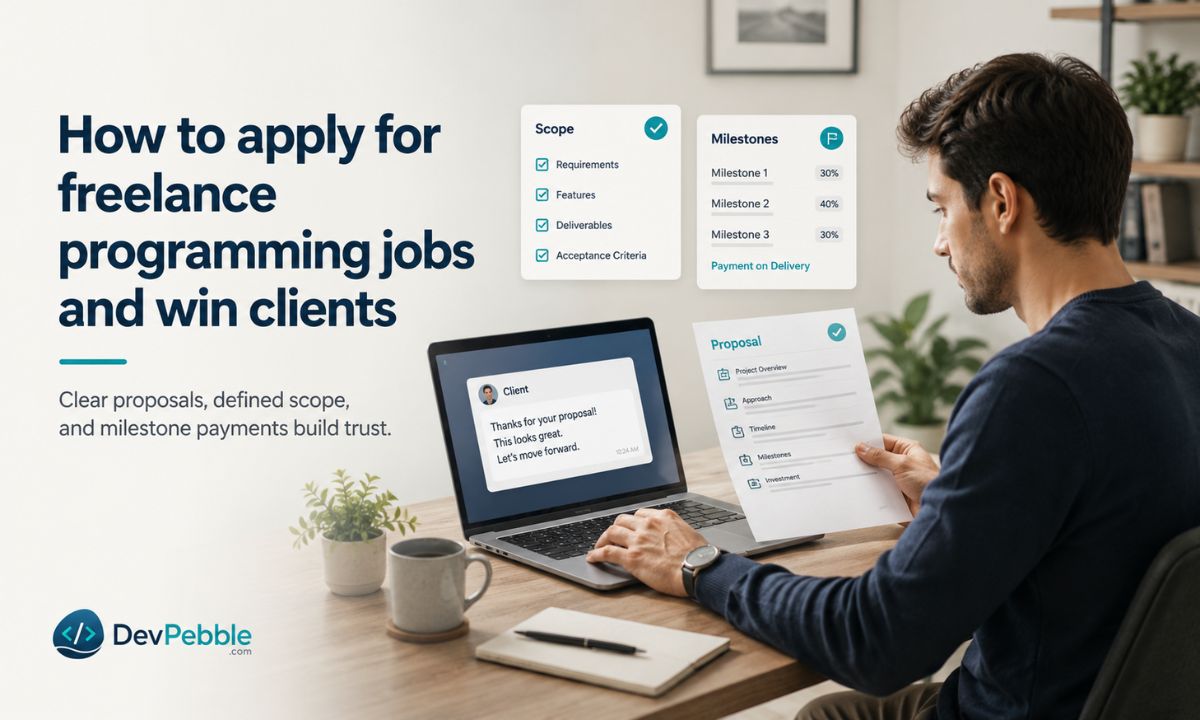
Setting up a profile is the easy part. The first client is where most people stall, and the gap between a proposal that gets ignored and one that gets a reply comes down to a few habits.
Write proposals about the client, not yourself. A client who posted a job already assumes you can code; what they're really asking is whether you understand what they need. Start by restating their project in your own words, which proves you read it. Give your approach in a sentence or two and keep it short, because on Upwork they're skimming a stack of these. Point to one relevant thing you've built, or if you have no paid work yet, link a GitHub project that solved a similar problem. Finish with one easy next step: a specific question, or an offer to talk briefly before you start.
Pin down scope before you commit. Get it in writing: what exactly are you delivering, what counts as done, and by when? Fuzzy scope is how you end up with scope creep, where the work grows while the budget doesn't.
And use milestone payments on anything longer than a day or two, something like 30% to 50% upfront and the rest on delivery. A client who refuses any partial payment on a sizeable project is telling you something worth believing.
Mistakes that cost beginners clients
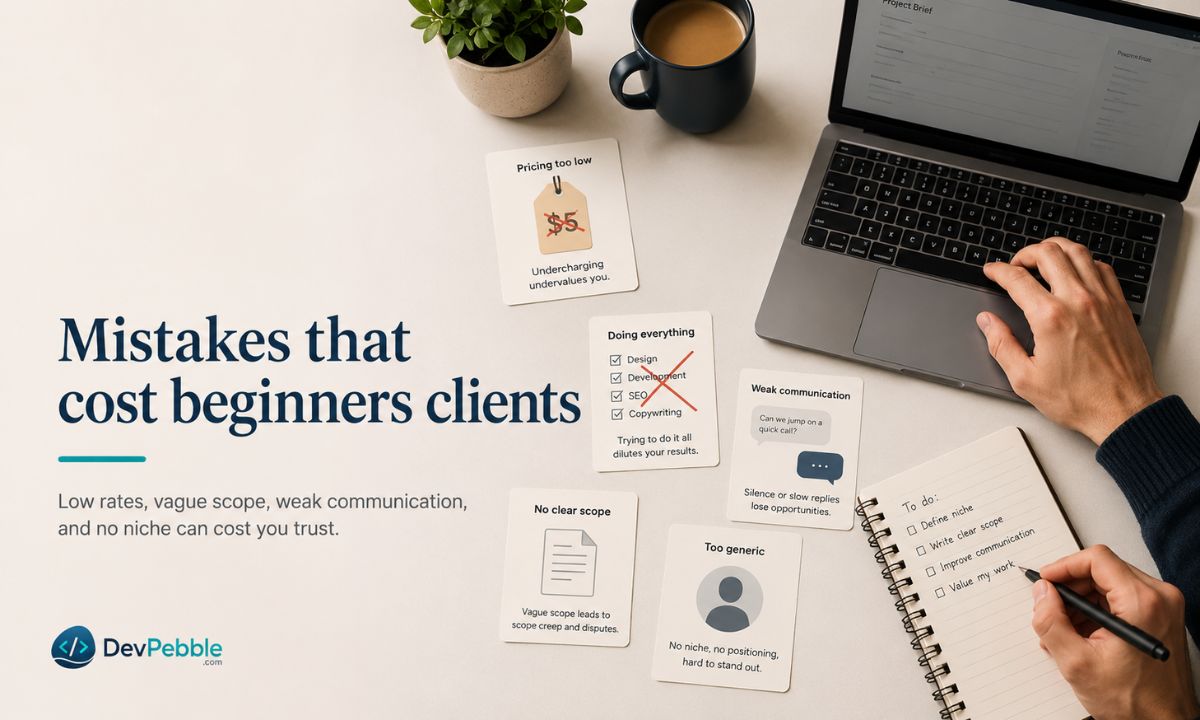
A few predictable errors eat up months. Underpricing and staying there is the first; charging low to win early jobs can make sense briefly, but rock-bottom rates attract the worst clients and signal low confidence, so raise them as your reviews grow. Taking on work above your level is the second, since delivering badly on a job you weren't ready for hurts your reputation more than turning it down would. Skipping anything in writing is the third; even on platforms that handle payment, a confirmed message thread on scope and revisions beats a verbal handshake when a dispute starts. Going quiet when something breaks is the fourth and worst, because a delay isn't the disaster, silence is; flag the problem early with a proposed fix. The last is ignoring your niche: a generalist profile drowns on a crowded platform, while developers known for one thing get found.
Spotting scams and dead-end jobs
Scams turn up on every platform, and eager beginners are the easiest marks. Be suspicious of unpaid "test" projects; a real client checks your portfolio or pays for a small task, so anyone asking for substantial free work as a test is fishing for free labor. Distrust offers that are too good, unusually high pay for low skill or promises of endless work before you've delivered anything. Keep payment on the platform, especially early, since the protection is the whole reason to be there and off-platform money has no recourse; treat requests for gift cards, crypto, or peer-to-peer apps the same way. And push for clarity on scope, since vague descriptions with urgent deadlines often mean a job that's badly planned or set up against you. A legitimate client answers pointed questions.
Is freelance programming still worth it in 2026?
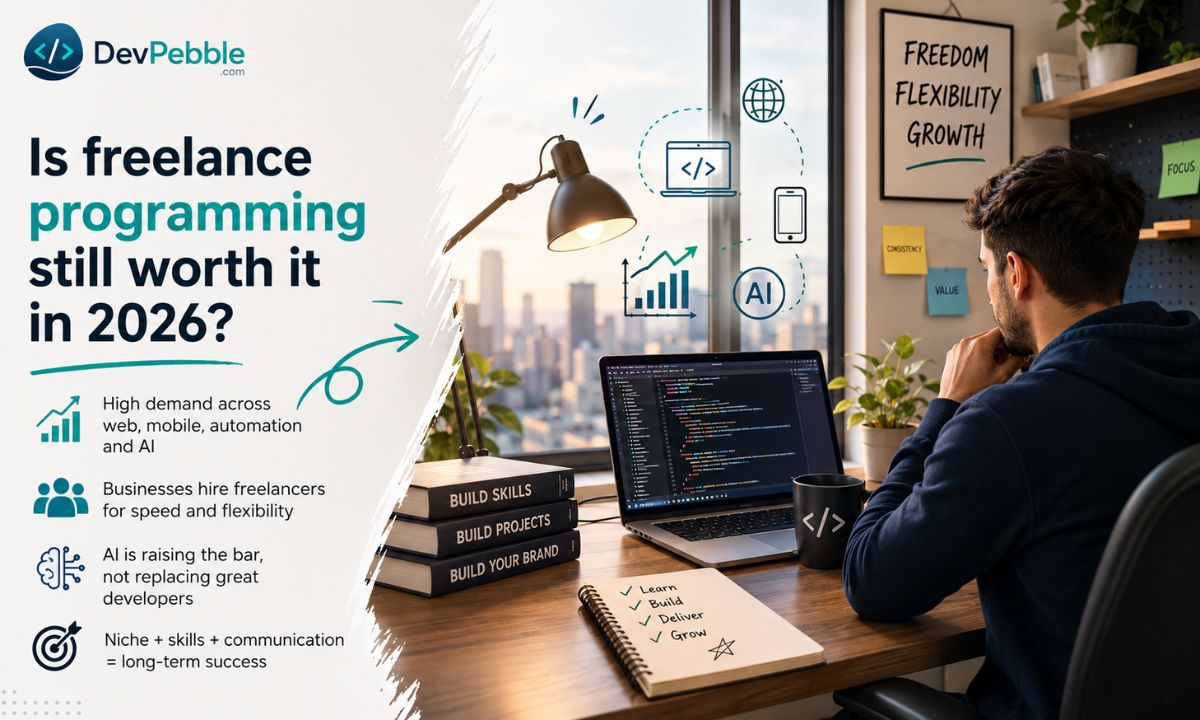
Short answer: yes, with caveats. Demand for remote development is still there across web, mobile, automation, and integrations, and businesses keep hiring independents because it's faster and cheaper than a full team. But the market has split. Repeatable, template-shaped work, basic sites, simple scripts, generic fixes, is what clients now hand to AI or to whoever bids lowest, and prices there have dropped. Specialized and AI-augmented work is the part that's growing; demand for AI-related freelance skills on Upwork more than doubled through 2025. Where you sit on that split matters.
Competition is the other change. More people enter every year, and on the big platforms you're up against developers worldwide who can price aggressively. Skill alone no longer carries you. What separates those who build something durable from those who burn out is a defined niche, a portfolio that shows real problem-solving, communication clients trust, and patience to build a reputation over months. AI is part of that now: it hasn't erased freelance programming jobs, it's raised the bar on speed and quality, and freelancers who fold it into their workflow have an edge over those who don't. None of this makes freelancing a shortcut to easy money, but it's a legitimate, flexible career for people willing to run it like a business.
Bringing it together
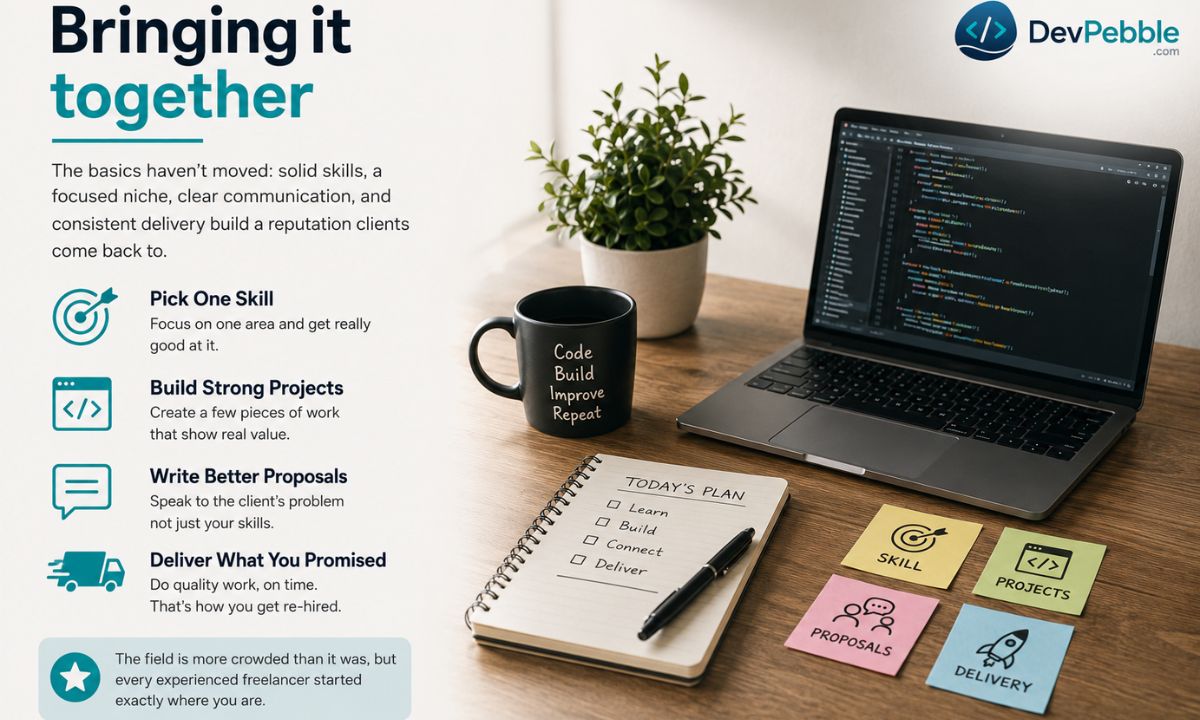
The basics haven't moved: solid skills, a focused niche, clear communication, and consistent delivery build a reputation clients come back to. So pick one skill, build a few strong projects, write proposals that speak to the client's problem, and deliver what you promised. The field is more crowded than it was, but every experienced freelancer started exactly where you are.